Edge of Thailand: Immersive Culture & Nature Tour
 チェンマイ坂田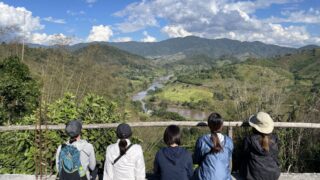
Chiang Mai, a land of diverse cultures, food, and nature, is one of the most fascinating destinations in northern Thailand.
In this tour, we introduce the "Living Experience" in Wang Pai Village, the northernmost village of Thailand!
This unique journey allows you to immerse yourself in the traditional culture of an uncommercialized ethnic minority, learn authentic survival skills, and experience the breathtaking natural scenery of
①Tour Highlights
Experience Diverse Ethnic Cultures
When you think of "Thai people," what kind of image comes to mind?
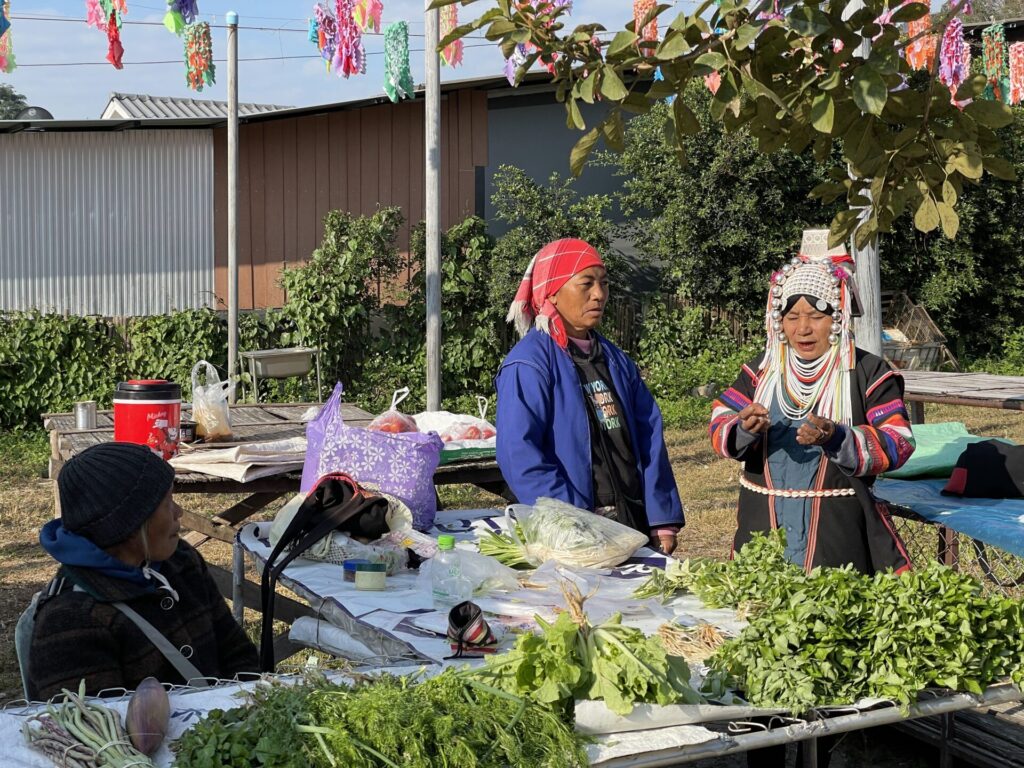
Thailand is home to a vast diversity of ethnic groups. In northern Thailand, particularly, mountain tribes and Chinese communities live side by side, preserving their unique traditions.
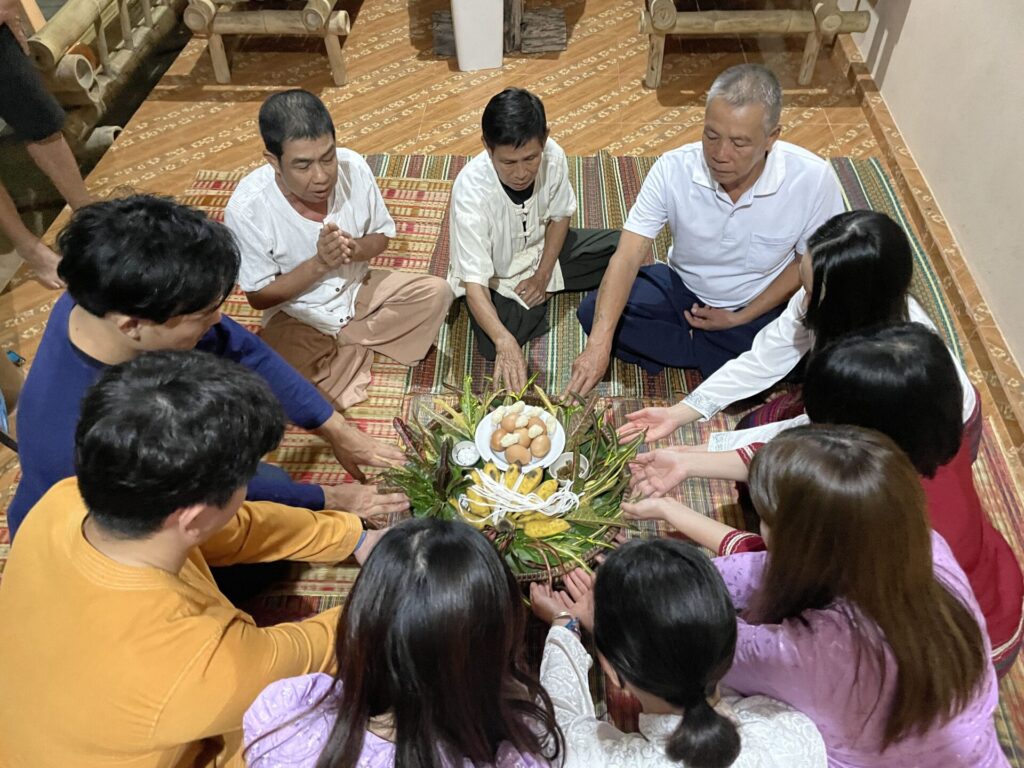
On this tour, you’ll explore a market where various ethnic minorities gather, interact with locals from the Tai Lue tribe, take part in their welcoming ceremony, and cook traditional meals—engaging all your senses in this cultural experience!
Discover the art of living
What if you suddenly lost access to modern utilities? Would you be able to survive?
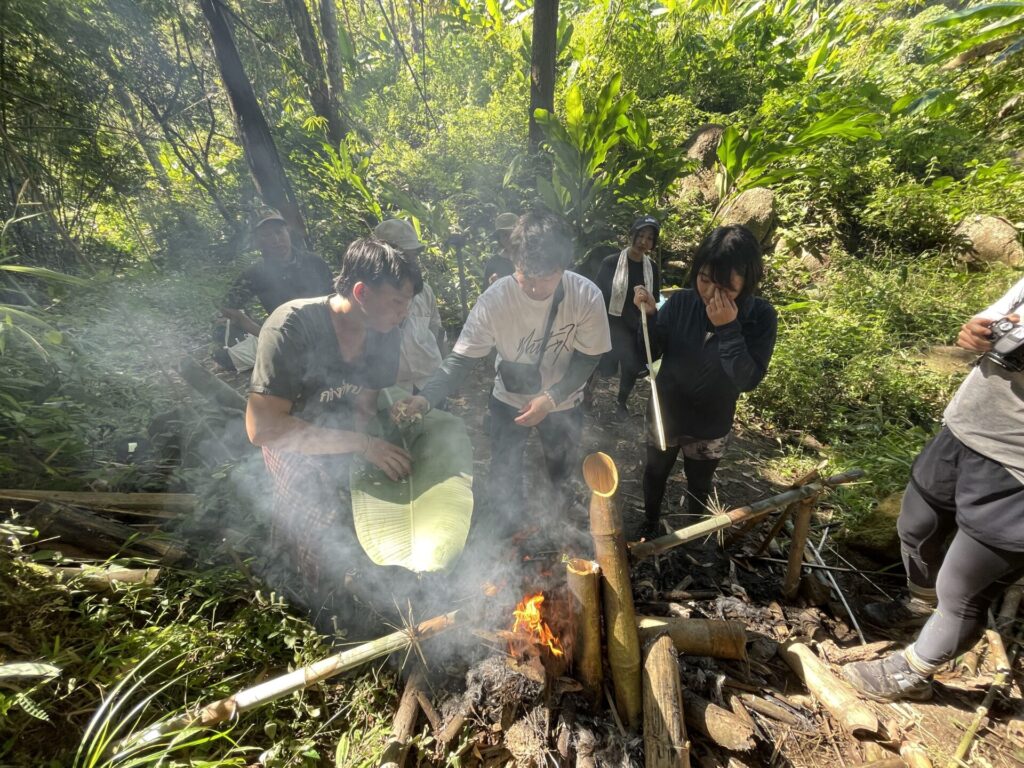
The Tai Lue people have a long history of living in harmony with nature. Even today, they utilize their survival skills to live strong and fulfilling lives in the forest.
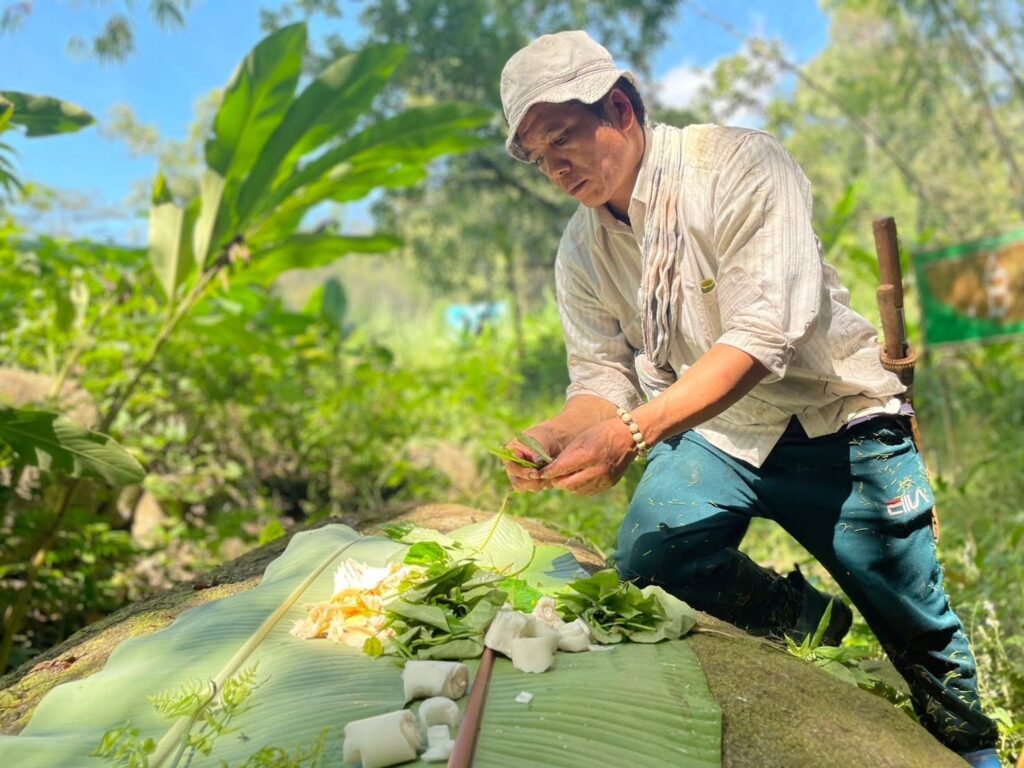
You will get to experience hands-on activities such as: Cooking with ingredients gathered from the forest and Crafting tools and utensils using only a knife and bamboo.
Through these activities, you will reflect on what is truly necessary for survival.
Feel the Northern Thailand’s Nature
What do you look at the most throughout your day? For many people, the answer might be a smartphone or computer screen.
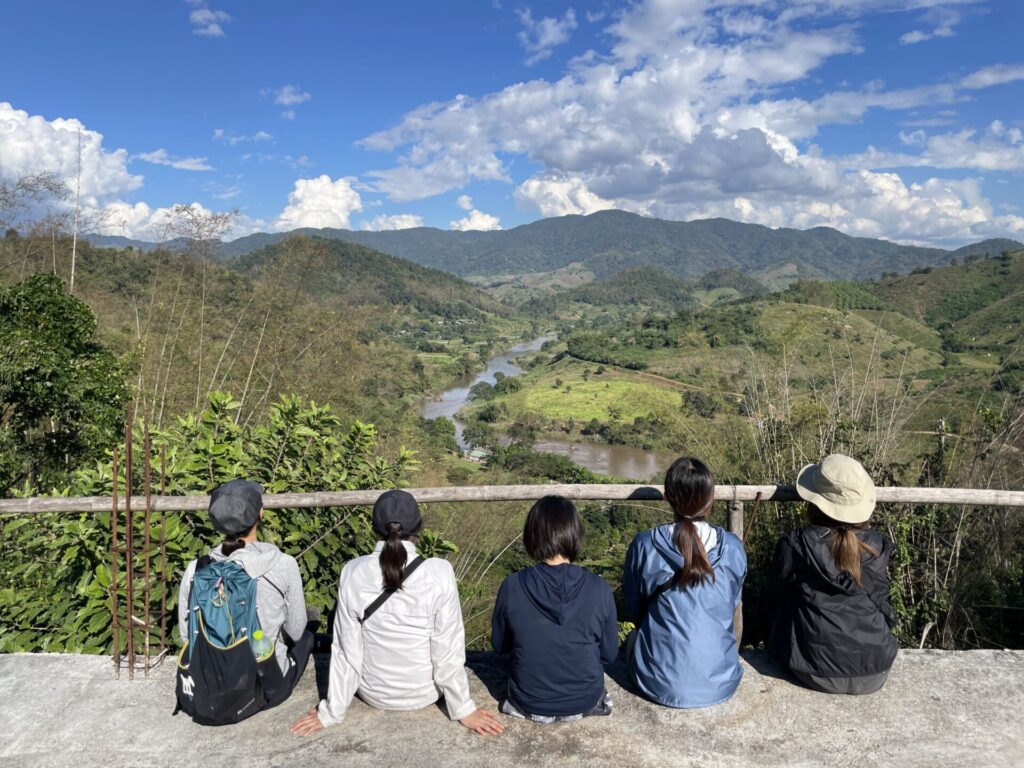
This tour invites you to step away from the digital world and immerse yourself in the beauty of nature.
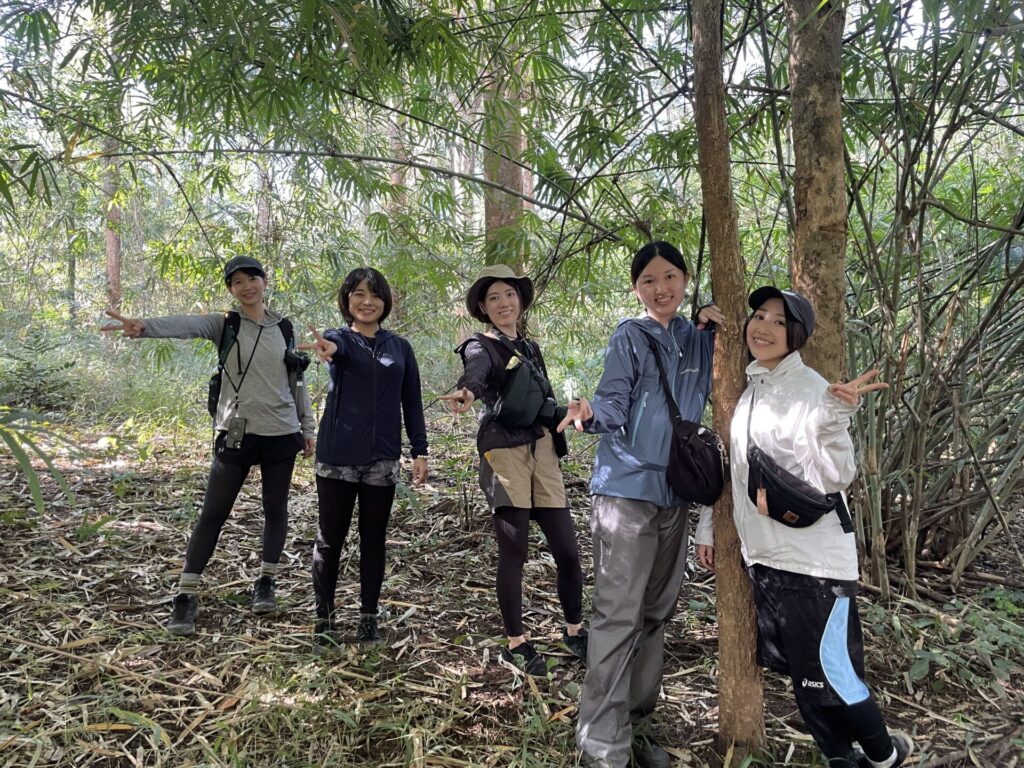
② Participant Reviews
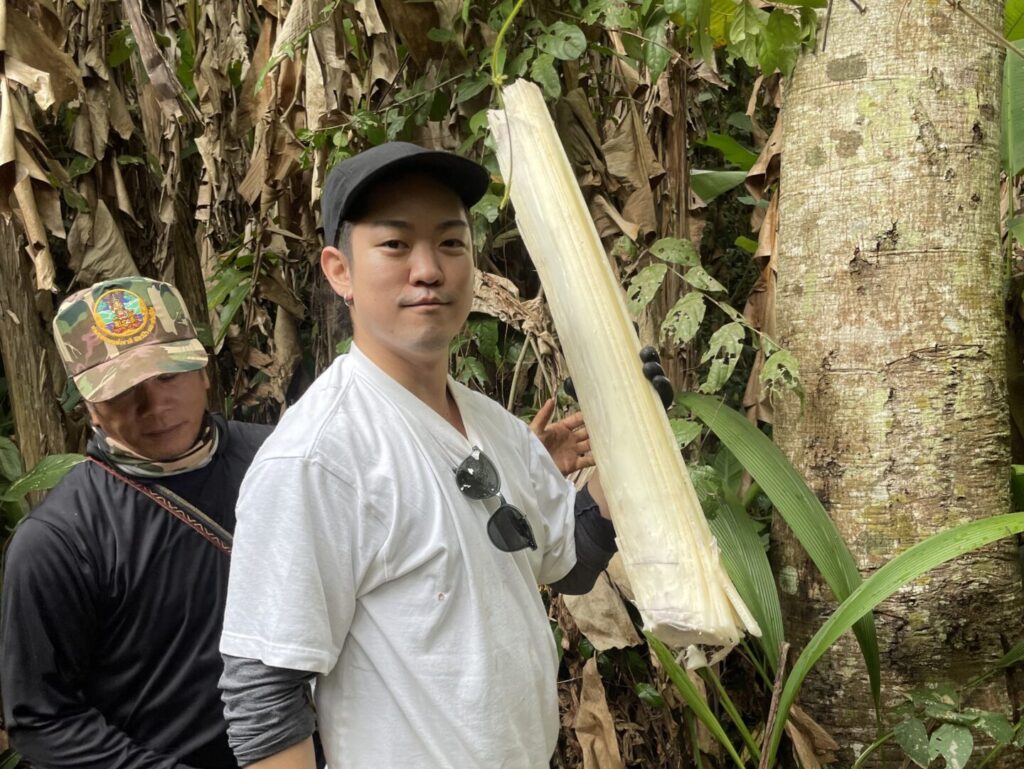
Koh
For those who aren't used to traveling abroad, I think this will change your life.
On this trip, we were guided around a village where the Tai Lue people live. There's only so much you can learn from researching beforehand, so I joined without overthinking it — and for me, that was absolutely the right call.
You'll understand once you go. You can't understand unless you go. Everything was a first-time experience, and there was so much I had never seen before!
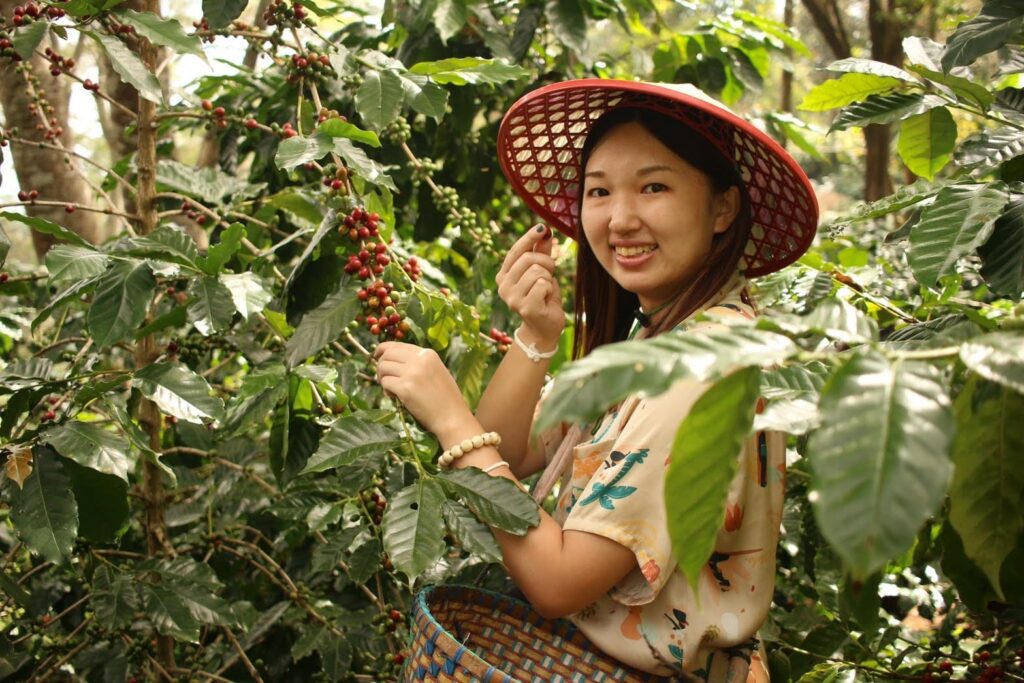
Chihiro
I'm so glad I got to join this tour with this group of people.
Honestly, I had been feeling less motivated about learning English lately, and I was struggling with not knowing what I wanted to do with my future —but through talking with the village people and getting inspired by being in a different country, I started to see — little by little — why I want to study languages, what I want to value in life, and what I truly want to do.
Without a doubt, this experience has become one of the turning points in my life.
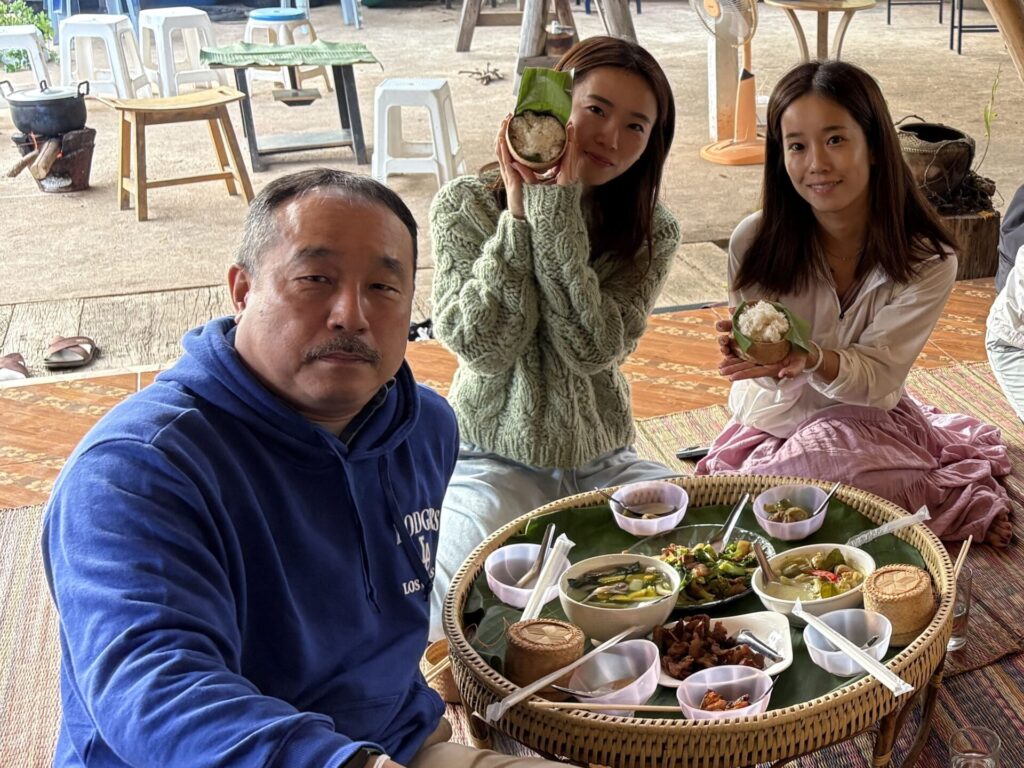
Susumu
Experiencing firsthand the warm hospitality of the village people, the connections that form between people of completely different cultures, and the relatable sense of everyday life — I feel we gained a concentrated form of deep interaction with the locals that you simply can't get through ordinary overseas travel.
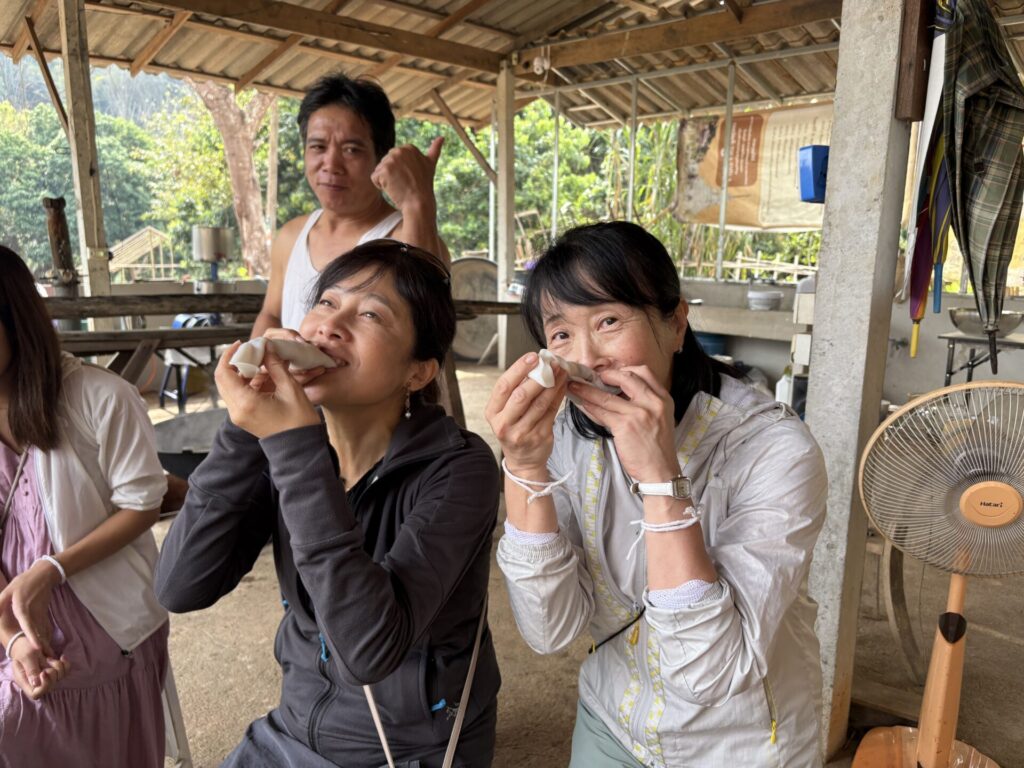
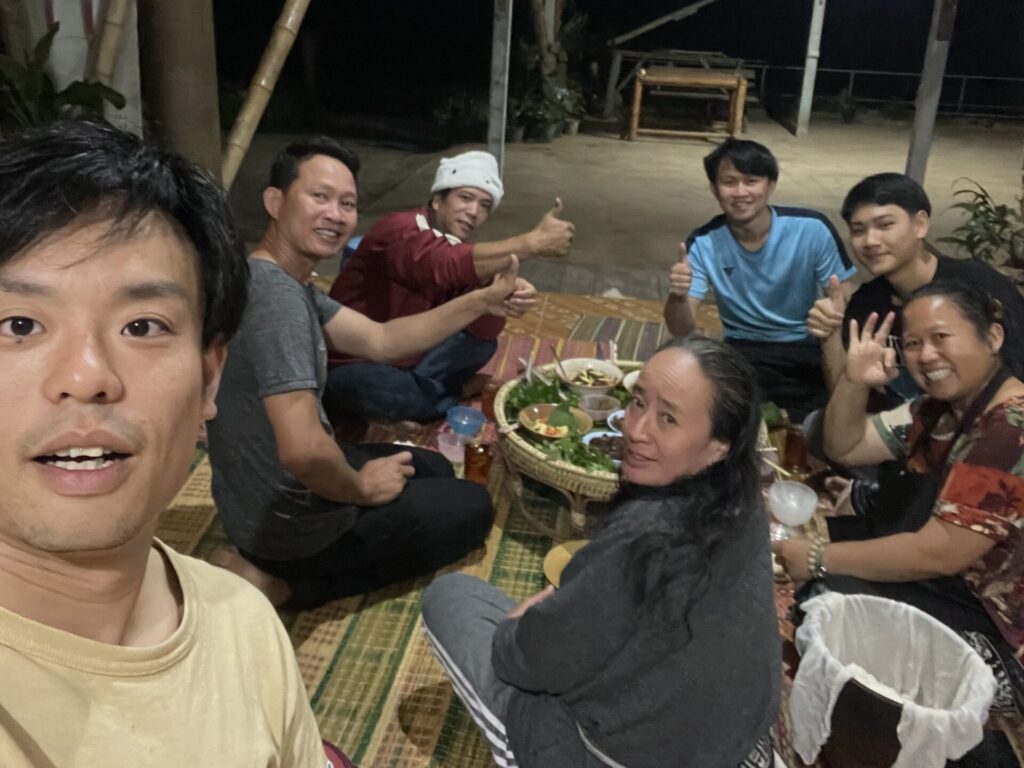
Mihoko(far right in photo)
Nature activities, delicious and healthy food — it was a wonderful 3 days. Even deep in the forest, I was surprised to find fewer insects and animals than expected (dry season).
This tour made me feel the kindness and strength of the village people, while also making me realize my own helplessness — having grown so accustomed to modern conveniences. I want to remember what it means to truly live, even if just in spirit, by following the example of the village people.
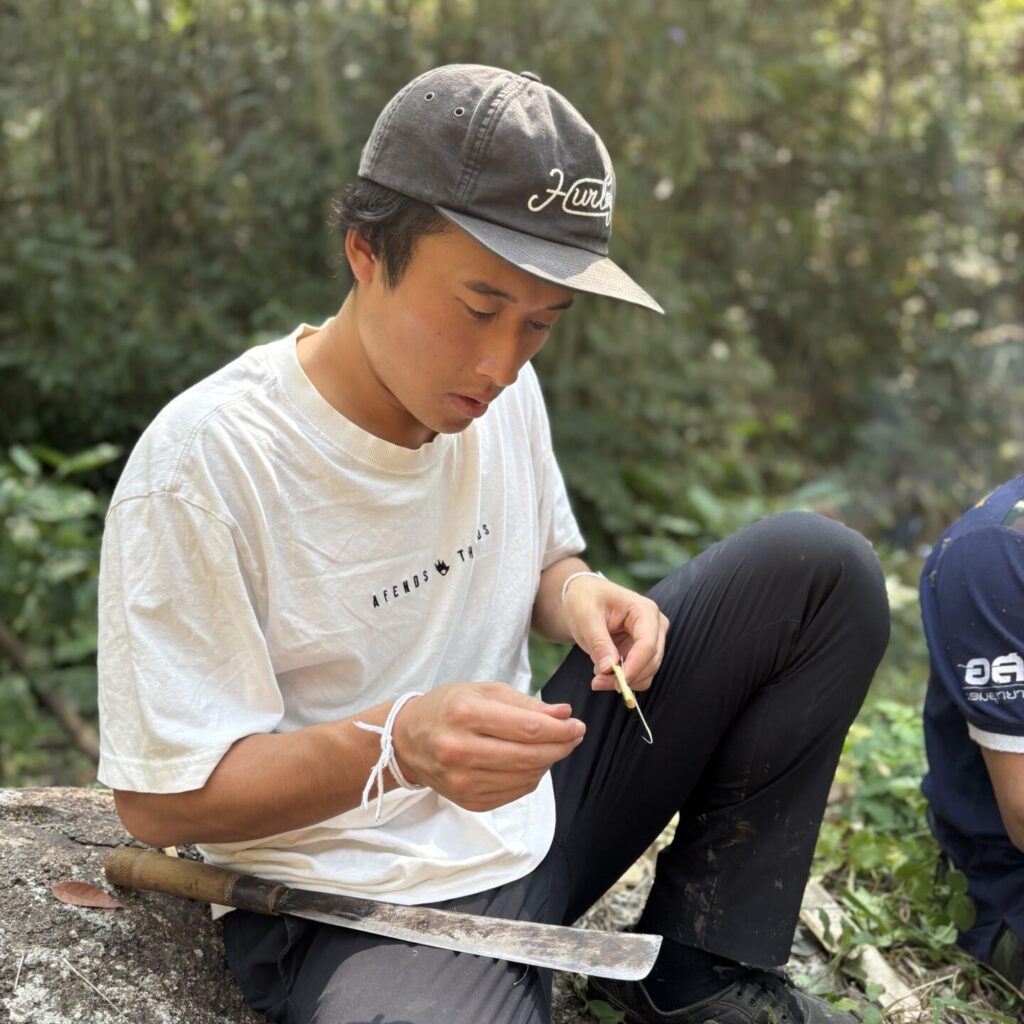
Mitoku
I travel abroad about twice a month, but you took me to a remote place I could never have found on my own. It's relatively easy to go to popular restaurants or popular adventures — and they tend to be good (enjoyable) — but they often stay within the range of expectations.
The physical strength and knowledge of people living off the land in rural Thailand, and the deliciousness of local cooking that brought out the full potential of each ingredient — these were beyond my expectations.
Rather than thinking about benefits, cost-efficiency, or time efficiency — none of that is really the point. What matters is broadening your range of experience and expanding your perspective, so I believe the right answer is simply to join and go.
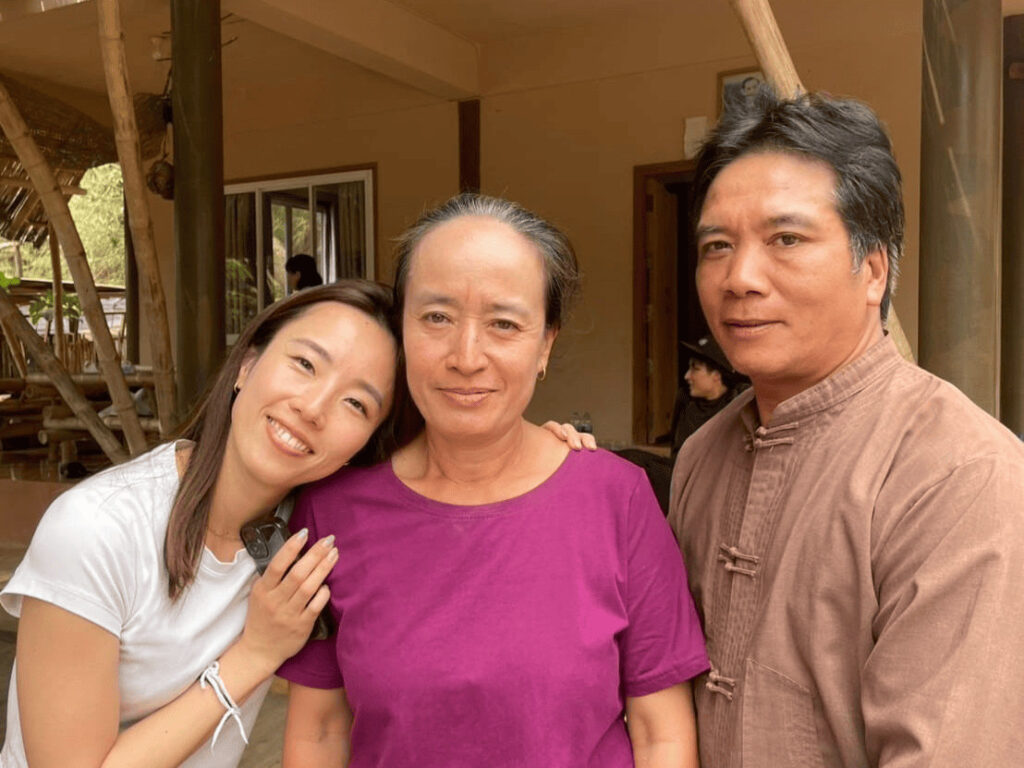
Yumika
I had experiences I never could in daily life, and felt refreshed surrounded by nature. The village people were very kind and the food was delicious — I felt completely at ease throughout my stay.
In particular, every dish the village people made was outstanding. During the hike, we cut wood, made chopsticks and cups from bamboo, and used banana leaves as plates — rare experiences you'd never get in Japan. It left a lasting impression!
Mayuka
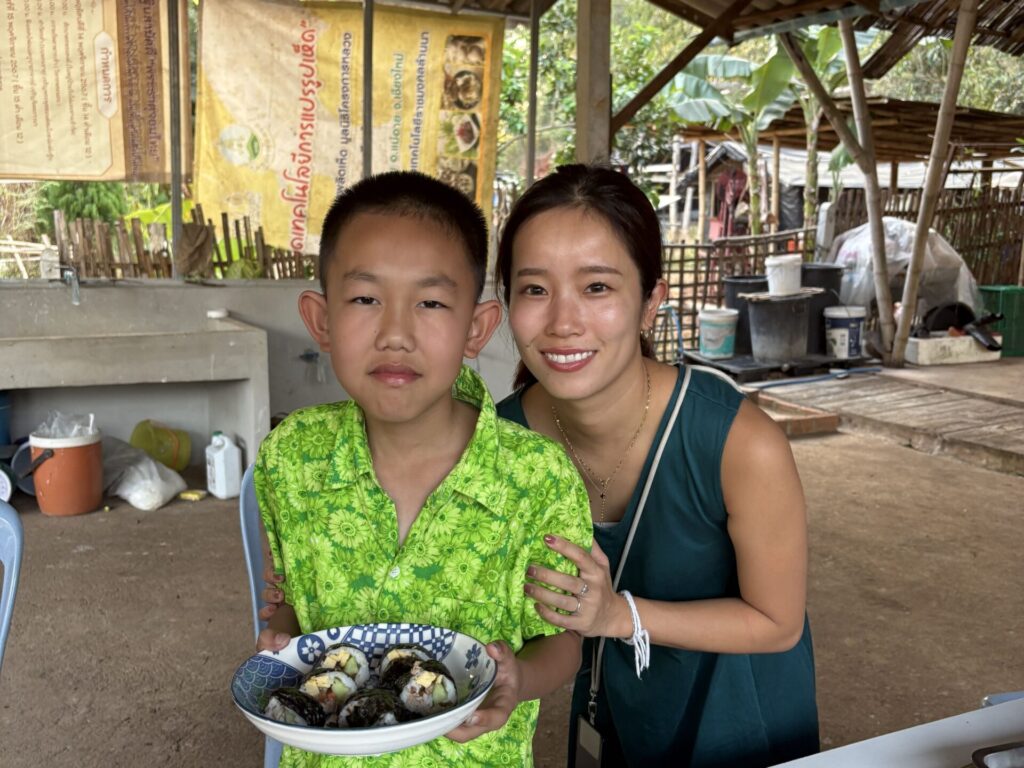
It reminded me of family camping trips and school forest retreats from my younger days — I was so excited. Being in a large group with interactions with village people and children, both joining in everyone's laughter and happy conversations and simply listening were incredibly enjoyable.
Above all, the food made by the village mothers was so delicious — they grow their own ingredients, everything is additive-free, packed with vegetables and healthy, and they adjusted the spiciness just right, which really showed their thoughtfulness.
Whenever a problem arose or someone needed help, people reached out to assist — the sense of solidarity and mutual support among the village people was truly remarkable, something you rarely see elsewhere.
Yang
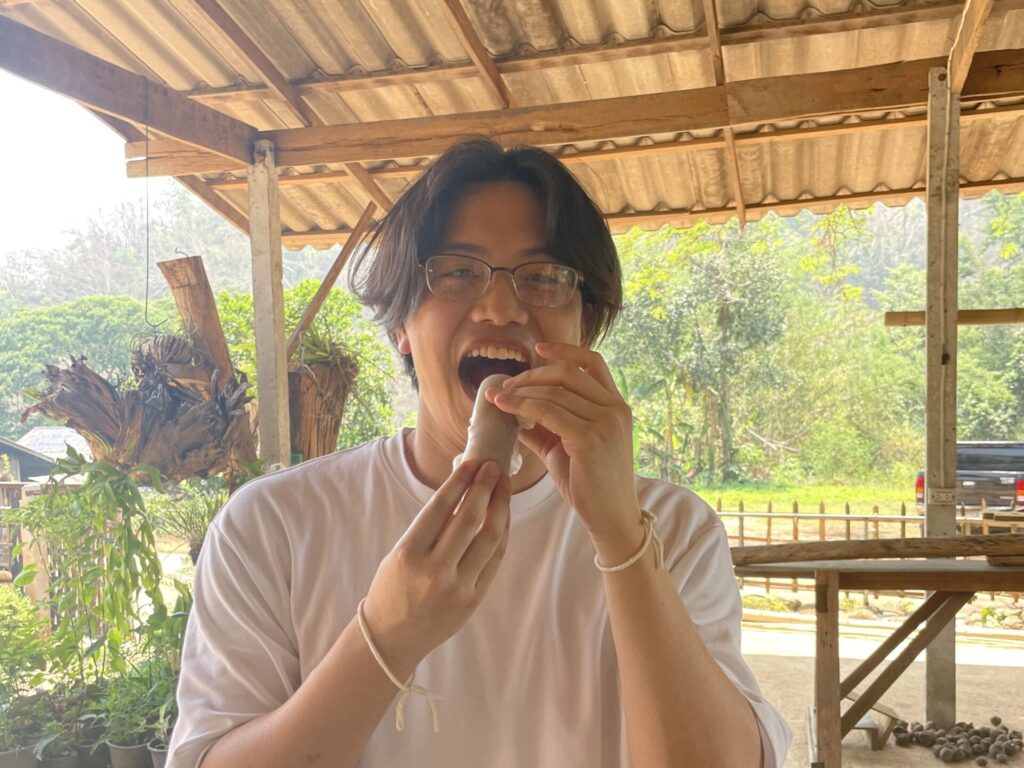
This was the deepest local travel experience of my life — truly enjoyable and precious. By sharing daily life with the Tai Lue people, I experienced what it feels like to live a completely different kind of everyday life.
It also gave me a chance to reflect on how privileged my own environment is, and on the remarkable adaptability of human beings — so many things to ponder. All in all, I believe it was a journey that added great value to my life.
Sayaka
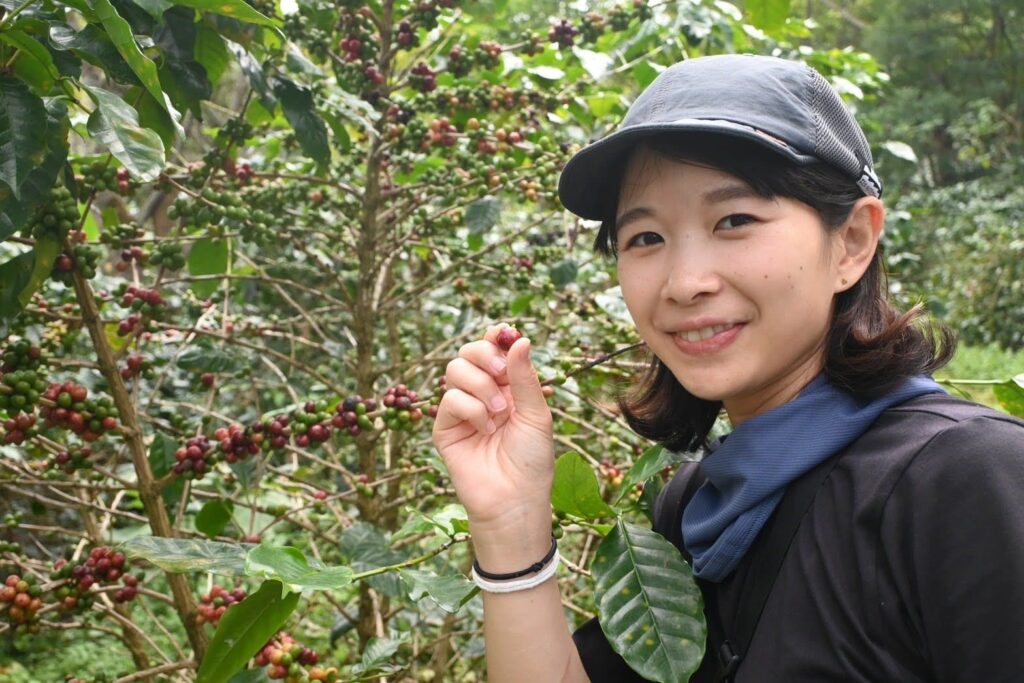
It was so, so much fun! I'm so glad I joined!! In particular, the forest survival meal was amazing!
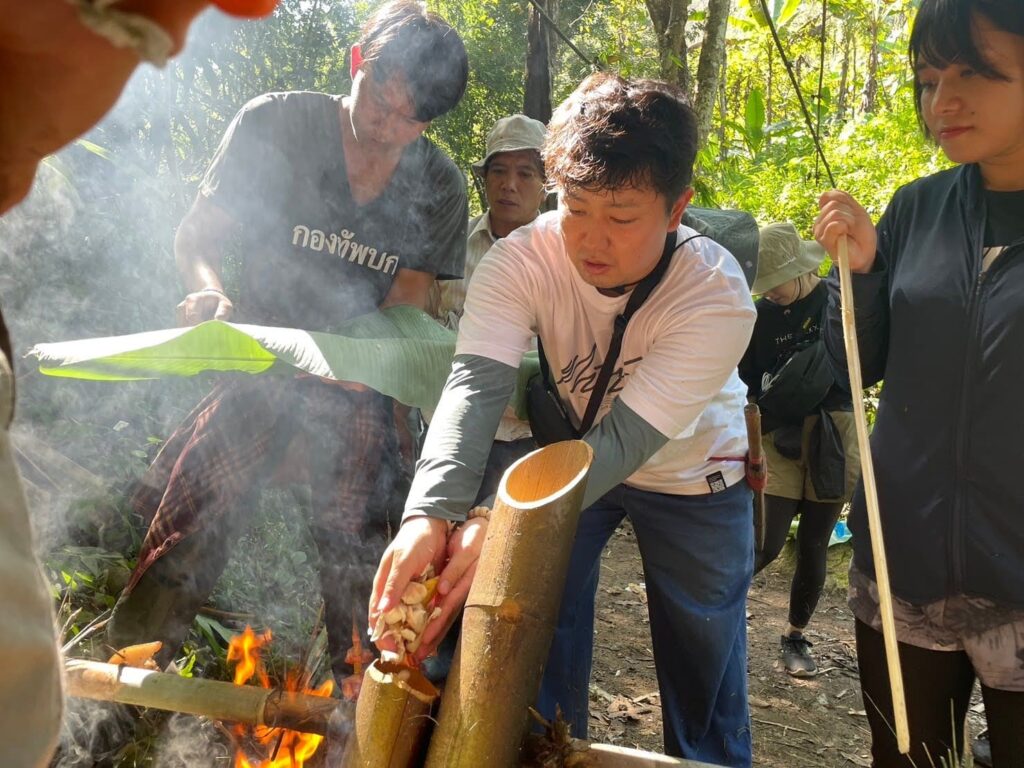
Learning survival knowledge (like how to use banana trunks and leaves) was fascinating, and cooking and eating with ingredients we gathered ourselves in natural pots and bowls was incredibly exciting!
Also, being able to hear the thoughts and feelings of Chai-san and the other village people over dinner was a truly wonderful time!
Okamoto
This was an experience I could never have as an ordinary office worker. Through interacting with the villagers and touching their way of life, I was able to see things through a new lens I had never had before.
Trips to beautiful scenery and delicious food are wonderful too, but participating in this tour expanded my sense of what travel can be. I'd highly recommend it.
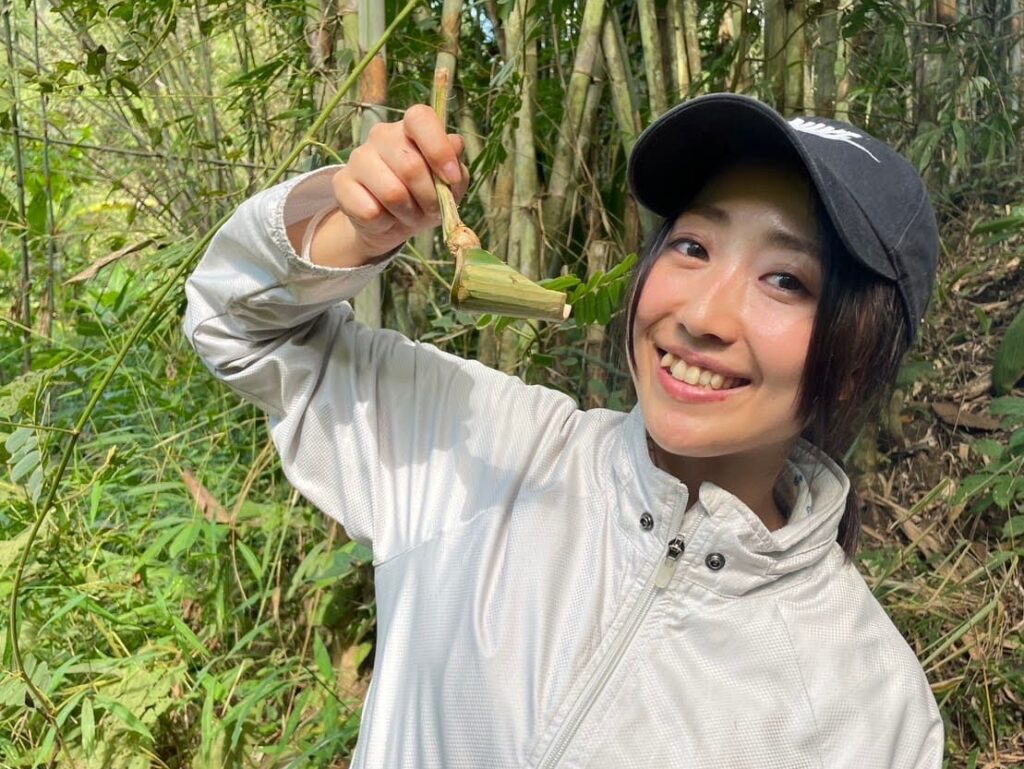
Mizuki
On this 2-night, 3-day tour, we received a warm welcome from the village people and enjoyed dancing and meals together. Through the welcome ceremony, I was happy to be embraced as "one of the village" — and we were able to connect deeply.
I had special experiences that no ordinary trip could offer, and I'm grateful to have found a place I want to return to. If you're on the fence, please give it a try!
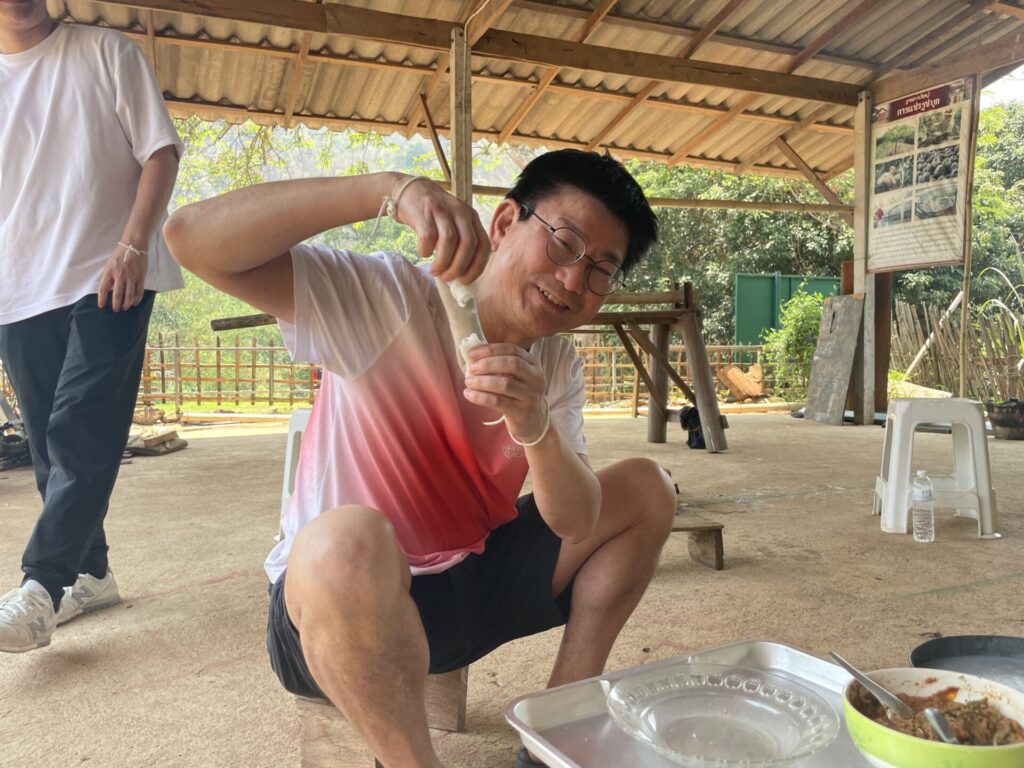
Kuwata
Thanks to the strong relationships Sakata-san has built with the village people, I was able to stay in the village with complete peace of mind, even in such a different culture.
It was a special itinerary I could never have arranged on my own. Being able to personally experience the village food and way of life left a lasting impression on me.
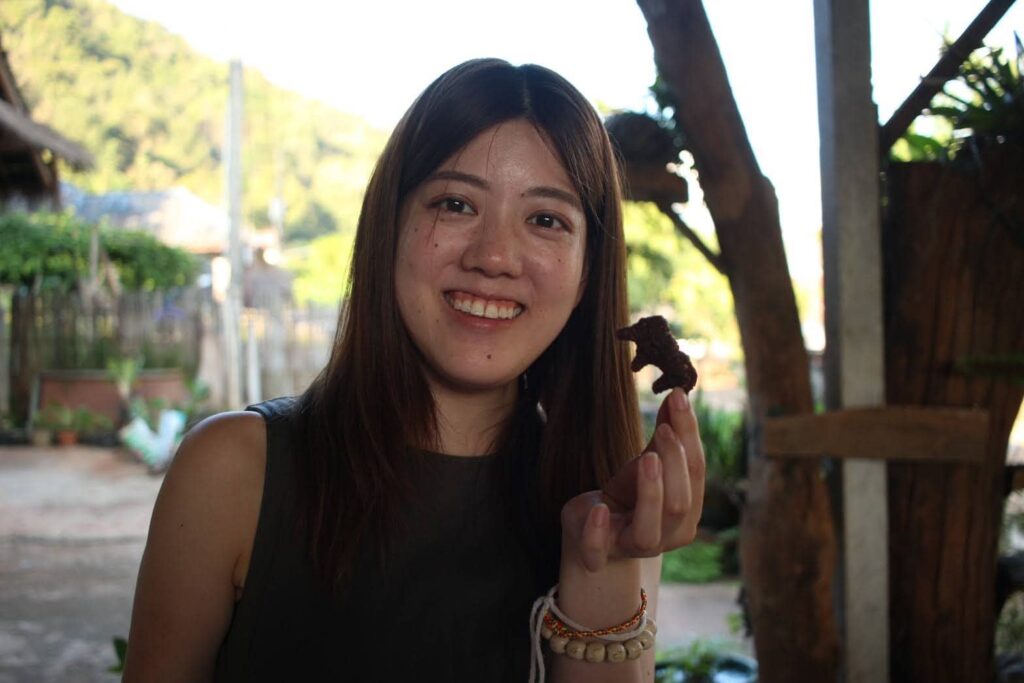
Aki
On this 2-night, 3-day tour, I spent time alongside the village people and experienced moments where our hearts connected even without a shared language. Sharing meals and dancing together allowed us to connect deeply, and I rediscovered the "true happiness" I had forgotten amidst the busyness of daily life.
Packed with precious experiences you simply can't get from an ordinary tour — this is truly a one-of-a-kind journey. If you're hesitating, please join!
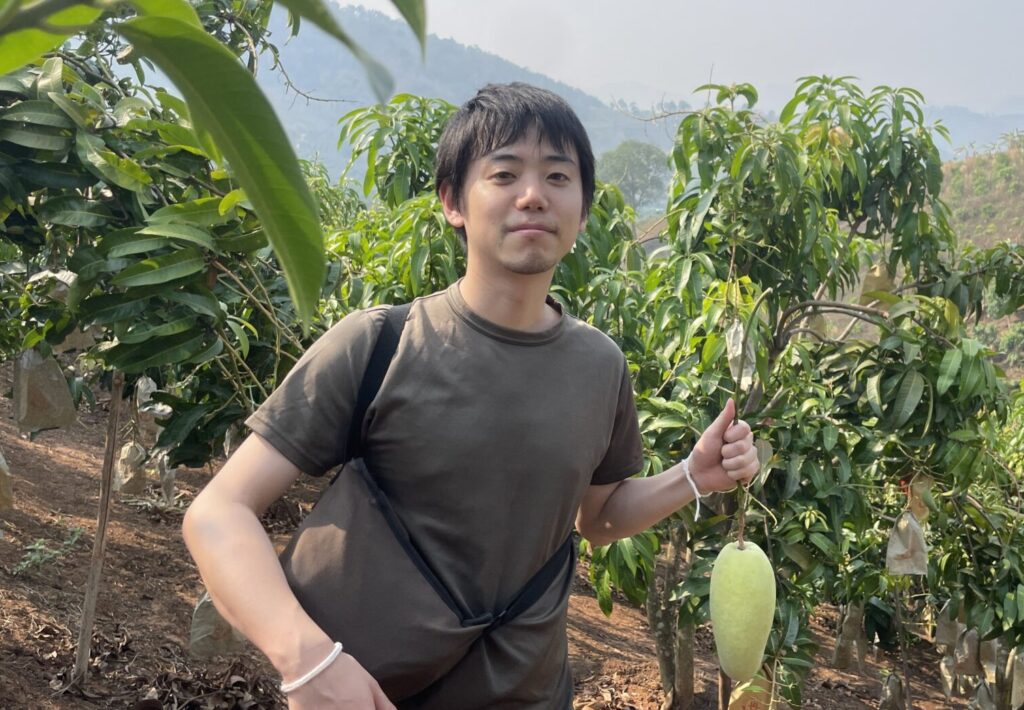
Tamaki
The cooking session and the conversation about the village's future left a deep impression on me!
The cooking — including bamboo crafts and gathering mountain vegetables — reflected the local way of life, climate, and culture, and the explanations were fascinating. The conversation about the village's future — particularly what goals they have and what they're trying to achieve through interactions with foreign visitors like us — was equally interesting.
③ Destination Overview
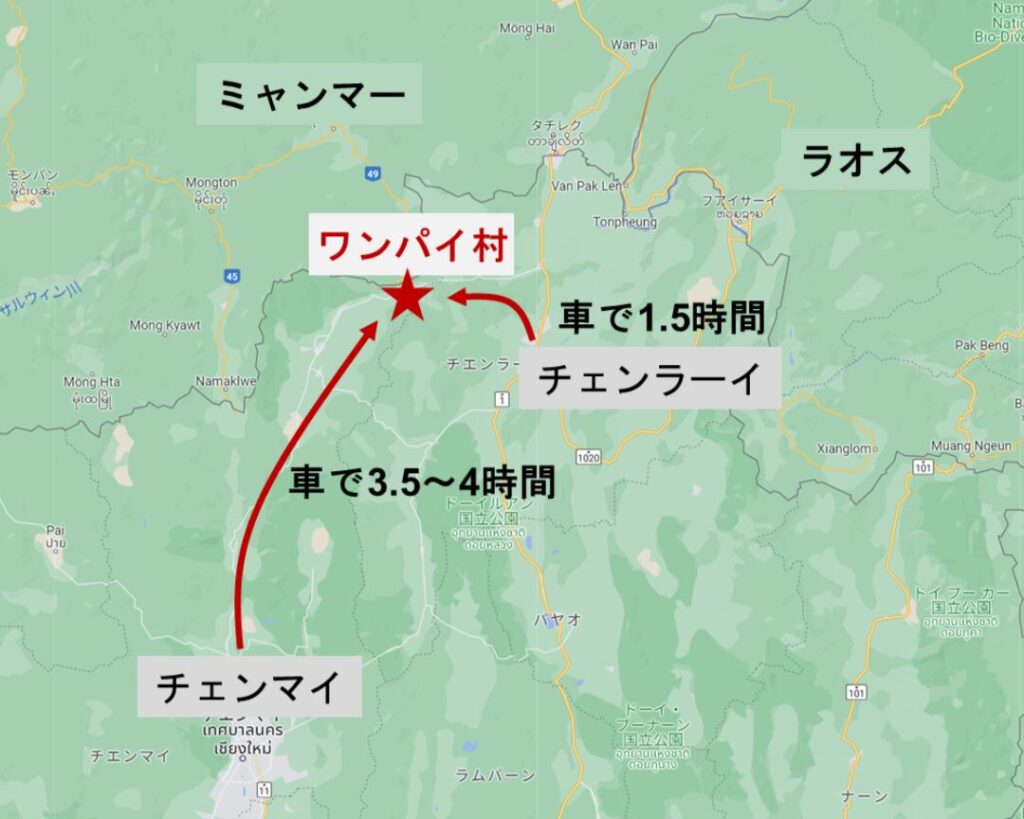
The tour takes place in Wang Pai Village, located in Mae Ai District, Chiang Mai Province.
The village sits along the Thai-Myanmar border and is the northernmost point of Chiang Mai Province. It takes approximately 3.5 to 4 hours by car from central Chiang Mai.
④Your Hosts
Chai
The villagers warmly welcome all visitors, and leading them is Chai.
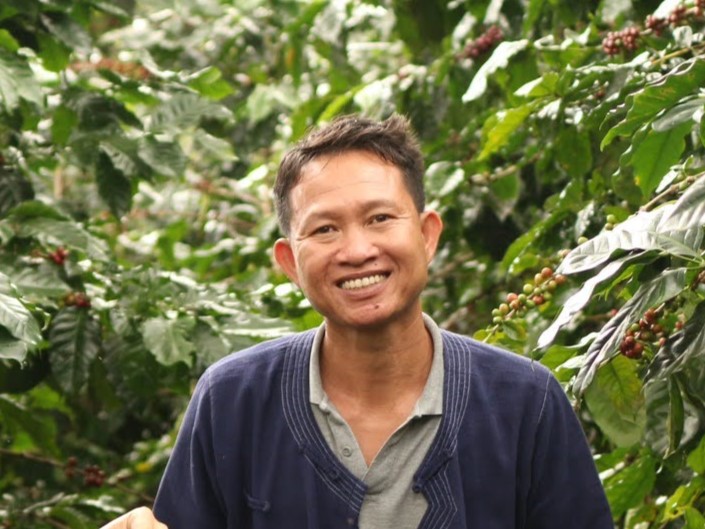
Chai, who leads the village tours, moved to Wang Pai Village after marriage, leaving his city life behind. Besides organizing cultural experiences for visitors, he leads community projects including waste management and wildfire prevention.
"By bringing visitors here, I hope our youth will recognize the value of their heritage that they often overlook," says Chai, who created this tour program with passion for preserving local culture.
Joom
Joom, a former Myanmar monk who left monastic life to marry, now lives in the village after running a Thai crepe stall in Bangkok. He sells snacks at the local school while helping with cultural preservation.
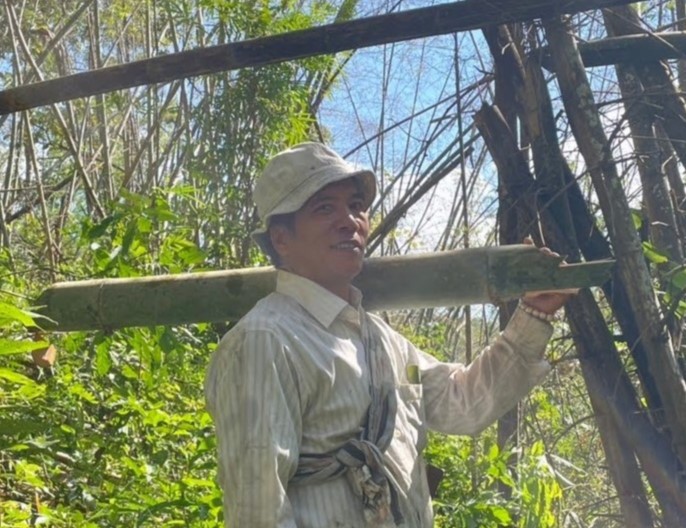
With his humor, songwriting skills, and ability to craft various items from bamboo, he adds unique value to the community.
Not only Chai and Joom, but also their wives, children, and other villagers will warmly welcome you.
Article about Tai Lue tribe👇
 ManiTabi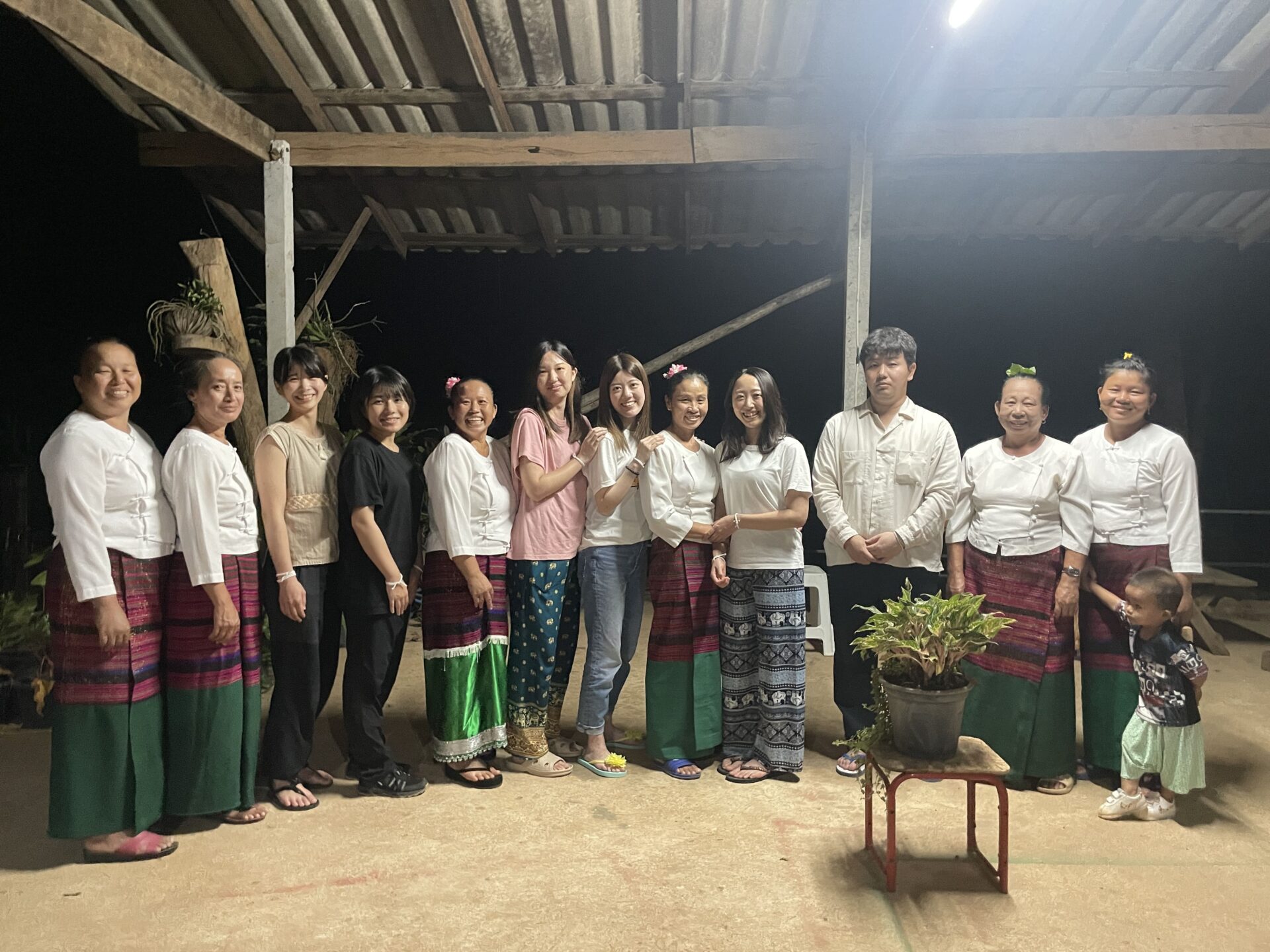
⑤Sample Itinerary
Day 1: Discover Diverse Cultures
8:00: Depart from Chiang Mai
You will travel to the village by private van from Chiang Mai city. We will pick you up from your accommodation. Since the journey takes about four hours, we will take breaks along the way.
※ Pickup and drop-off in Chiang Rai (either at the airport or within the city) is also available upon request.
11:00: Lunch at a Chinese village
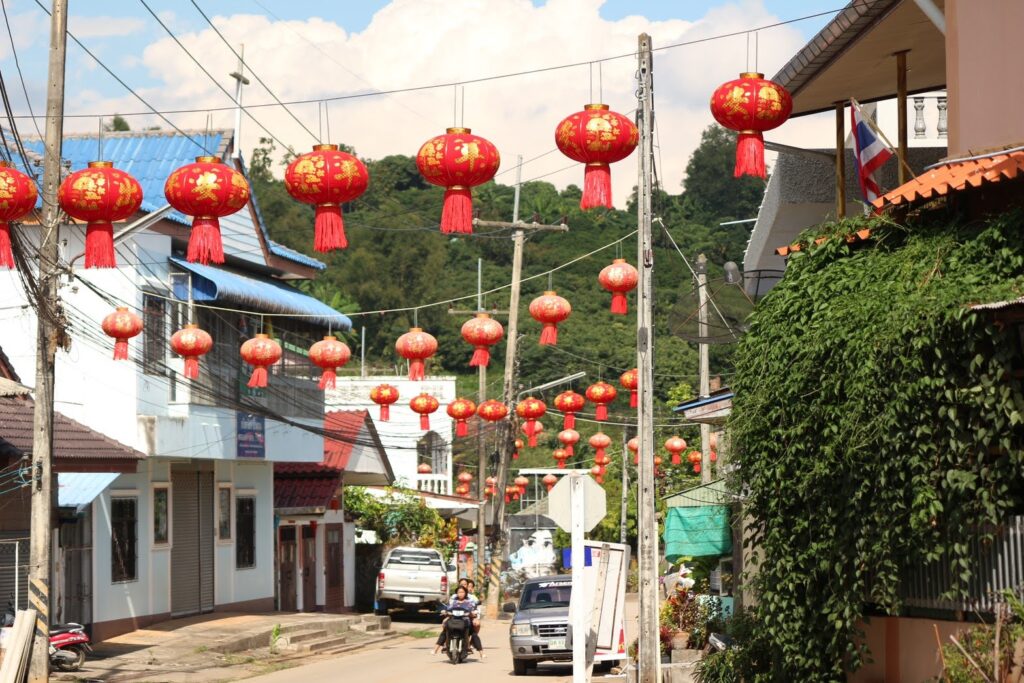
You might be wondering, "A Chinese village in Thailand?" In northern Thailand, many members of the Kuomintang (KMT) settled here after being defeated by the Communist Party during the Chinese Civil War.
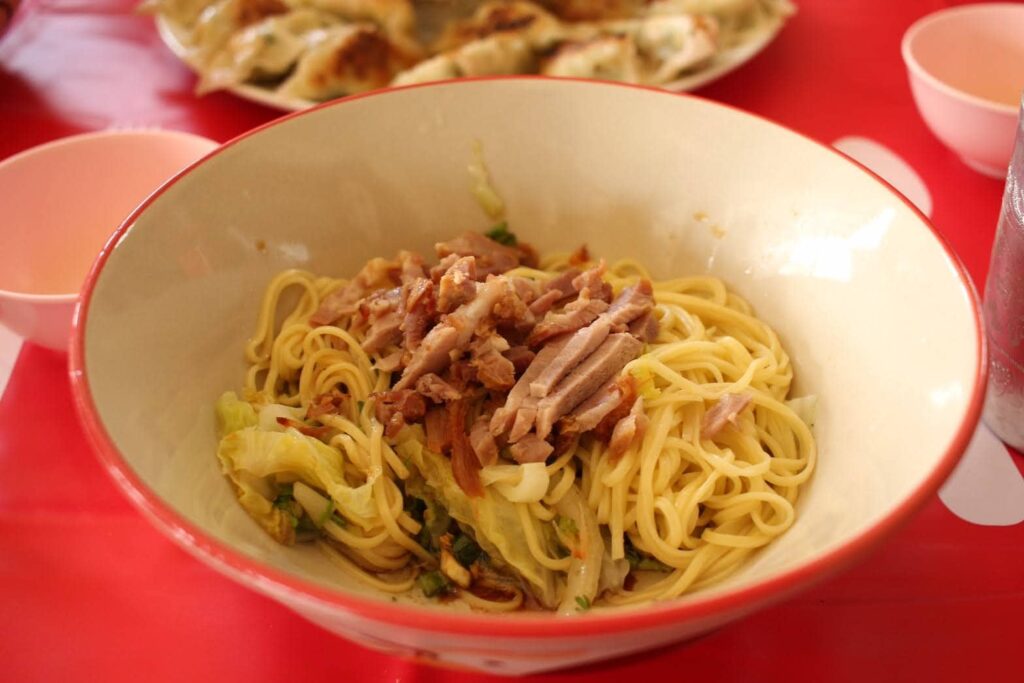
As you enjoy delicious Chinese cuisine, take a moment to reflect on the history of those who migrated to Thailand.
14:00 Thaton temple
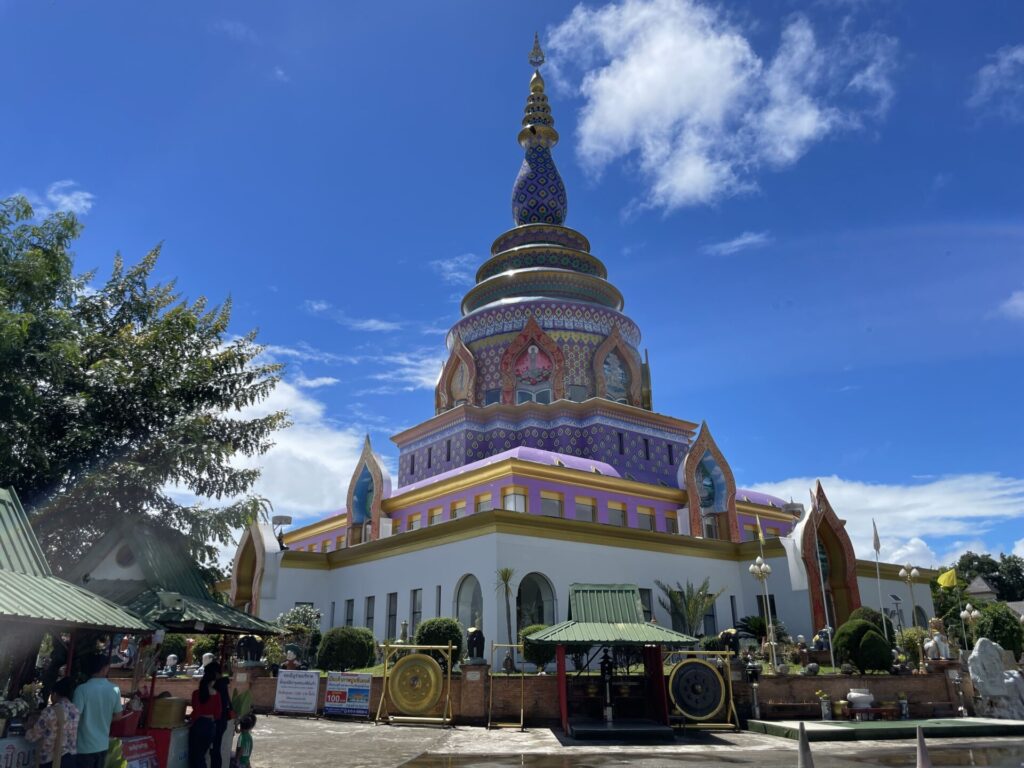
We will visit the beautiful temples of Thaton, the northernmost town in Chiang Mai Province.
15:00 Visit an ethnic minority market
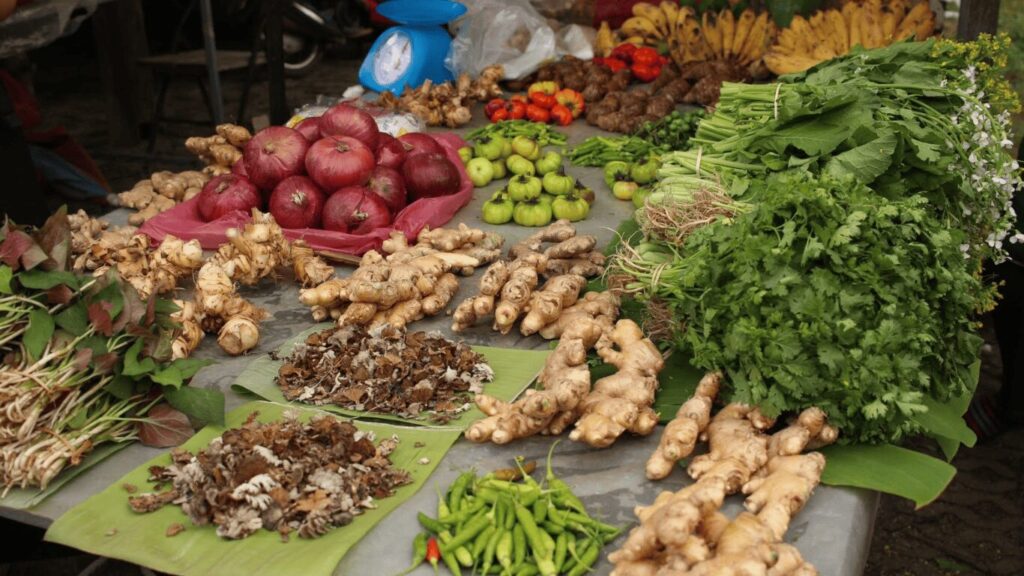
We will visit a market where various ethnic groups, including the Akha, Lisu, and Lahu tribes, gather.
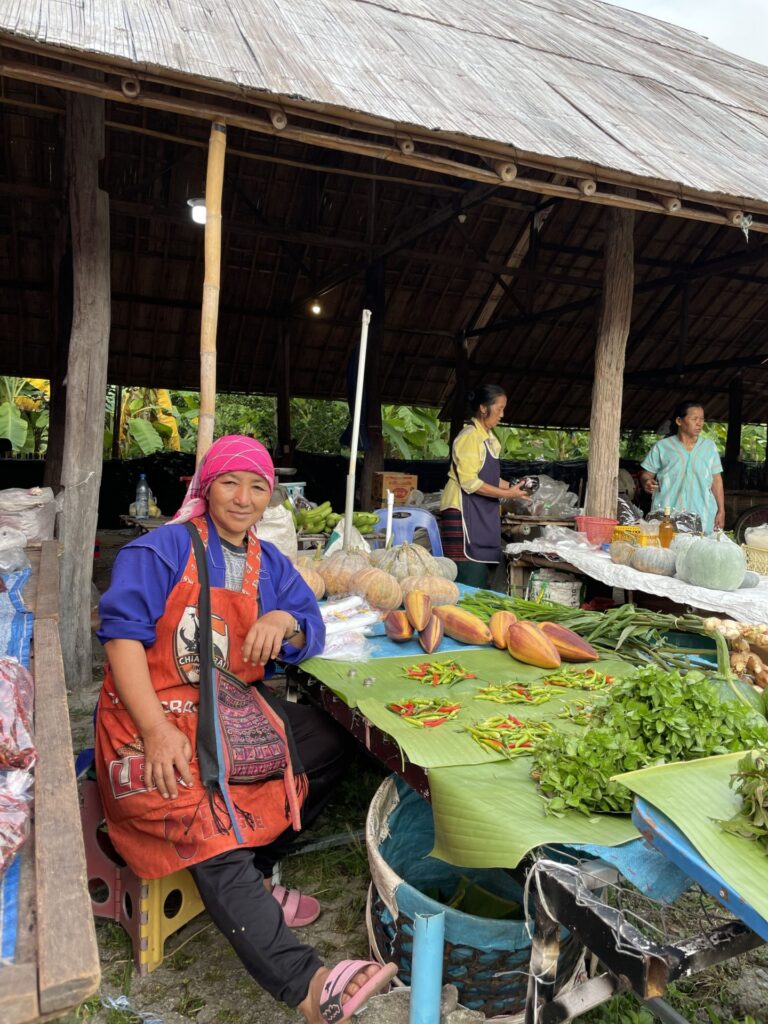
16:00:Arrive at Wang Pai Village.
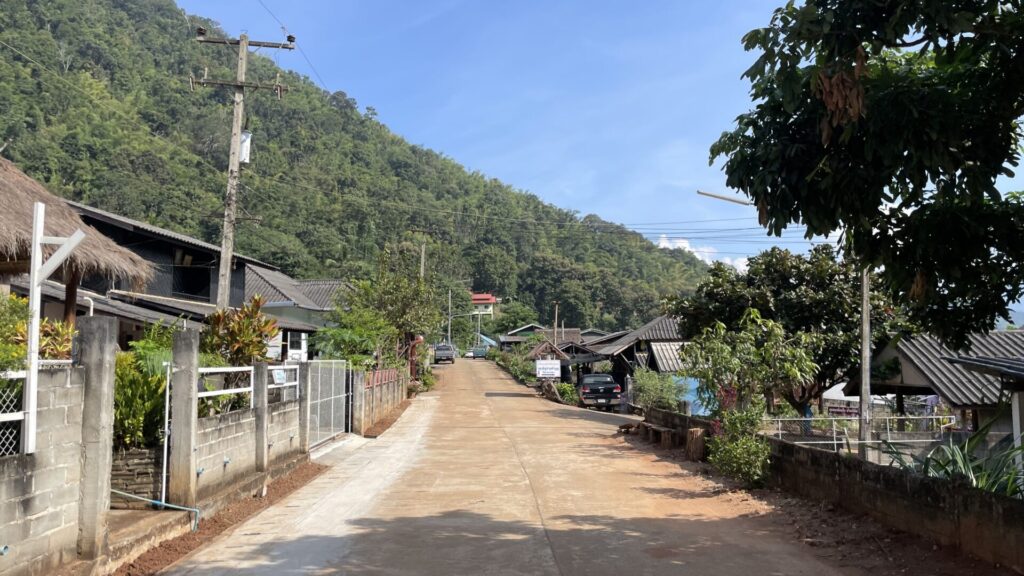
Upon arriving at the village, we will first pay our respects at the shrine.
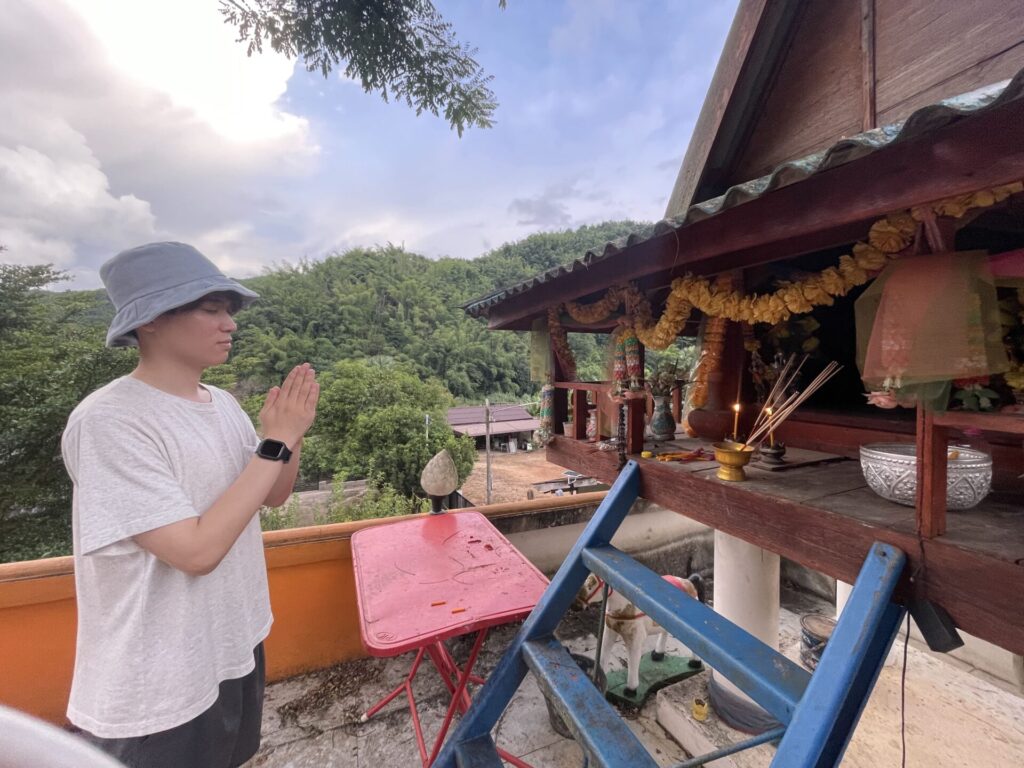
Additionally, the village elders will perform a traditional Tai Lue welcoming ceremony for us.
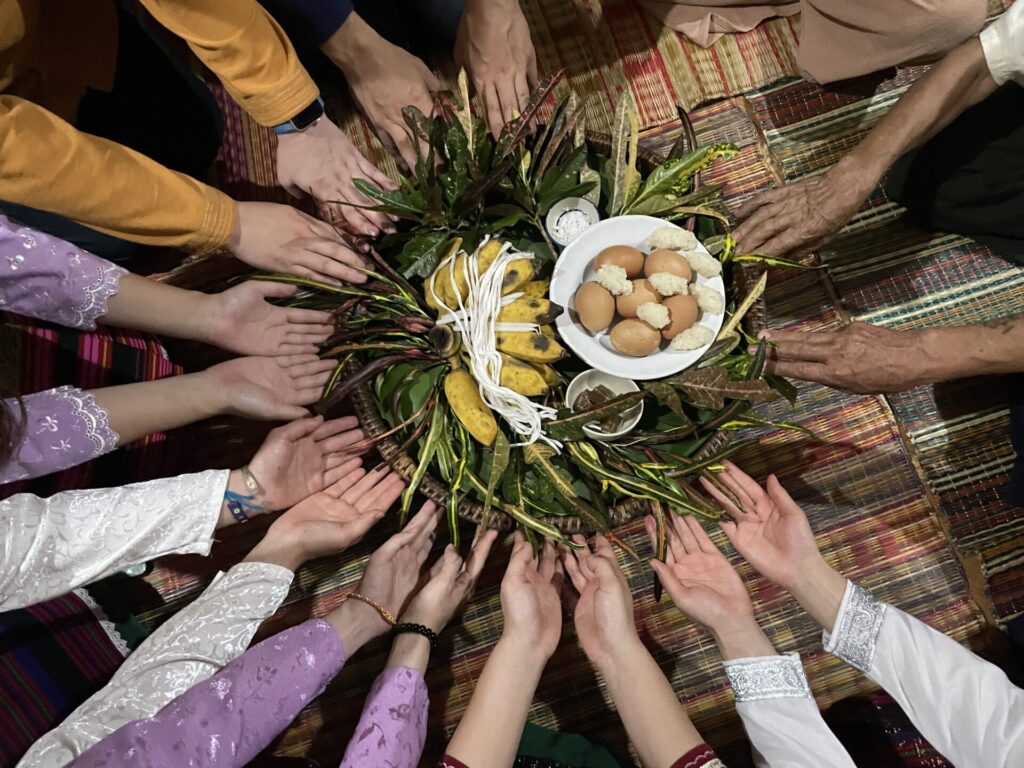
18:00 Enjoy a home-cooked village dinner
We will gather around and enjoy a homemade meal prepared by the villagers.
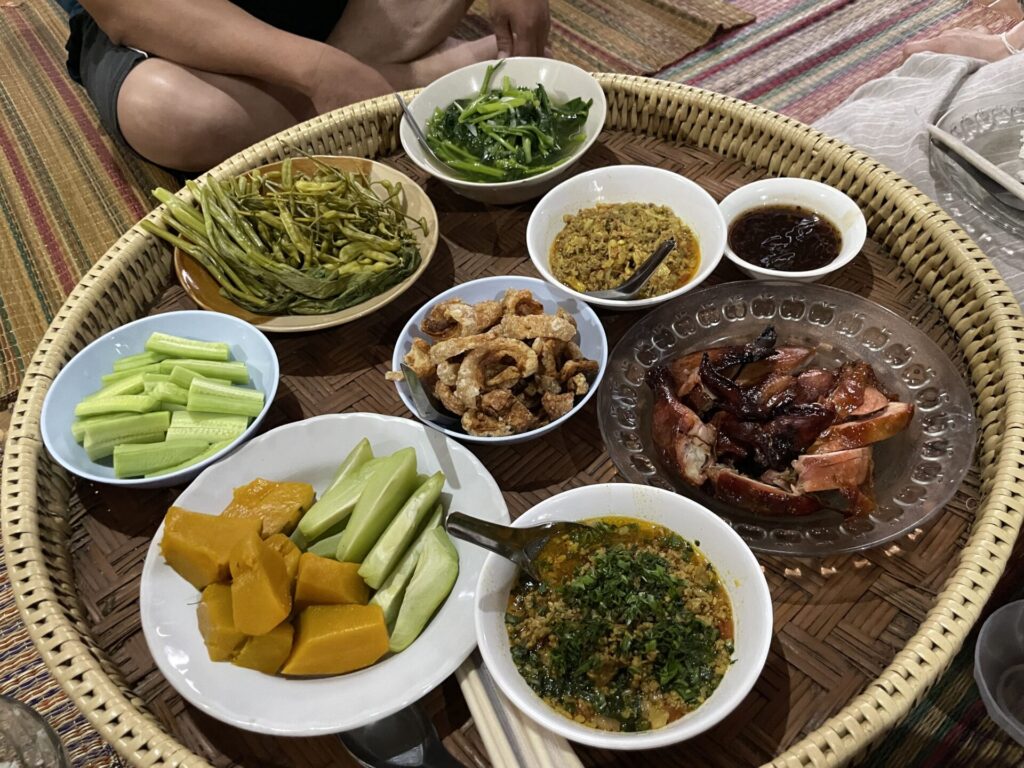
Day2:Discover the art of living
6:30 Wake-up & Alms Giving
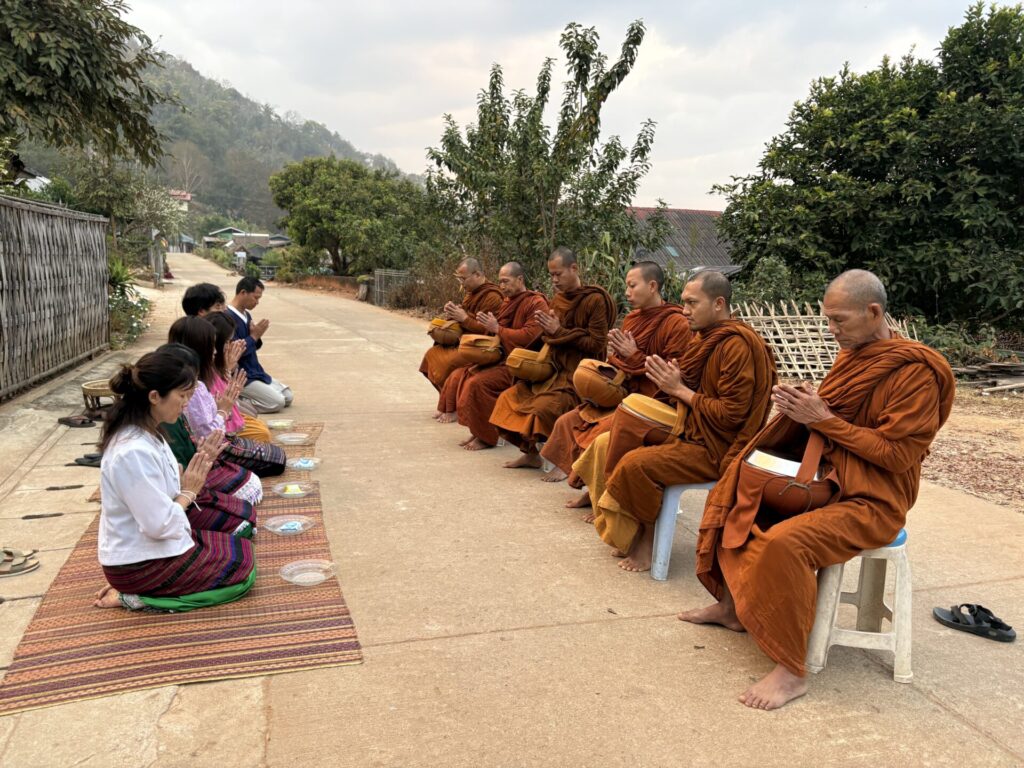
We will offer food to the monks at the village temple as part of the traditional alms-giving ritual.
9:30 Forest hike and survival cooking
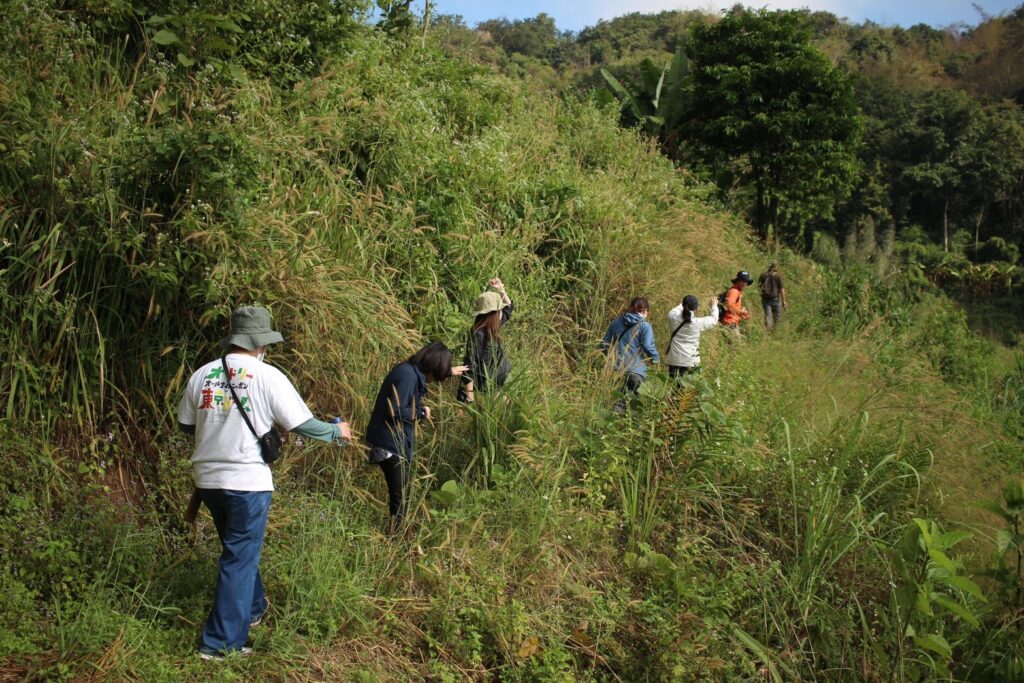
The main highlight of this trip is the forest trek and outdoor cooking experience.
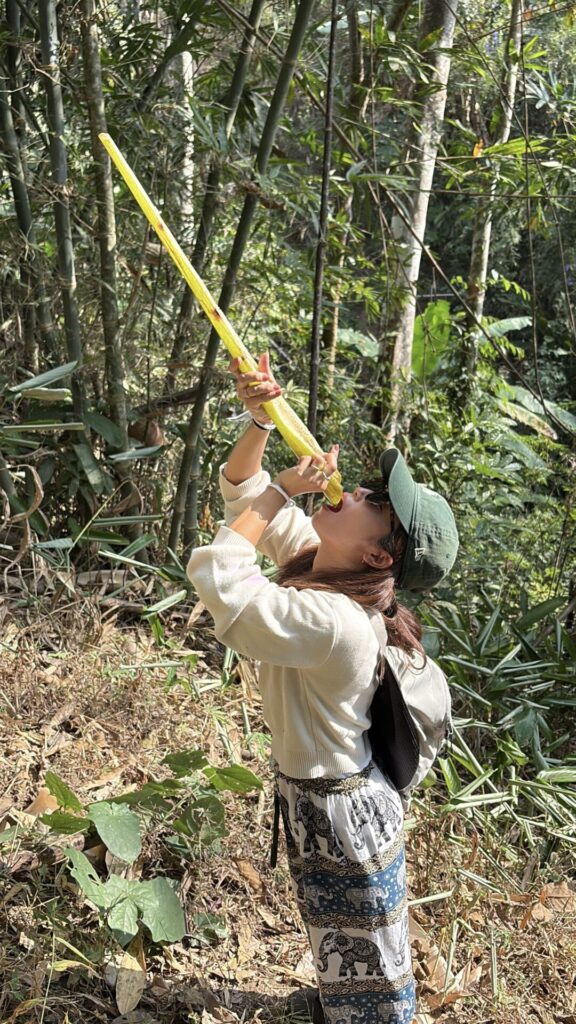
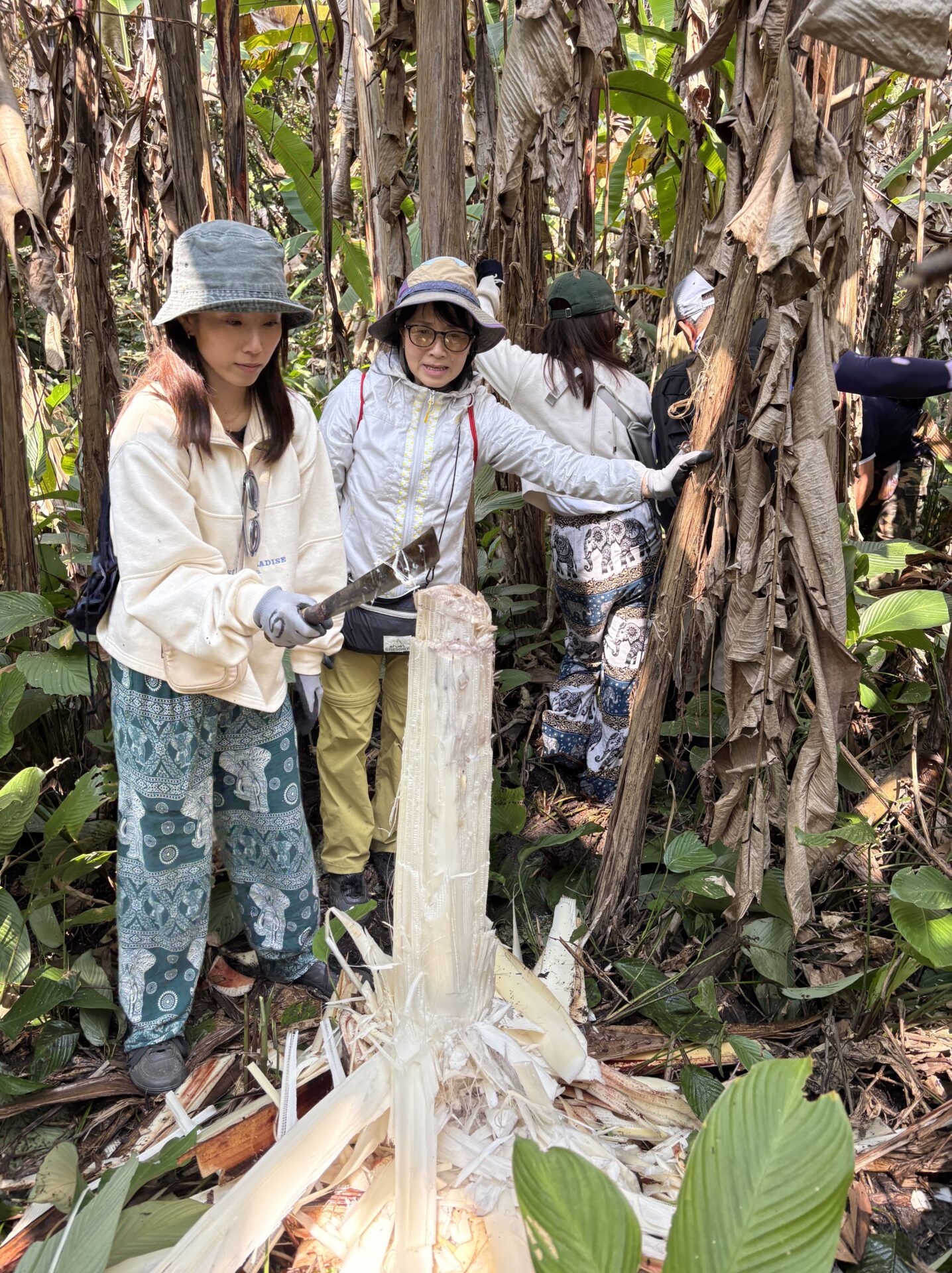
Then, using a knife, we will craft cooking pots and utensils from bamboo, and gather banana blossoms and stems from the forest to use as ingredients.
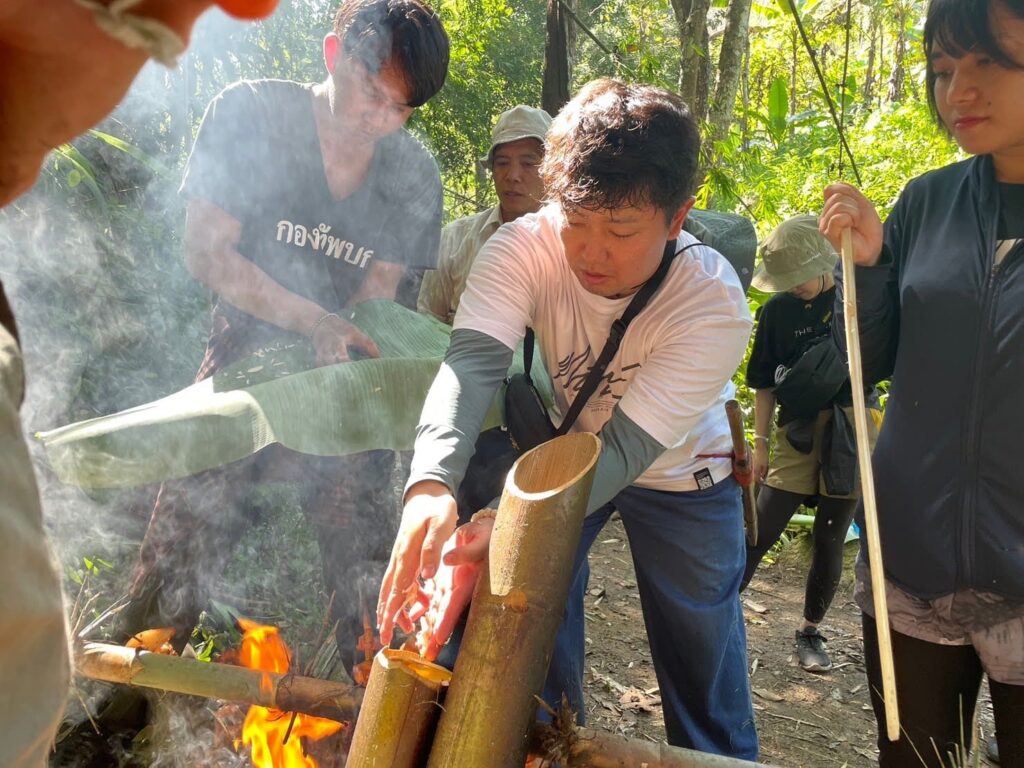
We will cook vegetables and meat in a bamboo pot.
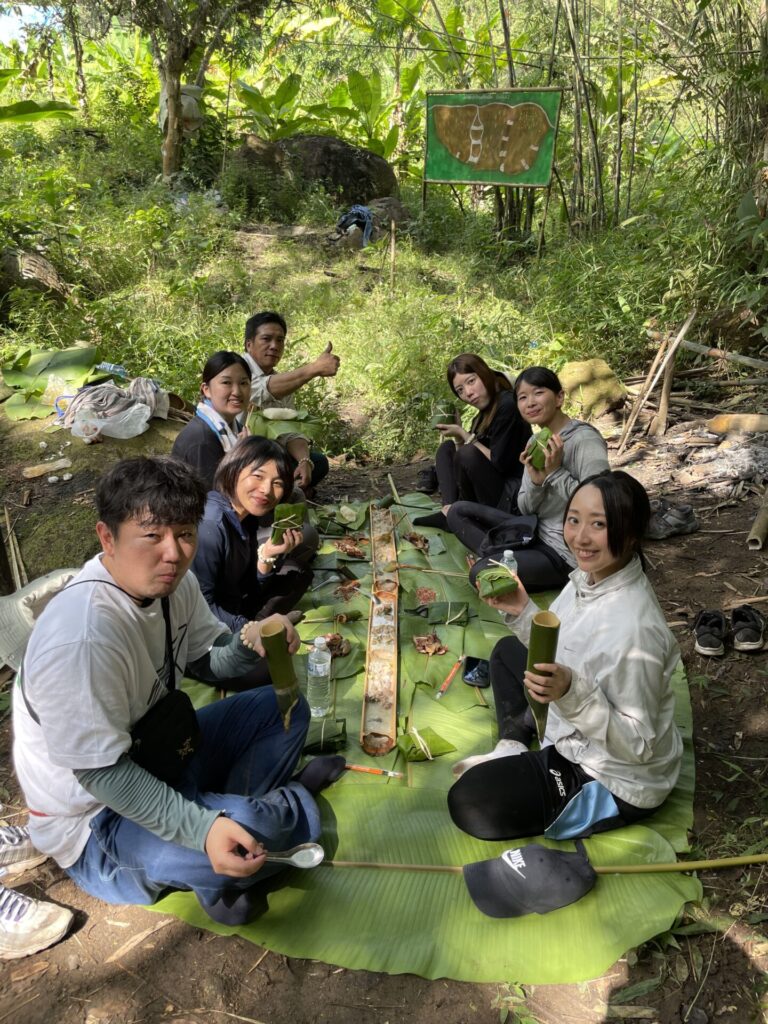
We will enjoy a truly authentic meal in the heart of nature!
For more details, check out the video below.
14:00 Return to the village and take a break
Take a shower and take a rest.
17:00 Cultural exchange and dinner
For dinner, we will have Thai Luu cuisine or "Moo Gat", a Thai dish that combines hotpot and grilled meat.
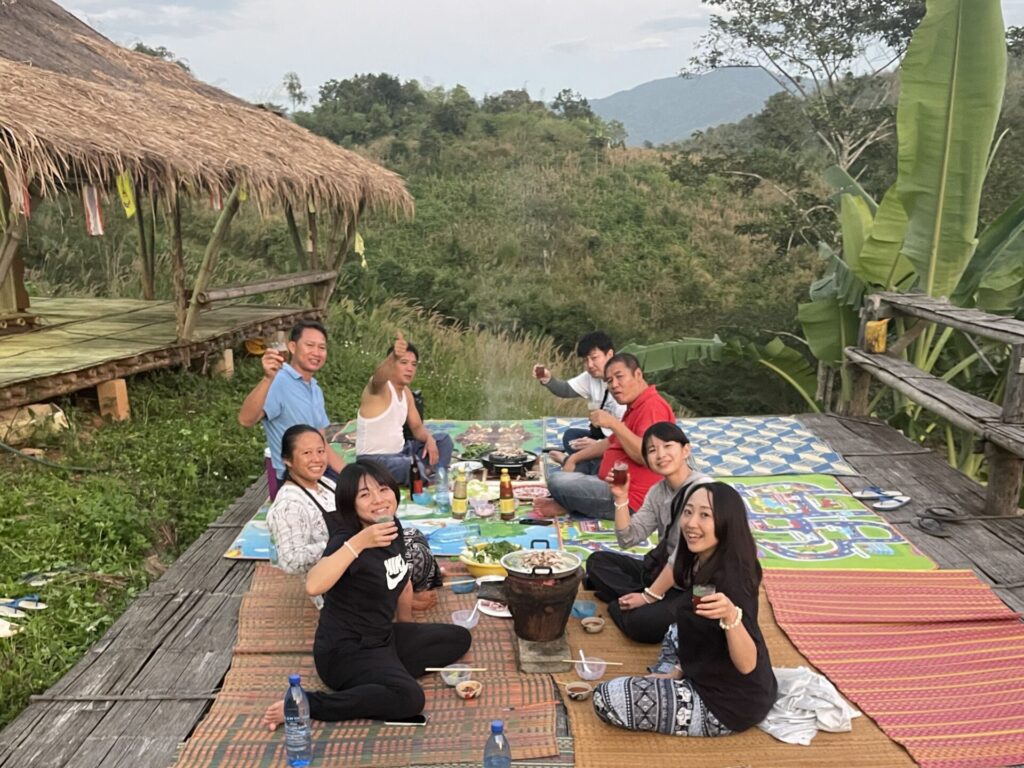
Cultural exchanges with village children can also be arranged upon request.
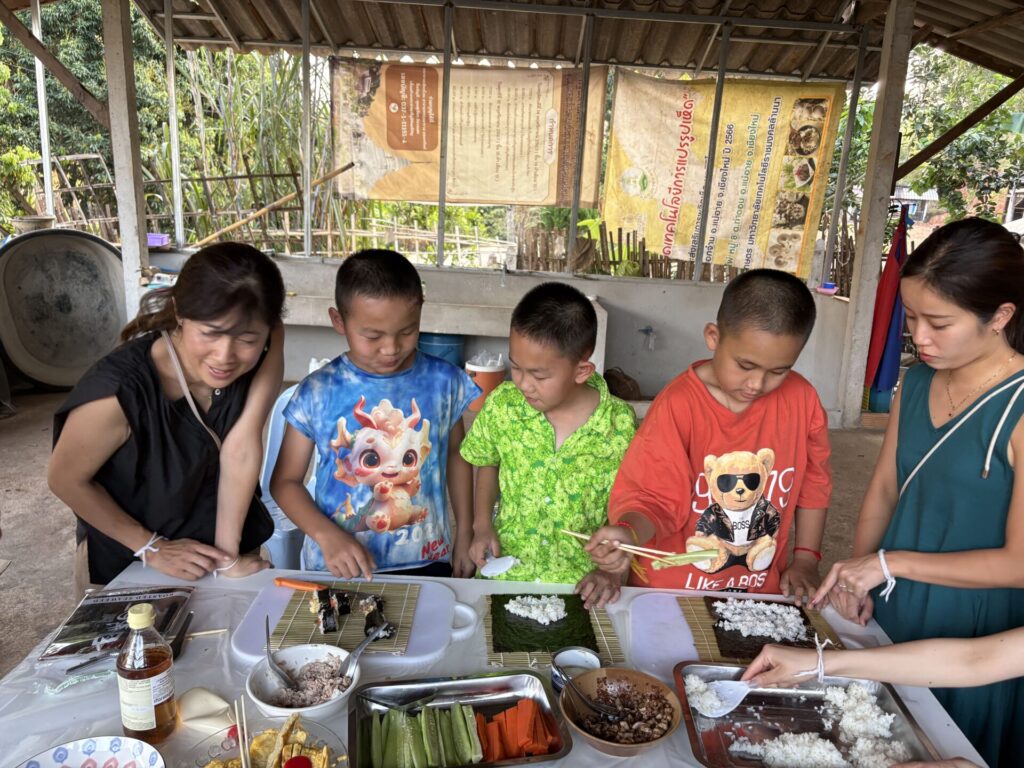
Day 3: Enjoy and Experience Local Cuisine
7:00 Village Walk
Walk around the village and see how the Tailu people live
8:00 Breakfast
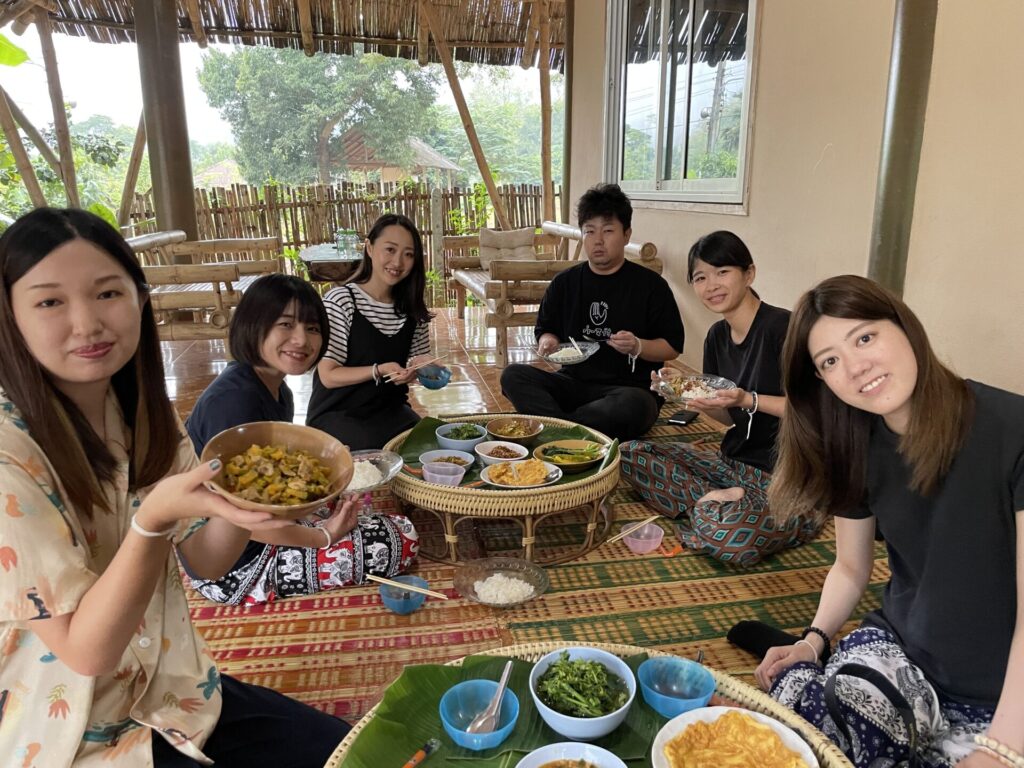
After breakfast there is a short break.
9:00 Cook Tai Lue traditional dish
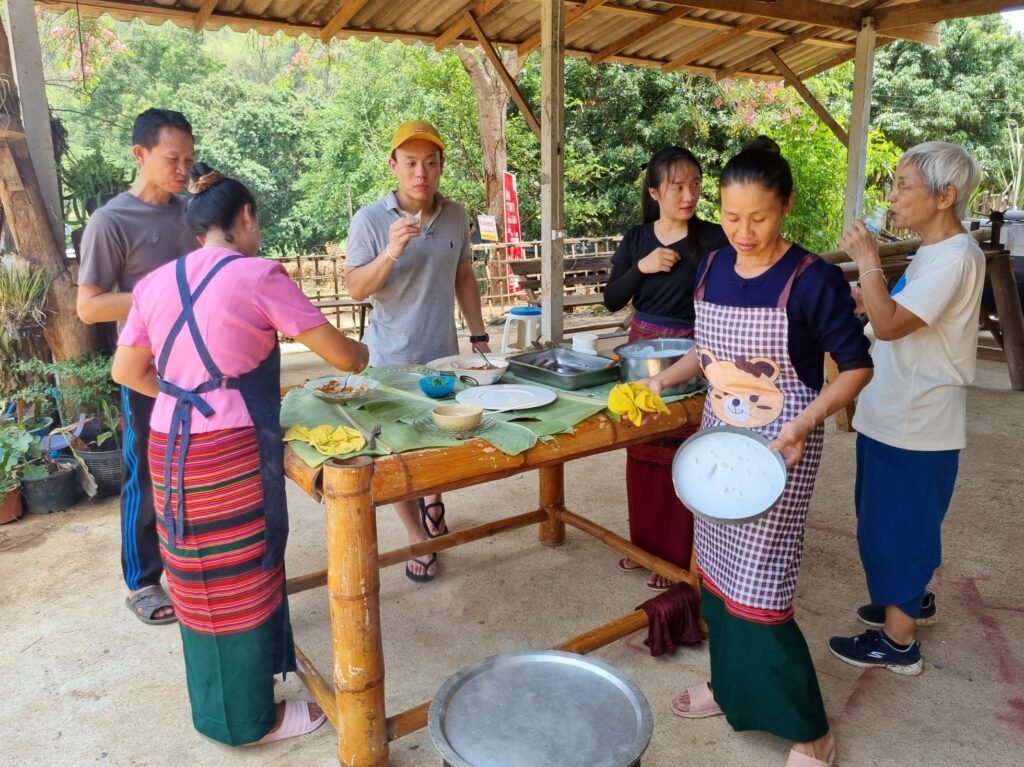
We will cook traditional Tai Lue dishes together with the villagers.
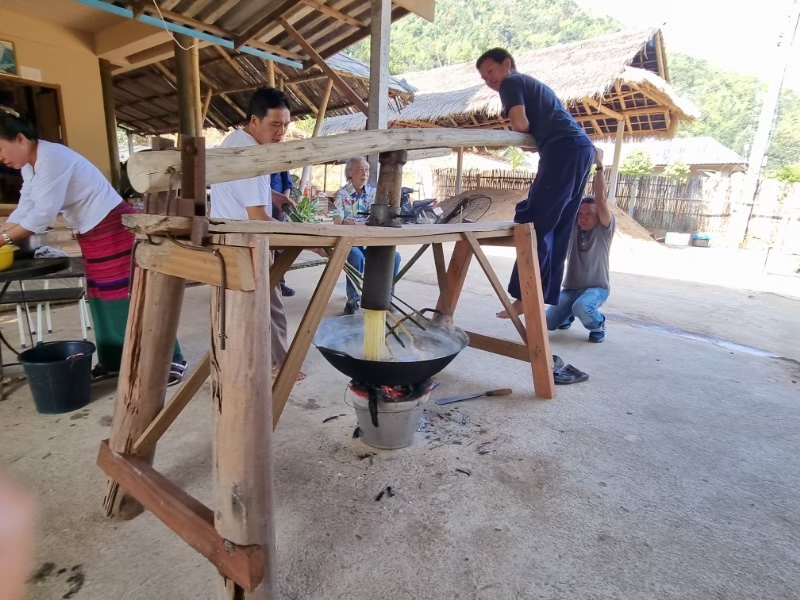
The highlight of this experience is making wild konjac (konnyaku) dishes using ingredients harvested from the village forest.
We will peel the konjac, grind it, shape it into noodles using a lever press, and then boil it.
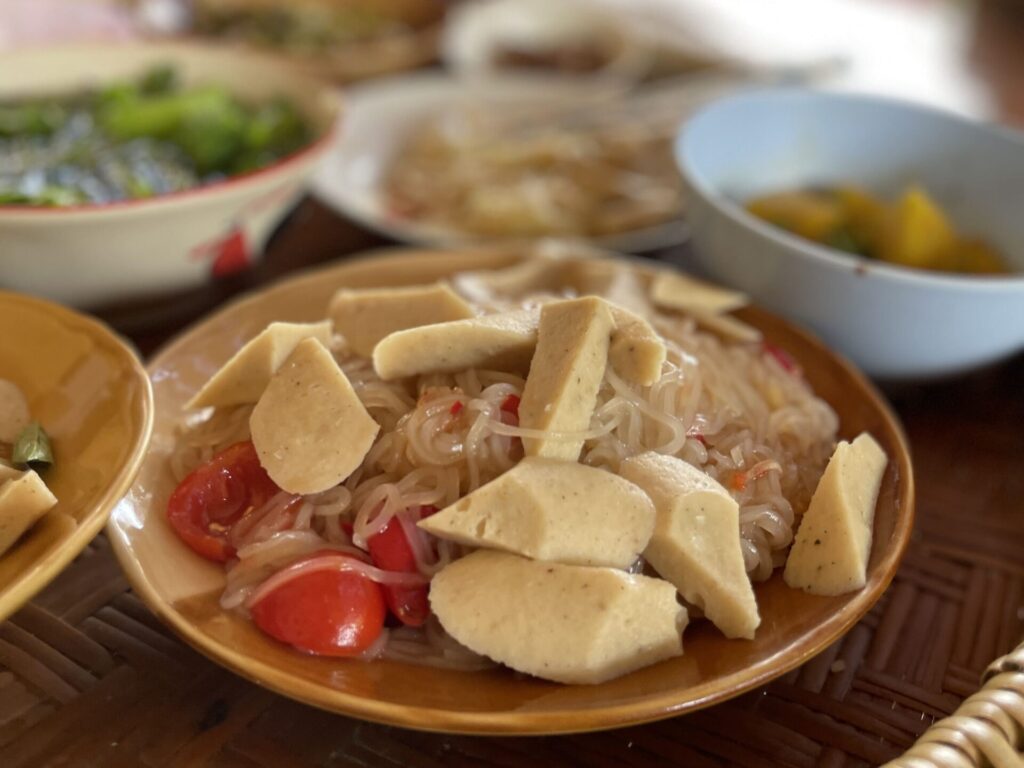
The boiled konjac is then mixed with tomatoes and chili, creating a delicious and flavorful dish.
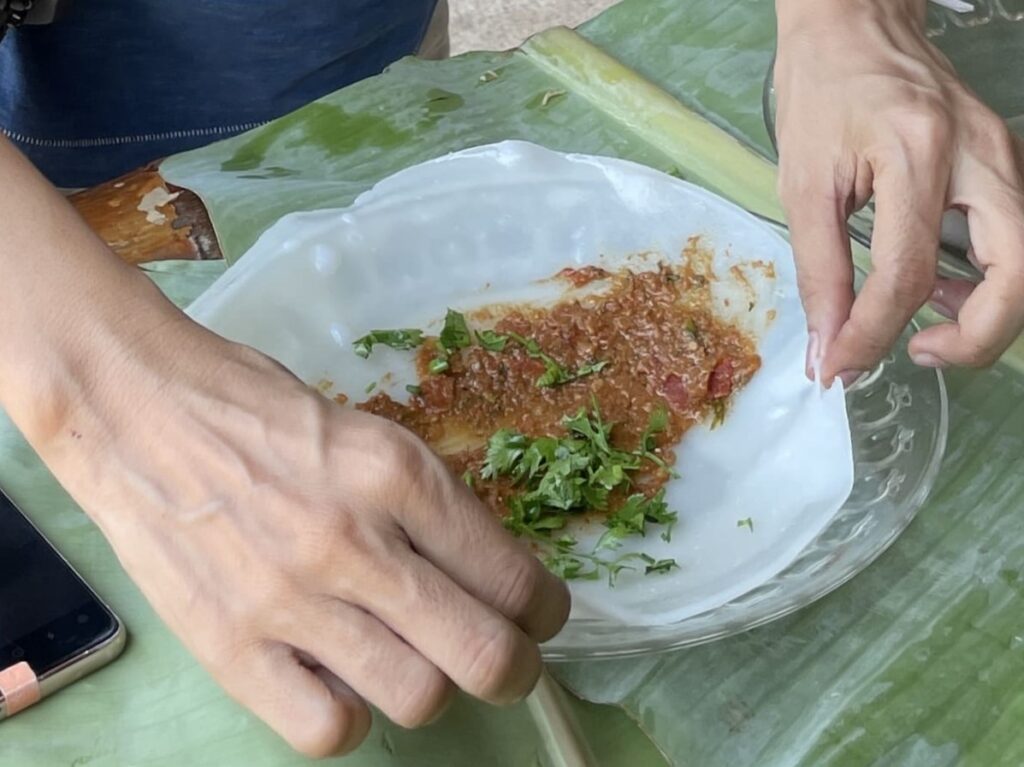
In addition to konjac, we will also make Tai Lue-style Khao Soi, which is different from the typical curry-based Khao Soi. This version even includes fermented soybeans (natto)!
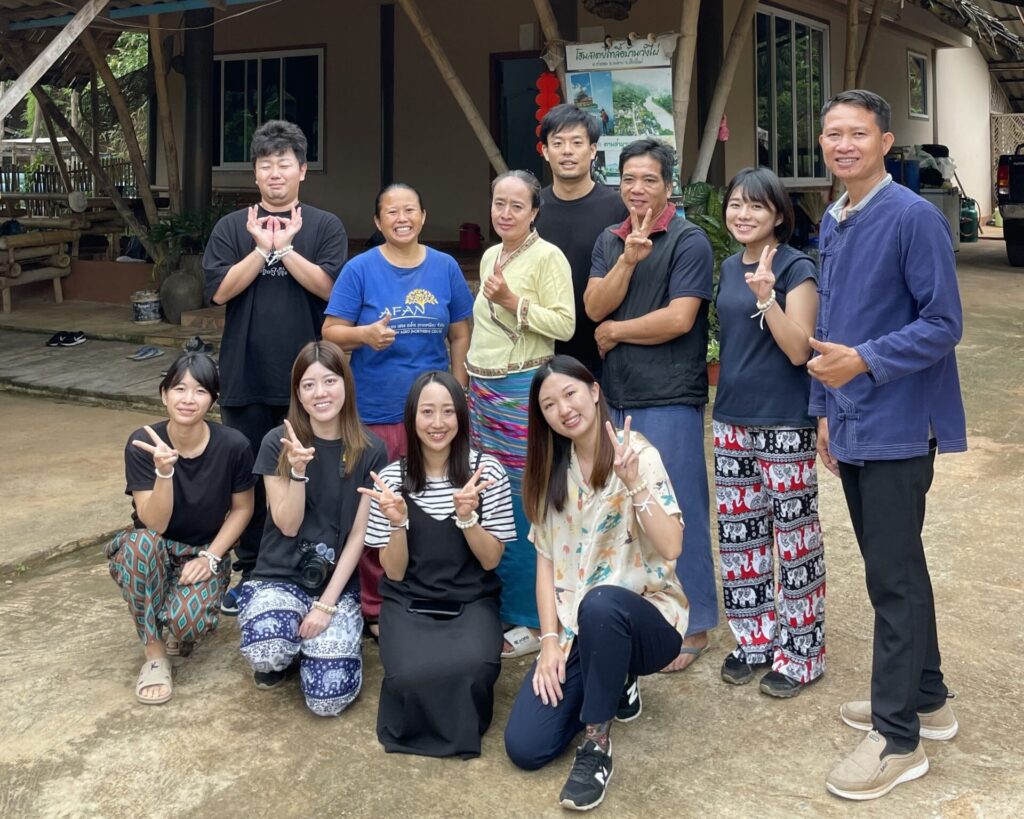
Around 13:00 Depart for Chiang Mai
Although it will be hard to say goodbye, we will take a group photo before leaving the village.
18:00 Return to Chiang Mai
We will head back to Chiang Mai city, taking breaks along the way.
※ We can also arrange to disband at Chiang Rai Airport or in the city. Please contact us if necessary.
⑥Additional Information
Accommodation & Showers
Simple yet clean lodging with mosquito nets provided.
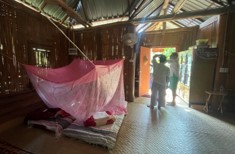
Mosquito nets to keep mosquitoes out.
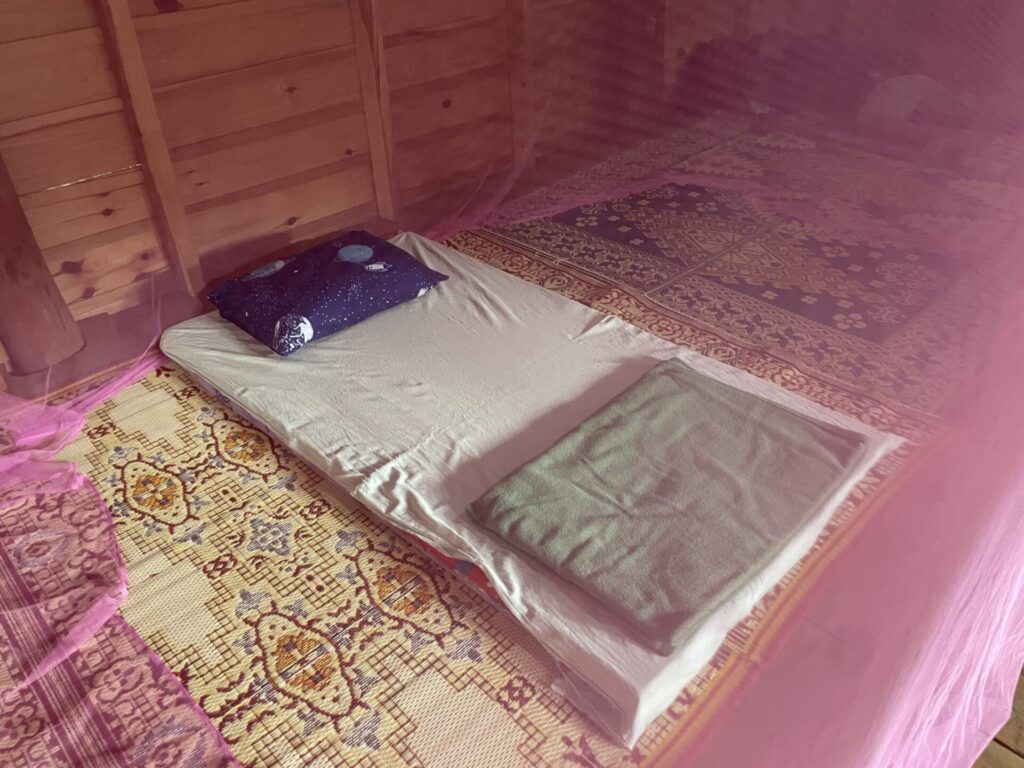
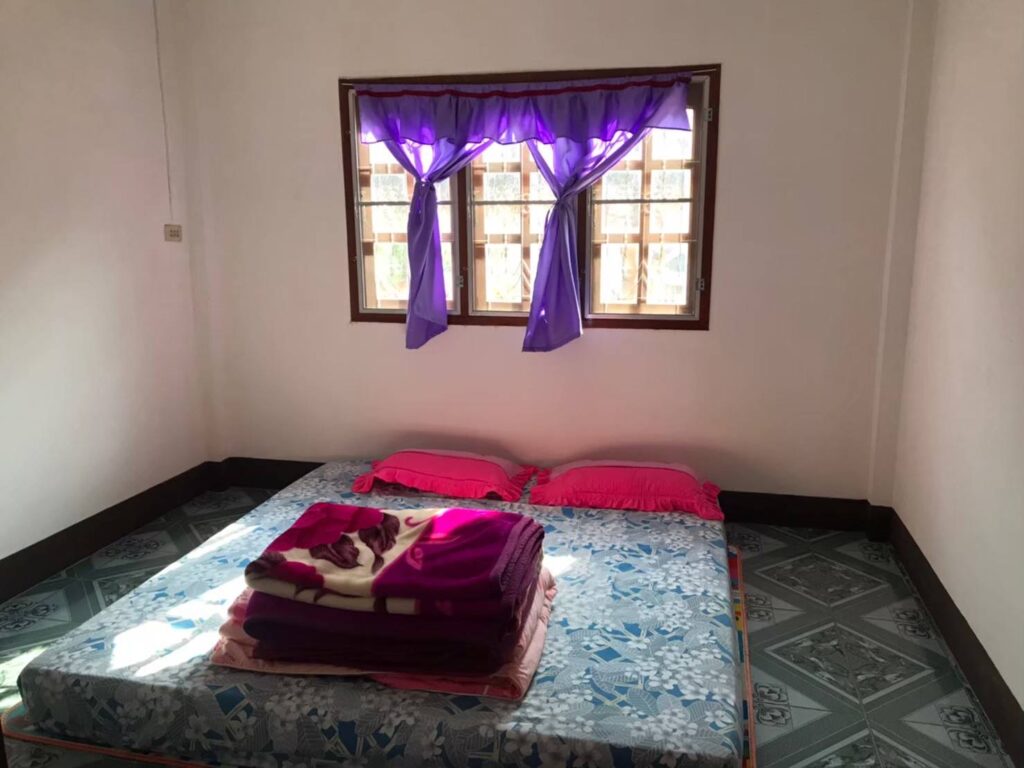
Hot water showers are available.

What to Bring
| Recommendation | Item | Notes |
|---|---|---|
| Essential | Comfortable clothes that can get dirty | Recommended to wear clothes you don’t mind getting dirty. |
| Long-sleeved top and pants | It may get chilly in the mornings/evenings. Also helps with insect protection. Long pants are recommended, especially when crossing rivers to reach the cacao farm. | |
| Personal medication | ||
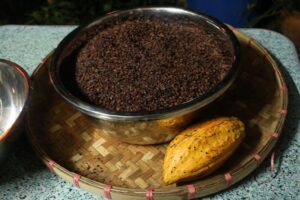
| Comfortable walking shoes | Recommended for visiting the cacao farm. Sandals may expose you to insects or leeches. | |
| Sandals | ||
| Toothbrush | ||
| Nice to Have | Sunscreen | |
| Hat | ||
| Small towel for sweat | ||
| Small bag | Just enough to carry water, towel, and valuables. | |
| Sunglasses | ||
| Shampoo / Conditioner | Please bring if you have a preferred brand. |
For Mountain Hiking
| Recommendation | Item | Note |
|---|---|---|
| Essential | Long-sleeve shirt | Please bring something that can get dirty. |
| Long pants | Same as above. | |
| Thick socks | ||
| Hat | ||
| Sweat towel | ||
| Small bag | Just enough for a water bottle, towel, and valuables. | |
| Optional | Sunglasses | |
| Gloves | Recommended for protecting hands from branches. Non-fabric (synthetic) gloves are better. |
These will be used when going into the forest. Although it is not yet the rainy season, the paths may be muddy after rainfall.
If you do not have clothes or shoes that can get dirty, it is possible to procure or rent them locally. Please consult with us in advance.
Items Prepared in the Village
We will provide towels, shampoo, conditioner, body soap, and a small hairdryer in the village.
If you have specific preferences for shampoo or conditioner, we would appreciate it if you could bring your own.
Additionally, we will prepare shoes for mountain walks. Please let us know your shoe size in advance.
Important Notes
- Since the forest is very close, there may be insects or lizards nearby. They generally pose no harm. We provide mosquito nets for sleeping areas.
- Depending on the weather and conditions, the planned program may not proceed as scheduled.
If you'd like to participate, please contact us using the inquiry form below or our Instagram account.
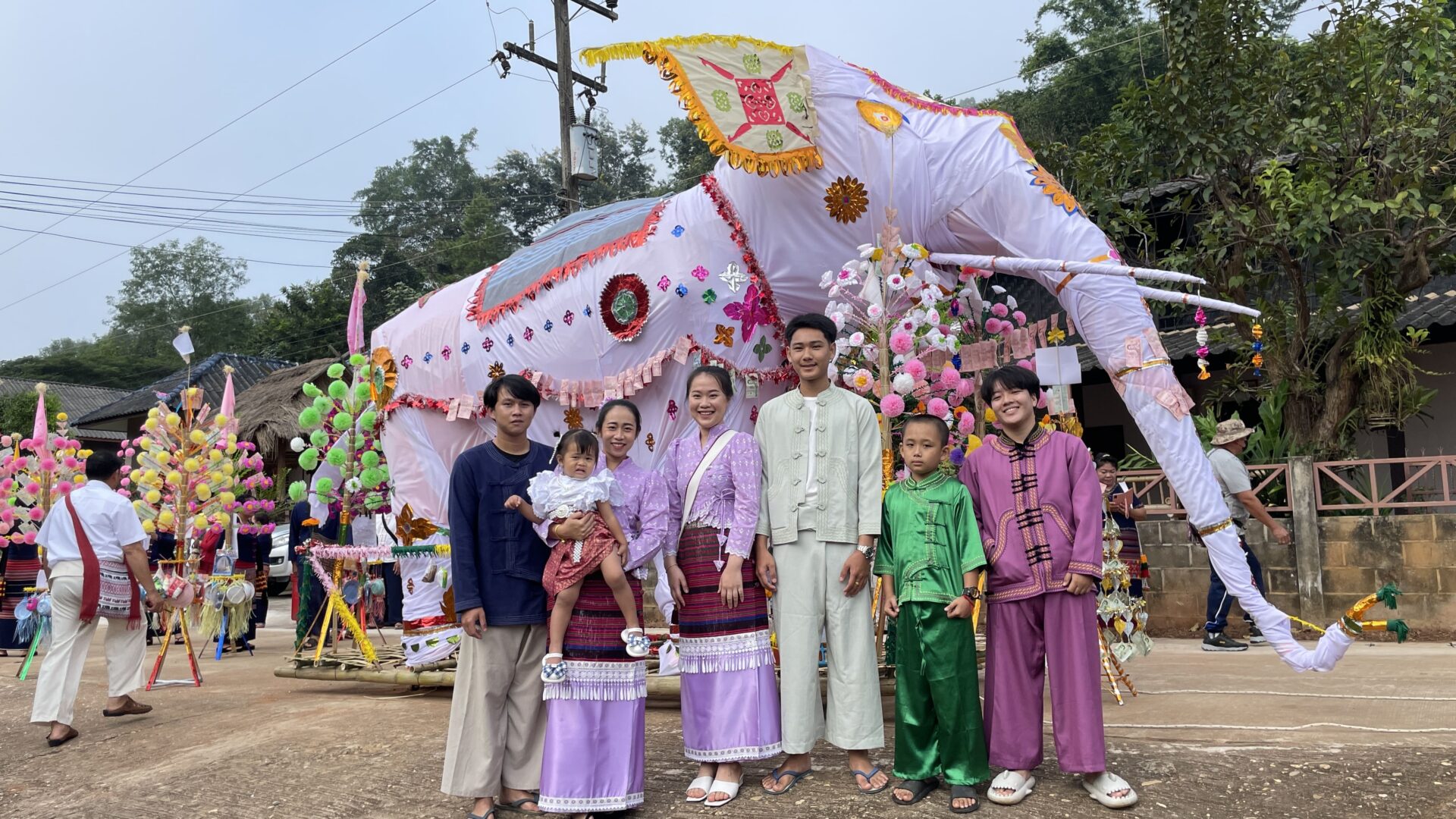
Wanpai Village also holds the following elephant festival every November!