100% Organic & Clay-Pot Roasted Coffee from a Karen Village
 チェンマイ坂田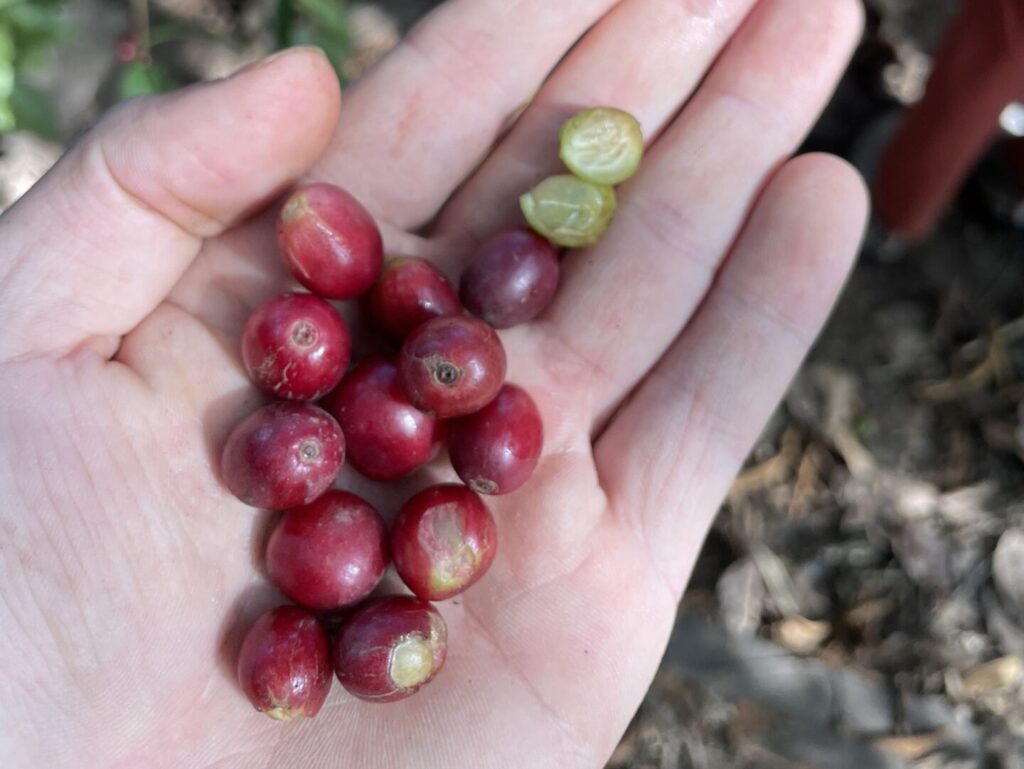
Deep in the mountains of northern Thailand lies Huai I Khang, a village in Mae Wang District, Chiang Mai Province.
Here, the Karen community lives closely with the forest. They grow Arabica coffee using the natural conditions of the land around them.
Every cup tells a story. From planting and harvesting to the final pour, each step depends on nature, patience, and a remarkable amount of care. Here is a closer look at the people and the process behind this village coffee.
For more on the history of Thai coffee, see this article by the Tourism Authority of Thailand (in Japanese).
100% Organic Coffee, Grown with Nature
What makes Huai I Khang coffee special is its fully natural approach to growing.
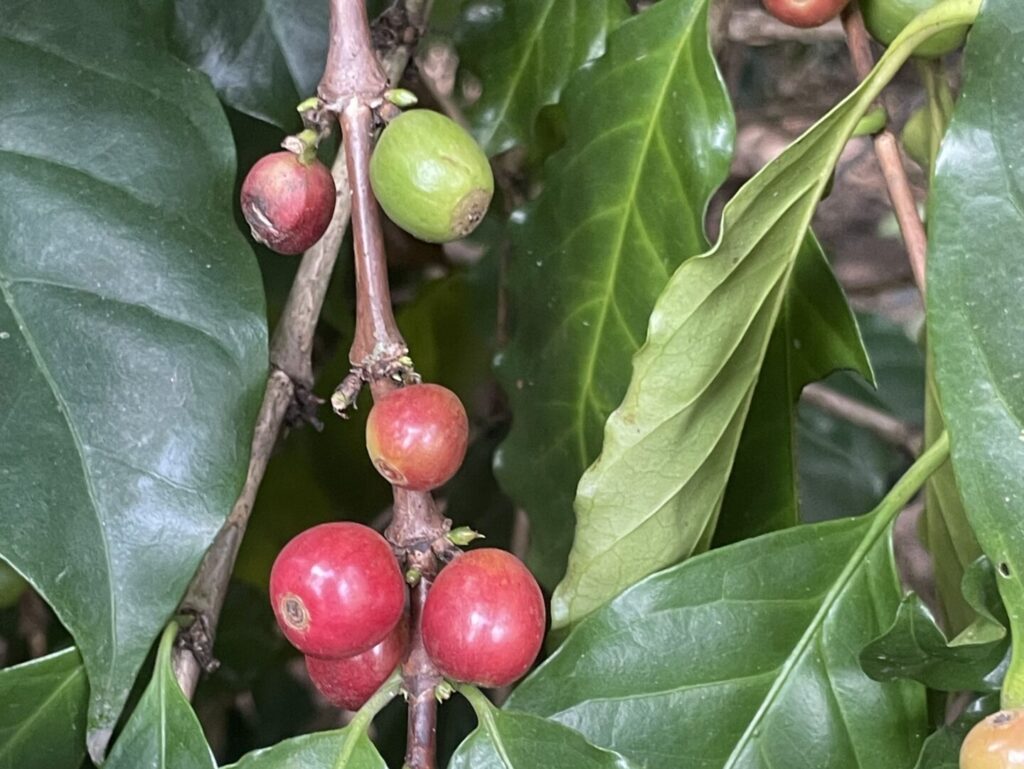
There is no irrigation, no tilling of the soil, and no added fertilizer. The coffee grows in the shade of trees, relying on rainfall, the soil, and Chiang Mai’s mountain climate. The village sits at around 1,000–1,100 meters above sea level.
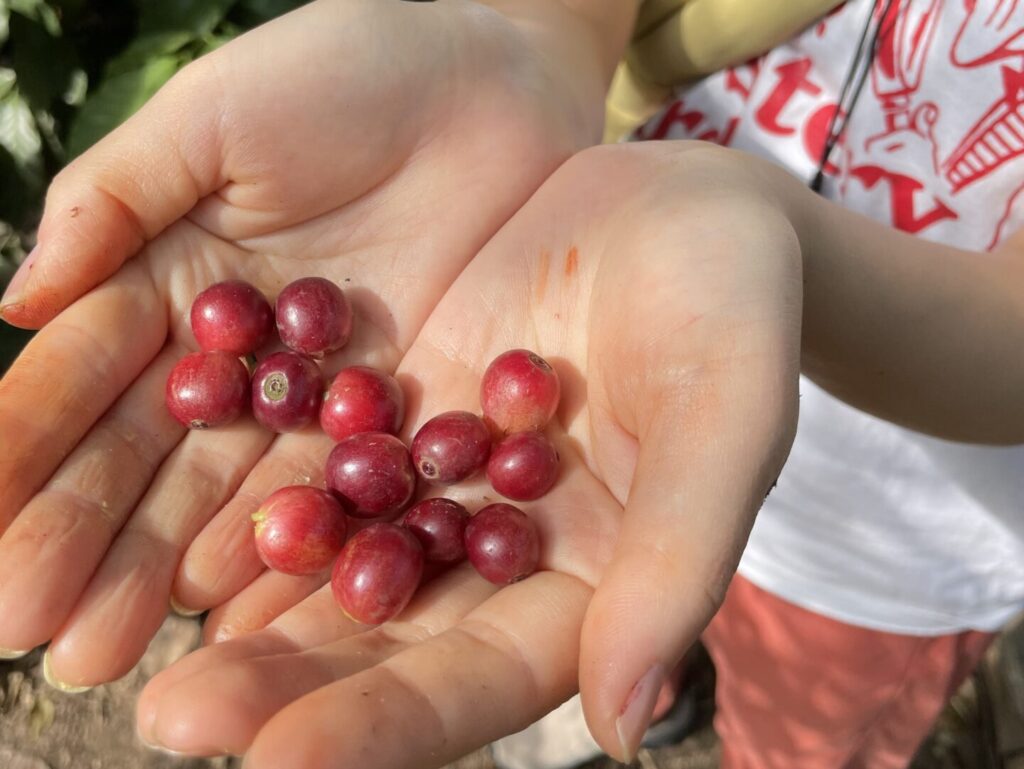
By allowing the plants to grow with minimal human intervention, the villagers produce coffee with a rich flavor of its own.
A Slow, Careful Journey from Fruit to Bean
After harvest, the coffee cherries—the small fruits that contain the beans—go through a carefully timed process. The village mainly uses the washed process, in which the fruit is removed and the beans are fermented and washed before drying.
1. First Fermentation: 12 Hours
The freshly harvested cherries are placed in burlap sacks and left to ferment for 12 hours.
2. Removing the Fruit and Fermenting Again: 20 Hours
A machine removes the skin and flesh from the cherries. The beans are then washed and left in a small amount of water to ferment for another 20 hours.
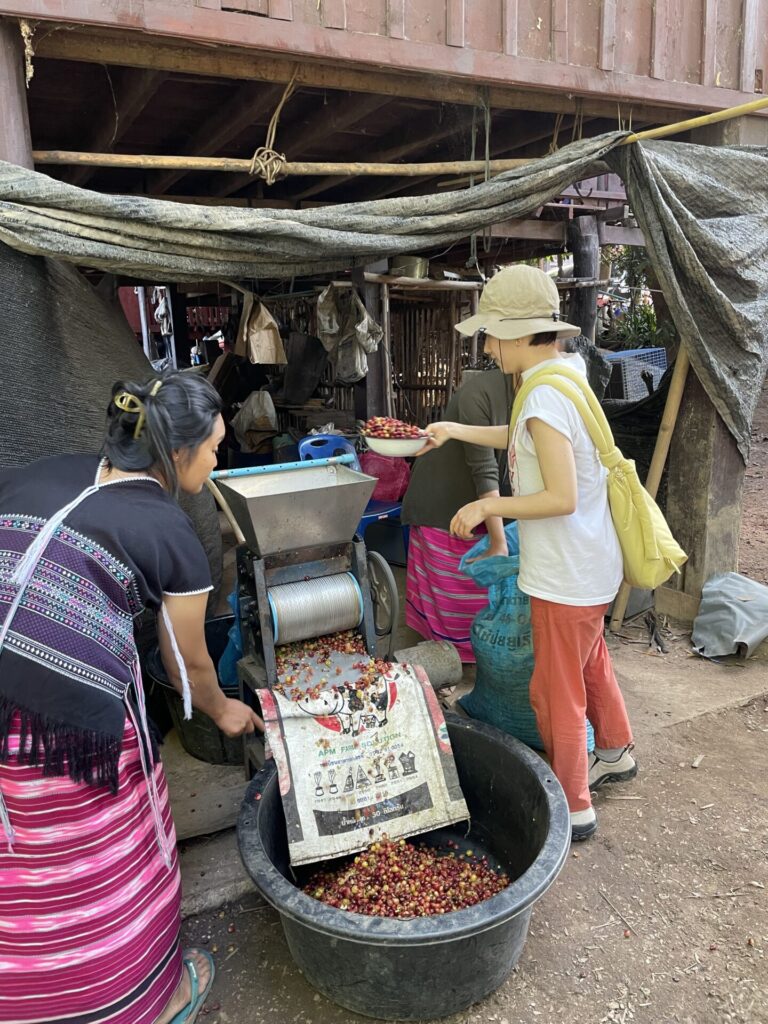
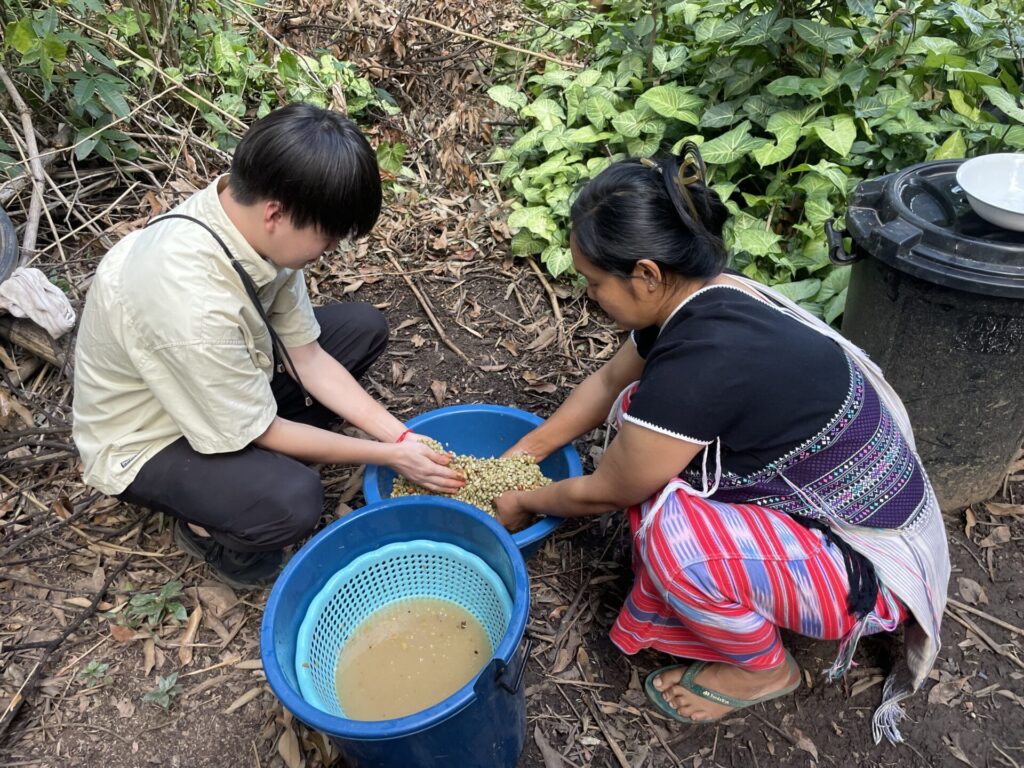
After fermentation, the beans still feel slightly slippery to the touch.
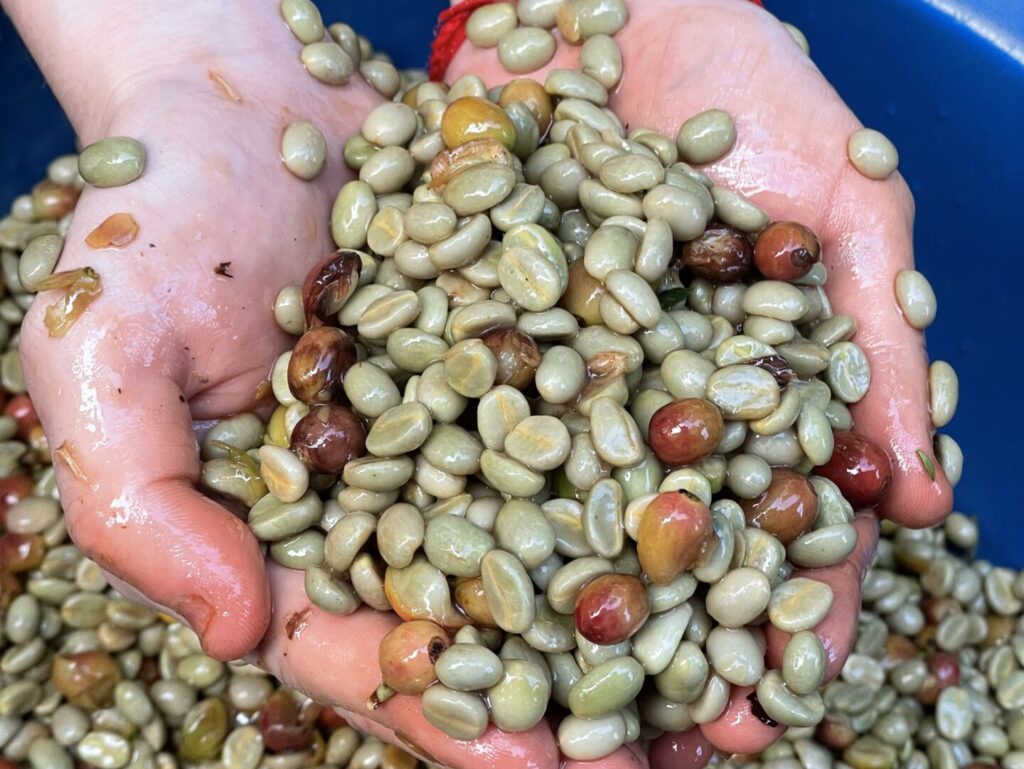
3. Drying in the Sun: 3–4 Weeks
The beans are washed again, then spread out to dry slowly in the sun for three to four weeks. Every bean is handled with care.
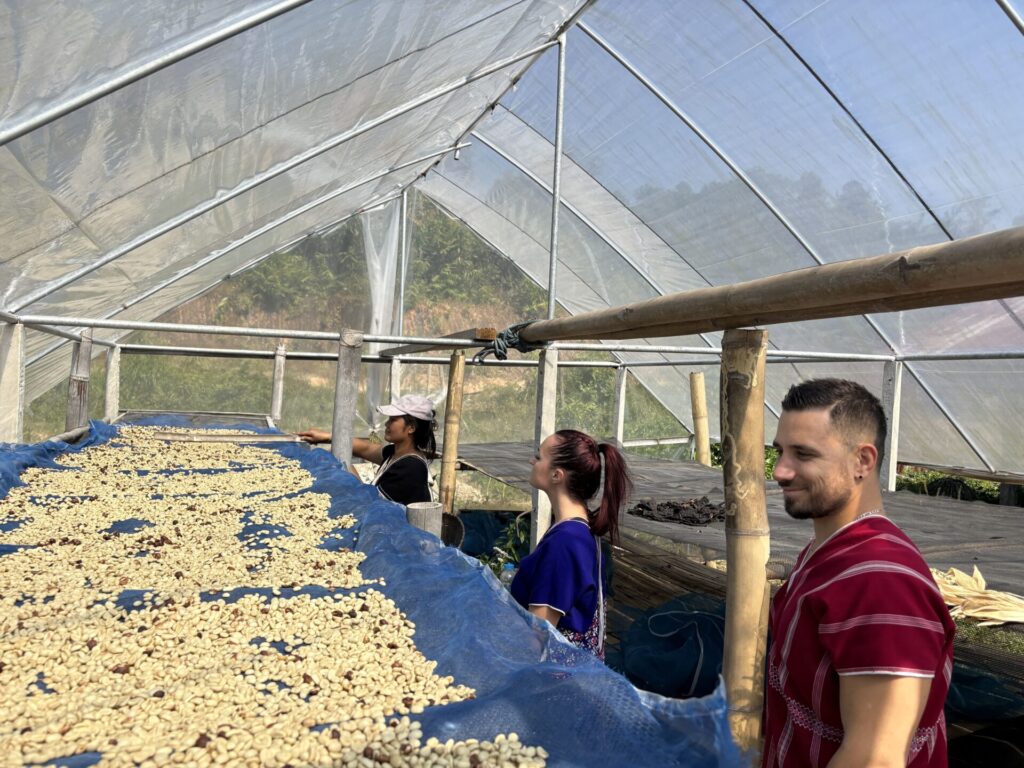
If you visit between around mid-November and February, you may be able to see this process on Yati’s village tour.
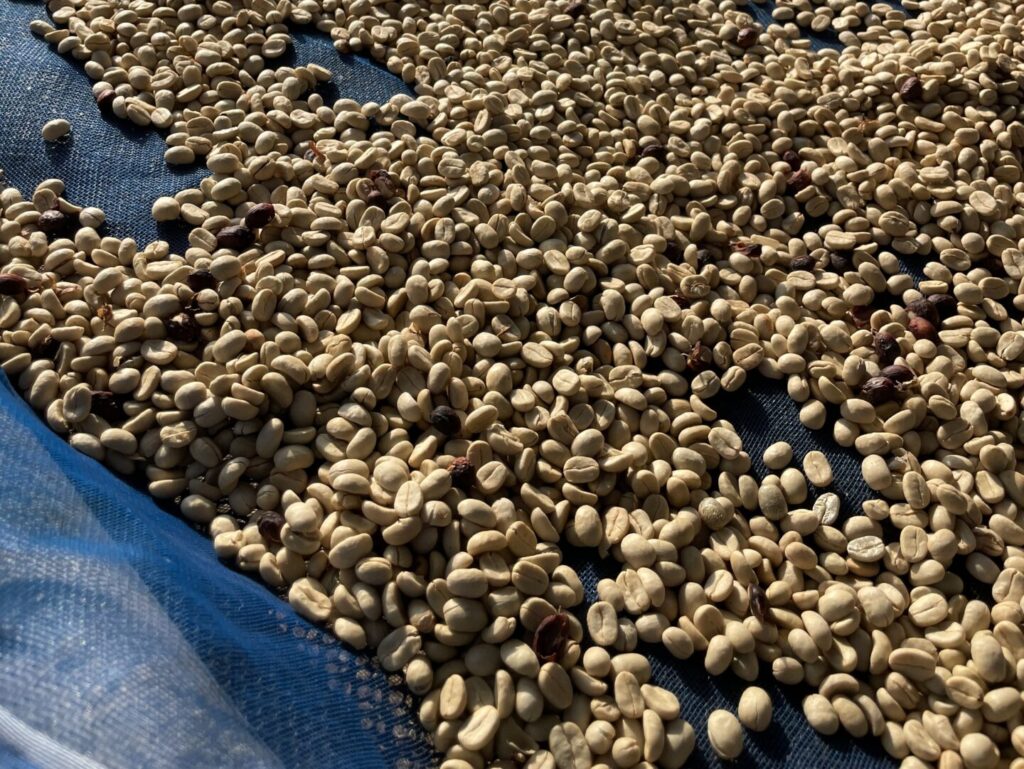
4. Resting the Beans: 3–5 Months
Once dry, the beans are stored for three to five months with their parchment—the thin, protective outer layer—still attached.
This resting period helps even out the moisture in the beans and allows their flavor to settle.
Only after this long period of careful storage is the parchment removed. The beans are finally ready for roasting.
The Skill Behind Clay-Pot Roasting
In Huai I Khang, coffee is roasted in a traditional clay pot, called mor din (หม้อดิน) in Thai.
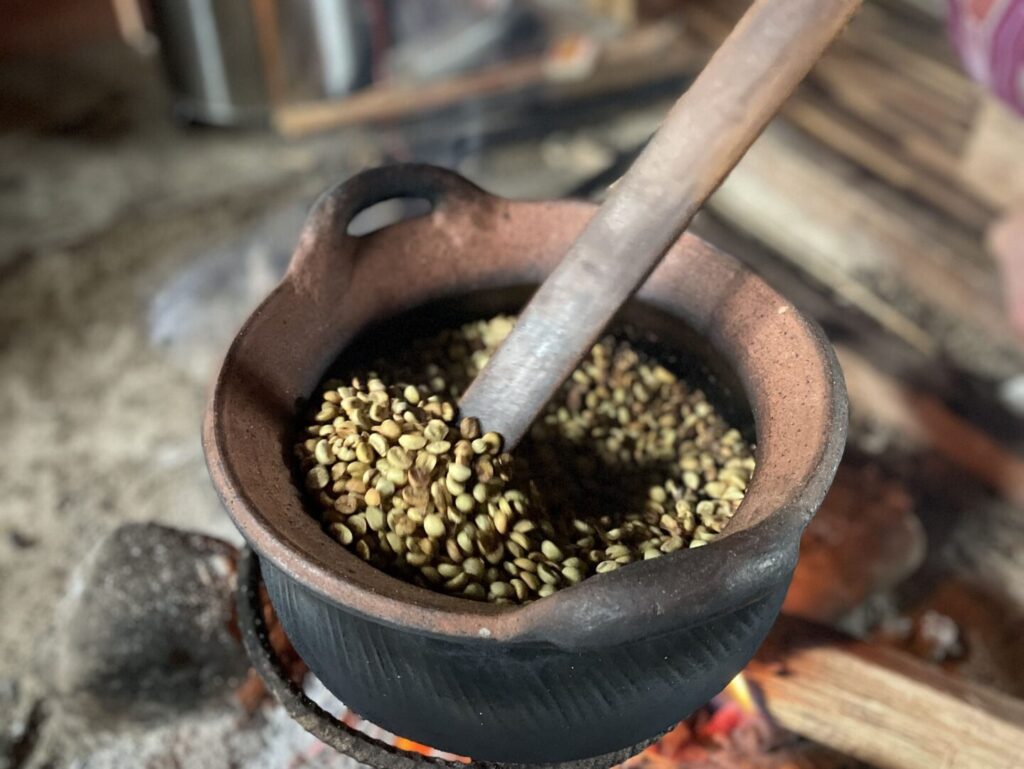
The method uses an open flame and heat radiating from the clay pot. It takes skill, close attention, and constant movement.
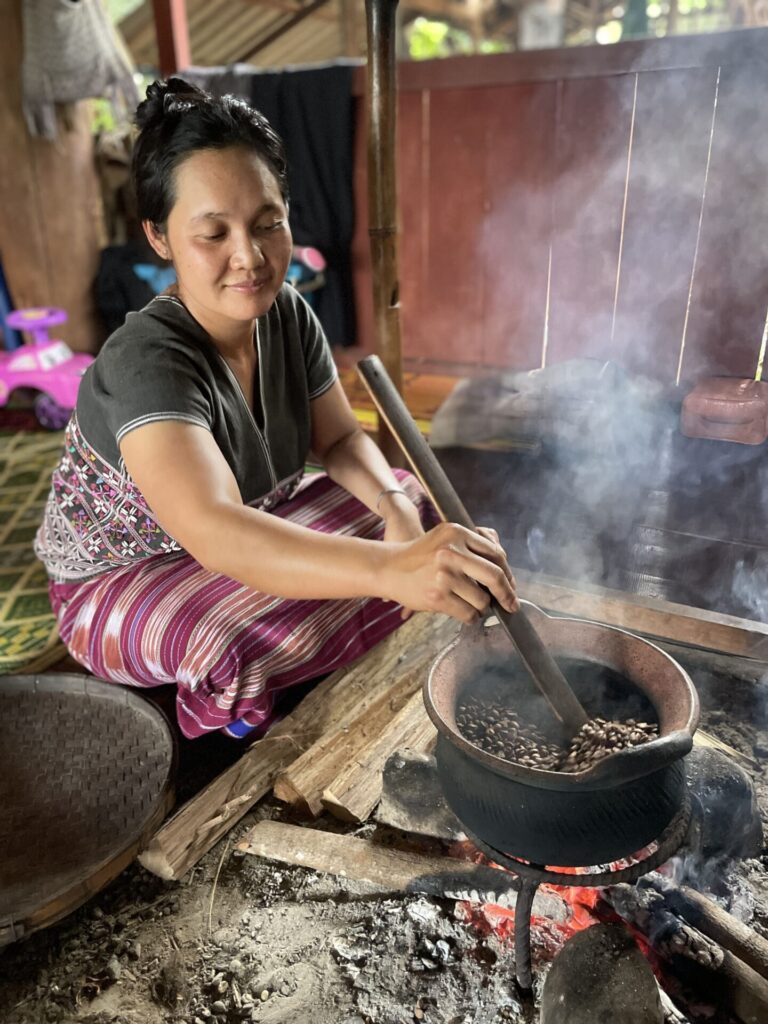
For 25–30 minutes, the roaster carefully adjusts the heat and keeps stirring without a break. The aim is to roast the beans evenly, all the way through.
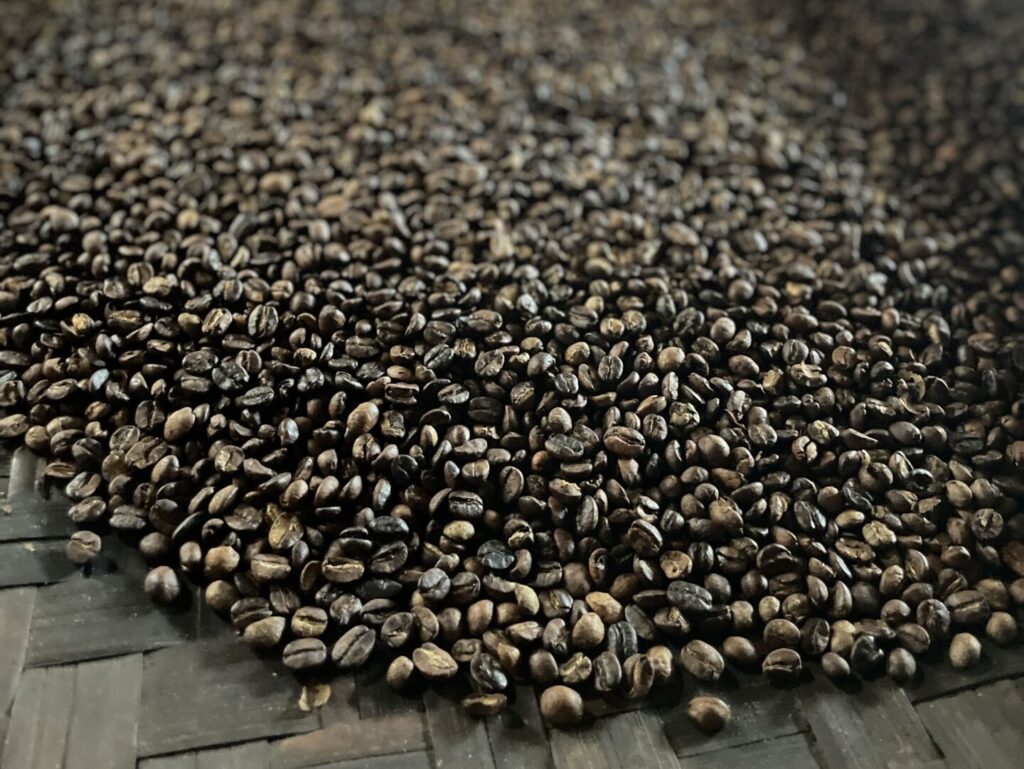
The coffee is then left to rest for another three to five days before brewing. During this time, gases released after roasting escape—a process known as degassing—allowing the coffee’s aroma and sweetness to develop fully.
There is a small story I would like to share here.
Even with all this care, I noticed that some beans were roasted a little darker than others. So I asked Yati, “Wouldn’t it be better to roast all the beans evenly? Have you thought about using a machine?”
She replied, “When lighter and darker beans are mixed together, the flavors come together just right.”
I had always assumed that an uneven roast meant something was wrong. Her answer made me see that there was another way to think about it.
A Medium Roast with the Scent of White Flowers
The finished coffee is a medium roast, chosen to bring out the beans’ individual character.
The first sip has a gentle, pleasant bitterness. Then a delicate floral aroma rises, like white flowers blooming in the forest.
My favorite way to enjoy it is as a simple hot Americano. Each sip brings to mind the quiet forests of Chiang Mai, the warmth of a wood fire, and the care of the Karen people who make it.
This coffee offers a small connection to village life beyond the usual tourist routes. Bring a little of that world into your home, and enjoy a moment outside your everyday routine.
Product Details
| Detail | Description |
|---|---|
| Processing method | Washed process |
| Roast level | Medium roast |
| Growing and roasting | 100% organically grown; roasted by hand in a clay pot |
Visit the Village Where This Coffee Grows
ManiTabi also offers tours to the village where this coffee is grown. Spend time with the Karen community and experience their close connection with nature through local cooking, a herbal sauna, and natural dyeing.