Songkran in Chiang Mai: Best Water Festival Spots, Temple Traditions & Tips
 チェンマイ坂田
How is Songkran in Chiang Mai? Where are the best places to join the water fight? Is there more to it than getting wet?
I live in Chiang Mai, and I enjoyed last year’s Songkran as much as anyone. This guide answers those questions. Songkran is held every year on April 13–15, so use it to plan your next April trip.
What is Songkran?
History and meaning
Songkran is the famous “water festival” held every year from April 13 to 15. It began as a celebration of the time when the sun finishes its yearly cycle and enters the sign of Aries (the start of a new year).
People pour water on Buddha images, pagodas and the hands of elders to bless and purify them.
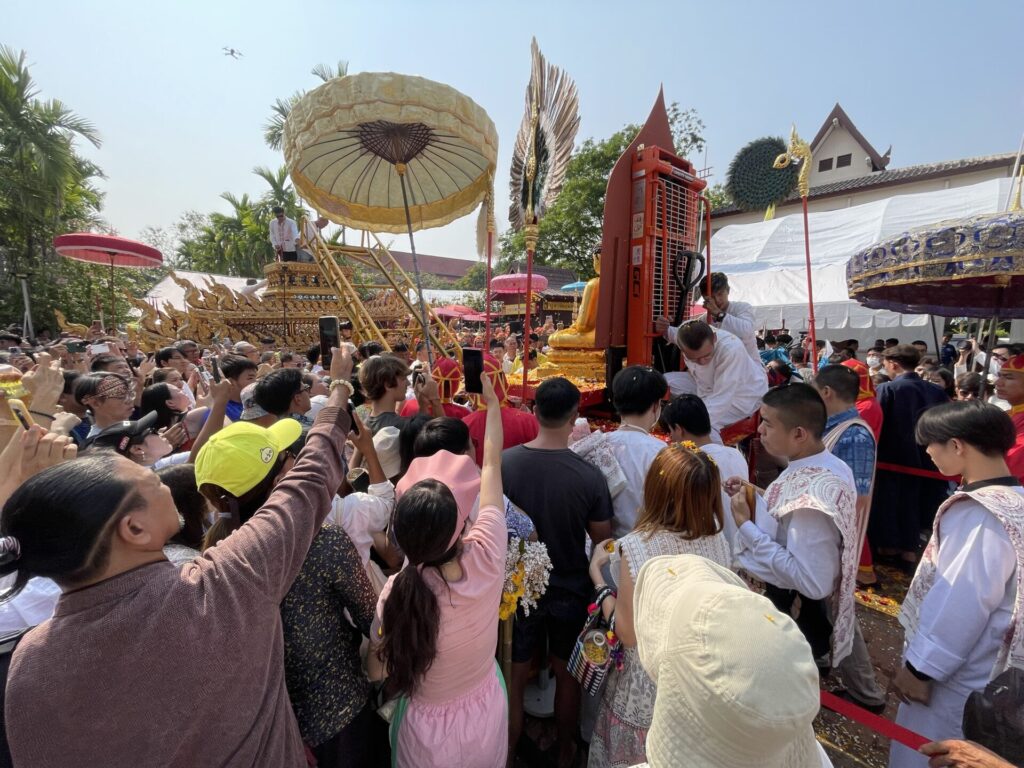
Today, it is best known as a fun street festival where people of all ages splash water on each other.
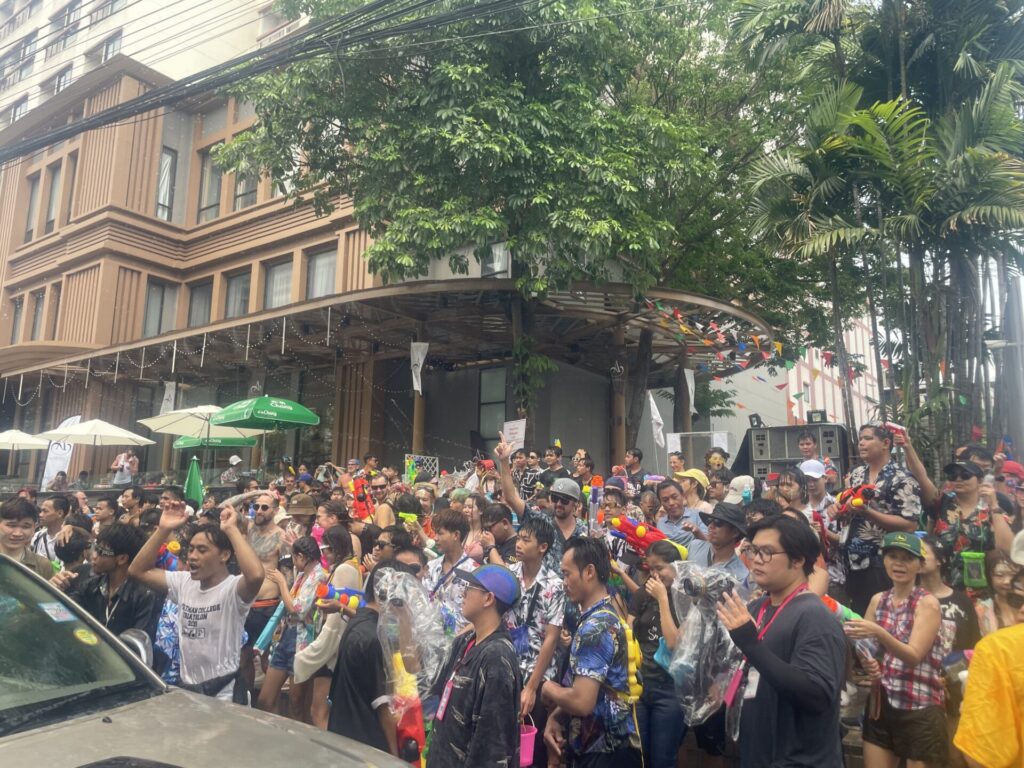
In 2023, UNESCO added Songkran in Thailand to its list of Intangible Cultural Heritage.
Schedule
The main days are April 13–15. The city starts to feel festive around April 12, and it calms down after April 16.
Some restaurants and souvenir shops stay open, and some close for the whole week. Google Maps often does not show this, so you only know when you get there. During Songkran, take it easy: “If a shop is closed, that is okay.”
What do people do?
Many people know Songkran from TV pictures of the water fight. It is a lot of fun, but the traditional and cultural side of Songkran is just as good.
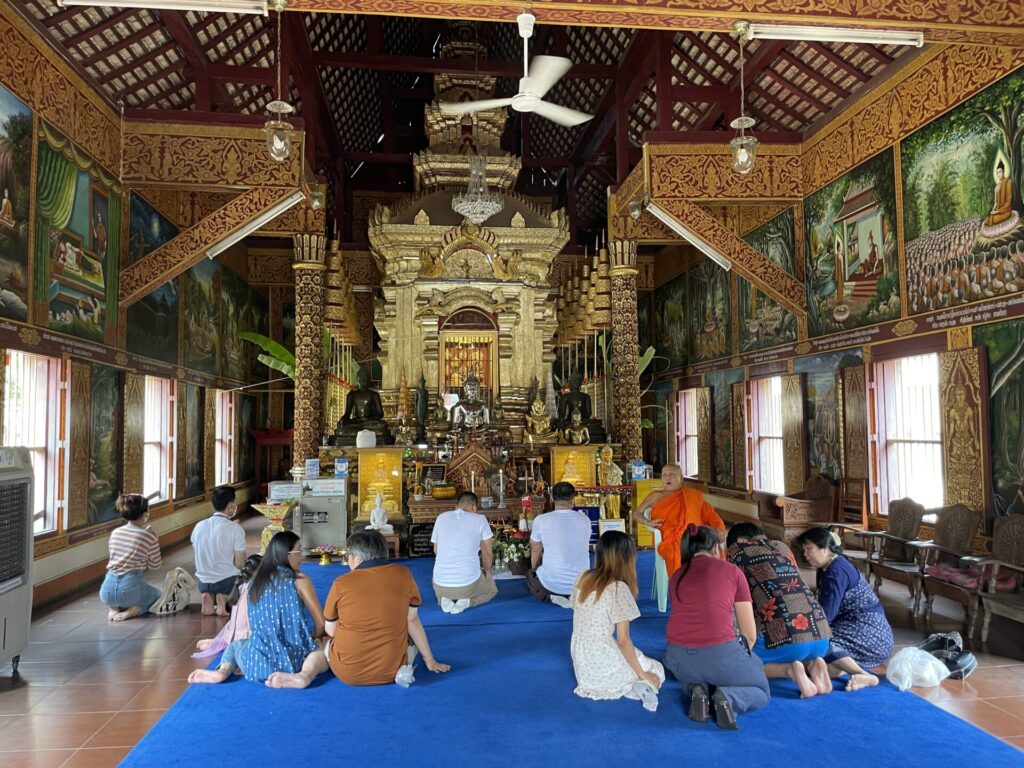
So this guide has two parts: enjoying the water fight and enjoying the traditions and culture.
Part 1: Best places for the water fight in Chiang Mai
During Songkran, the whole city becomes one giant water festival. You will be splashed wherever you walk, so be ready to get soaked. These are the most exciting areas.
1. Tha Phae Gate: the best place for first-timers
If you just want the full Songkran experience, go to Tha Phae Gate.
Tha Phae Gate is the starting point for sightseeing in Chiang Mai, and during Songkran it is almost the main venue.
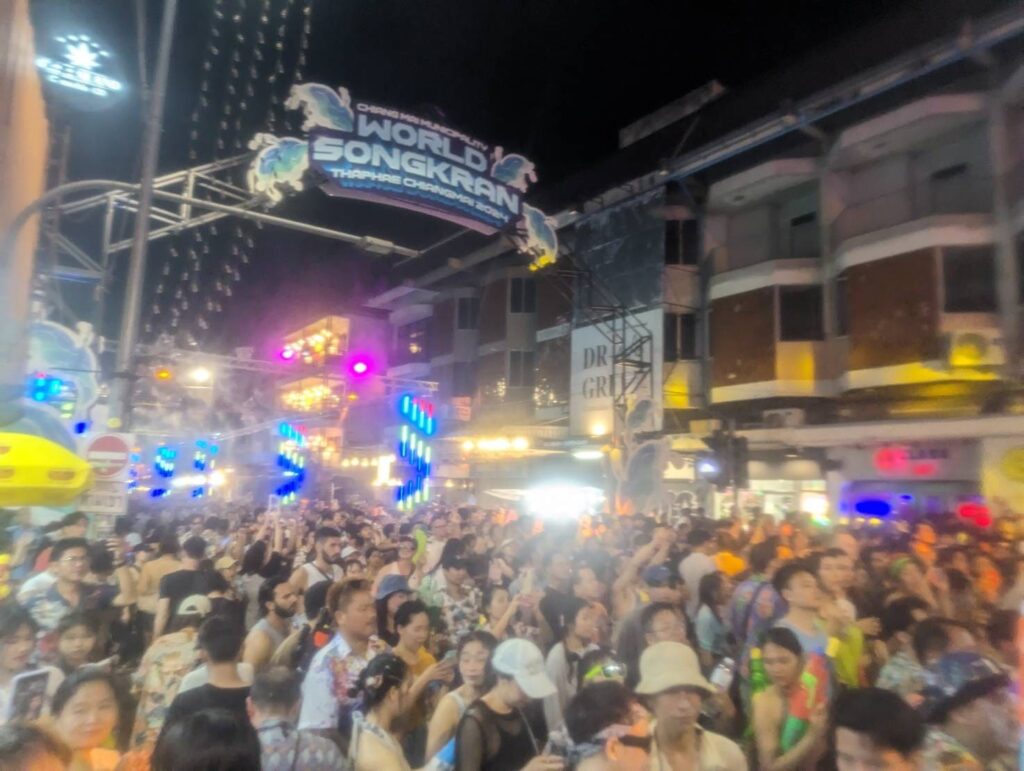
Western visitors, Asian tourists and local Thai people all gather here. The wild water fight goes on until late at night.
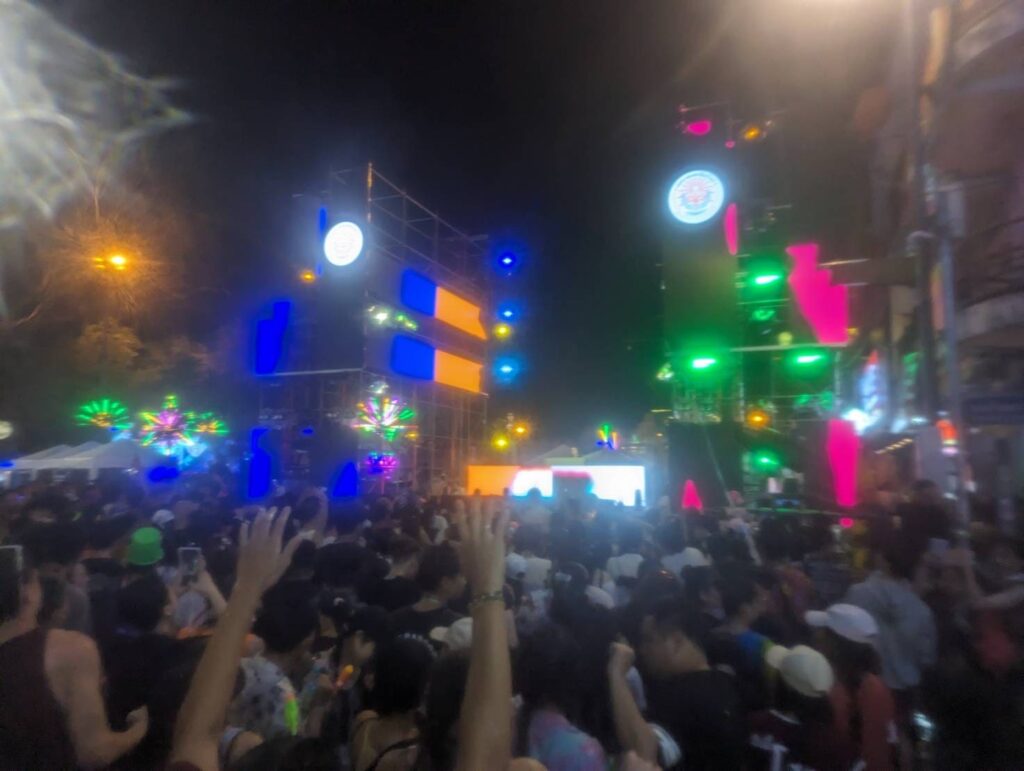
It is the easiest place to feel the real Songkran spirit, and even beginners can enjoy it.
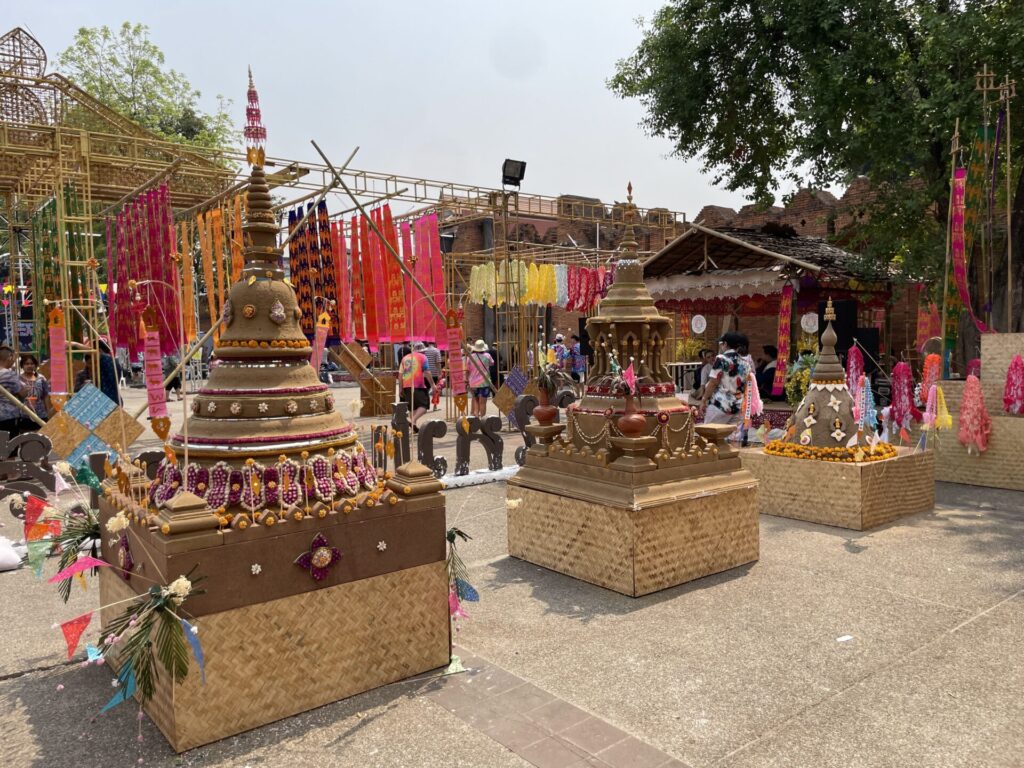
In the daytime you can also see sand pagodas and traditional dance shows.
2. Around the old city moat: the hottest battle zone
Water from all sides, 360 degrees!
The road along the moat around the old city is a water battle zone where locals and tourists are mixed together.
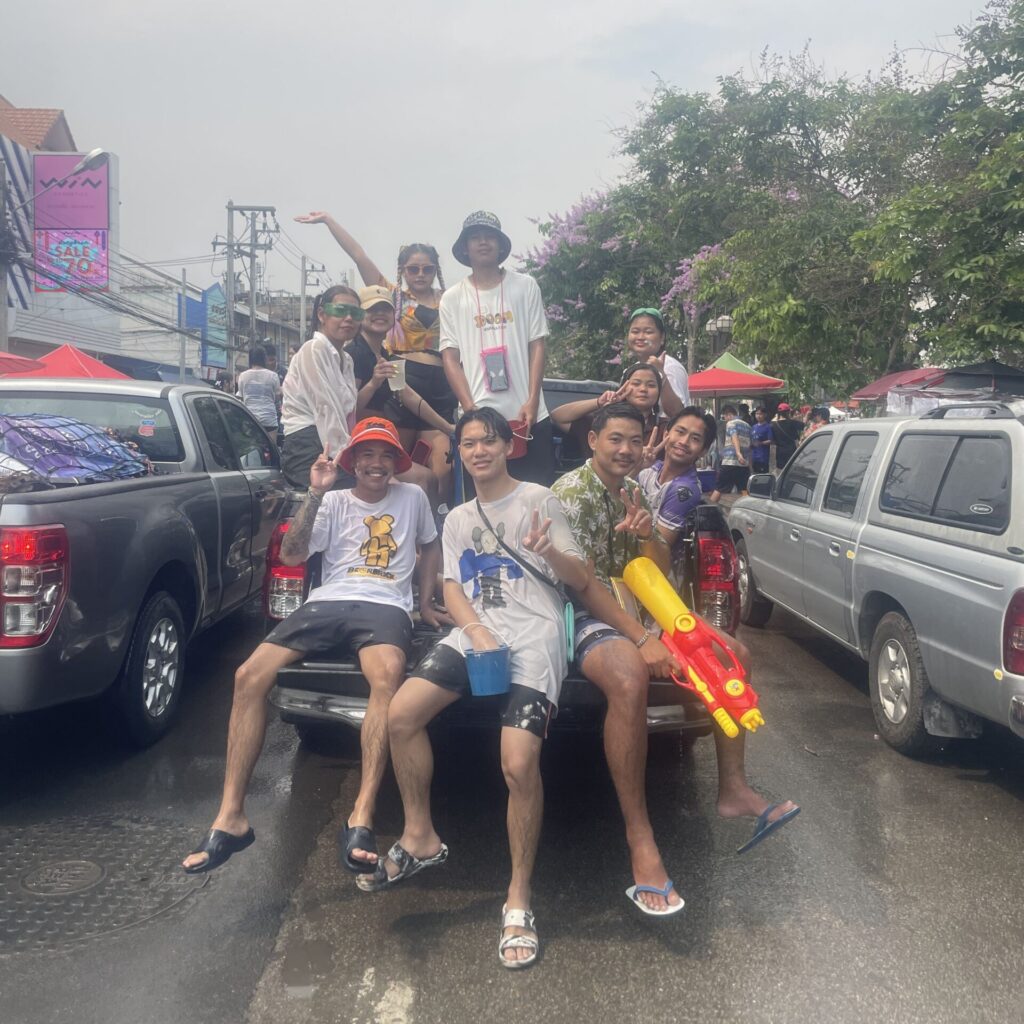
Locals join in with water tanks on the back of pickup trucks, and you get splashed from every direction.
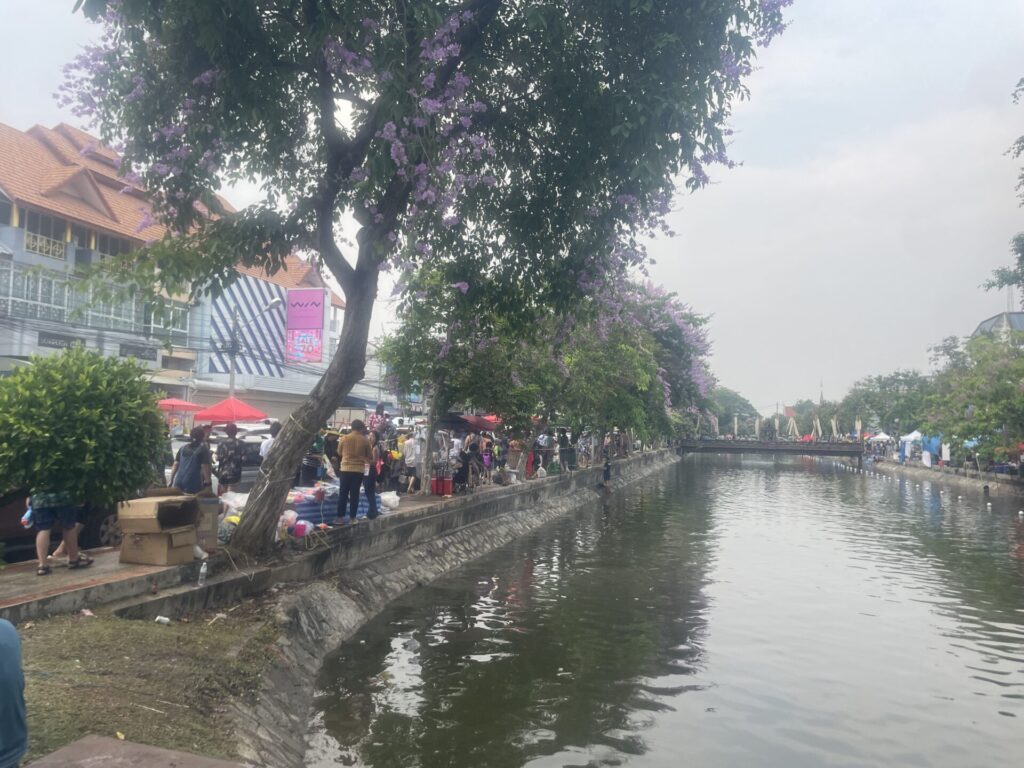
Many stalls line both sides of the moat. When water runs short, people refill from the moat itself.
The moat area, especially near Tha Phae Gate, is very crowded. If you want to feel the Songkran chaos, walk around the moat and splash back like a local!
3. MAYA: where young people and students gather
A popular spot for Chiang Mai’s young crowd.
MAYA is one of the biggest shopping malls in Chiang Mai. The crossing in front of it is one of the two big water-fight spots, together with Tha Phae Gate.
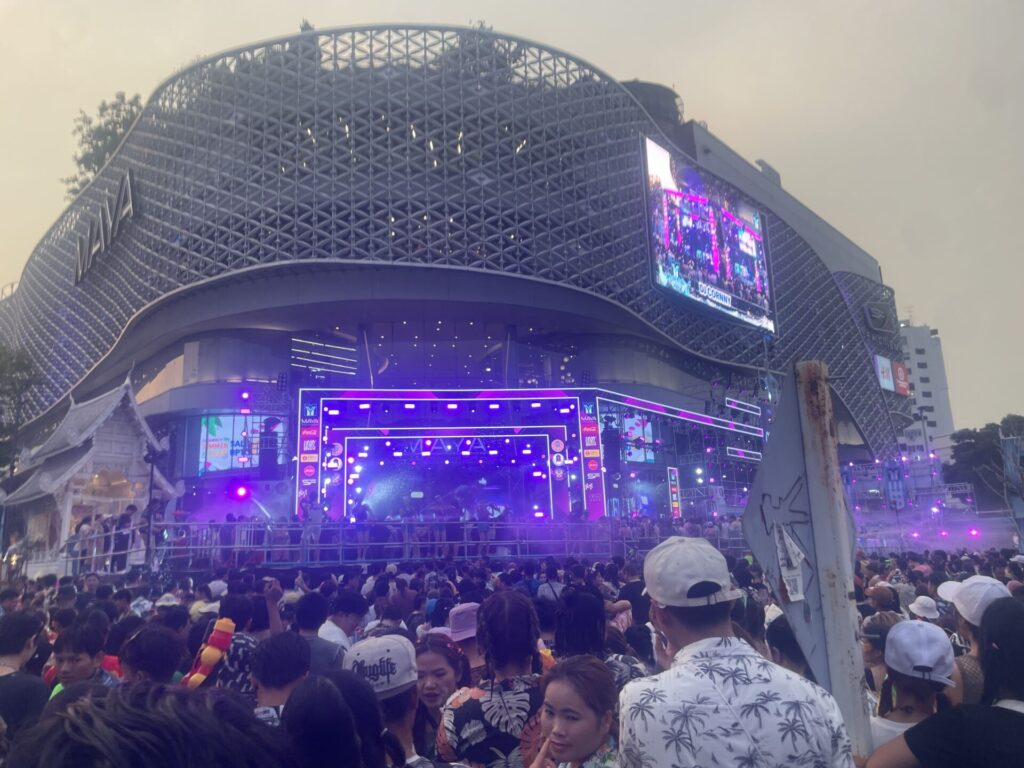
University students and Thai people in their early twenties fill the area with energy. It is even more crowded than Tha Phae Gate, and at night people fill the whole crossing. Once you are inside, there is no going back!
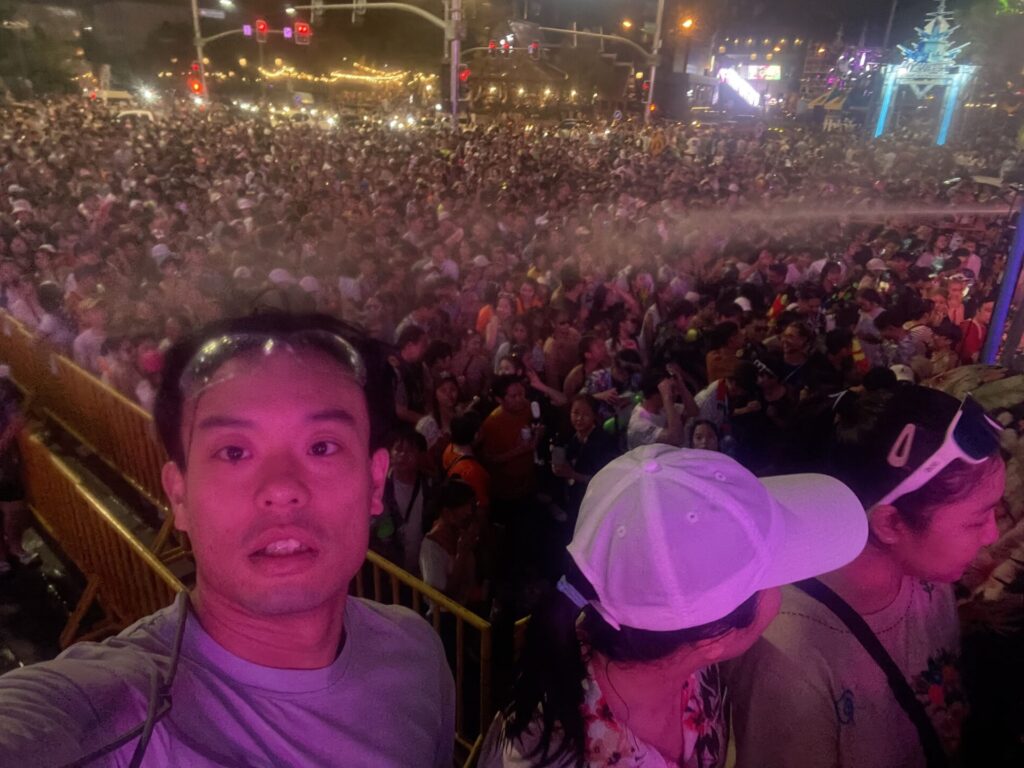
DJ events and performances make it a big party. If you want to splash with young Thai people, MAYA is a good choice. The area does not use moat water, so the water is relatively clean.
4. WATER WAR Chiang Mai: a live music event
Water plus a music festival!
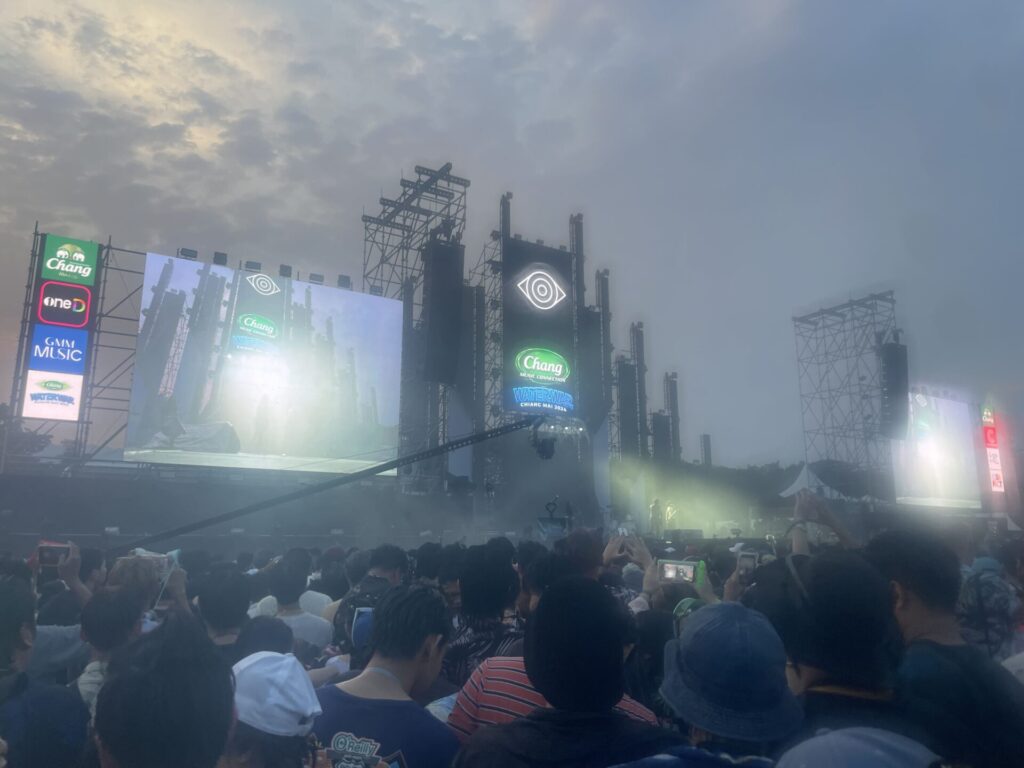
This special Songkran event is held every year on April 13 at Central Chiang Mai Airport, near Chiang Mai Airport. Popular Thai bands such as Body Slam, POTATO and Big Ass play on stage.
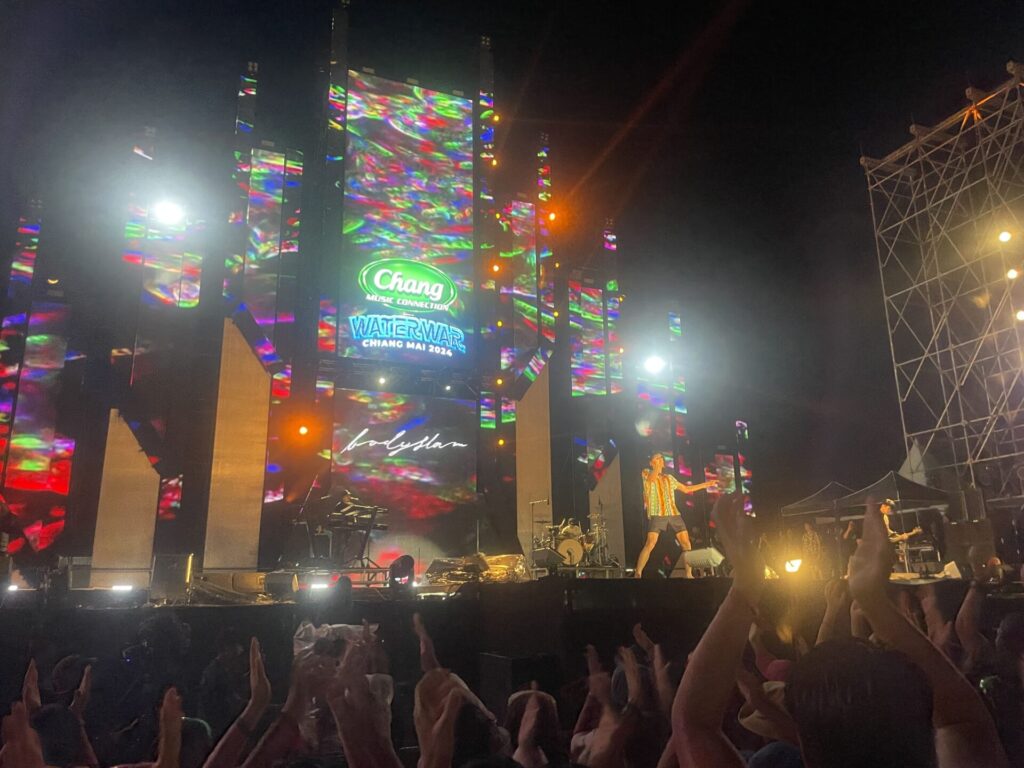
The whole venue turns into a water party, as wild as the city center. It mixes music, water and festival fun. See their Facebook page for details.
Which area should you choose?
- First-time visitors and tourists: Tha Phae Gate
- You just want the biggest water fight: around the moat
- You want to play with young locals: MAYA
- You want a music festival too: WATER WAR Chiang Mai
You will get soaked wherever you go. Enjoy Songkran to the fullest!
Part 2: Songkran culture and traditions in Chiang Mai
Songkran in Chiang Mai is not only water. Here are some temple traditions and customs you can enjoy.
Wat Phra Singh ceremony (April 13)
During Songkran, the sacred Buddha image Phra Phutthasihing, kept at Wat Phra Singh, is taken out of the temple only once a year.
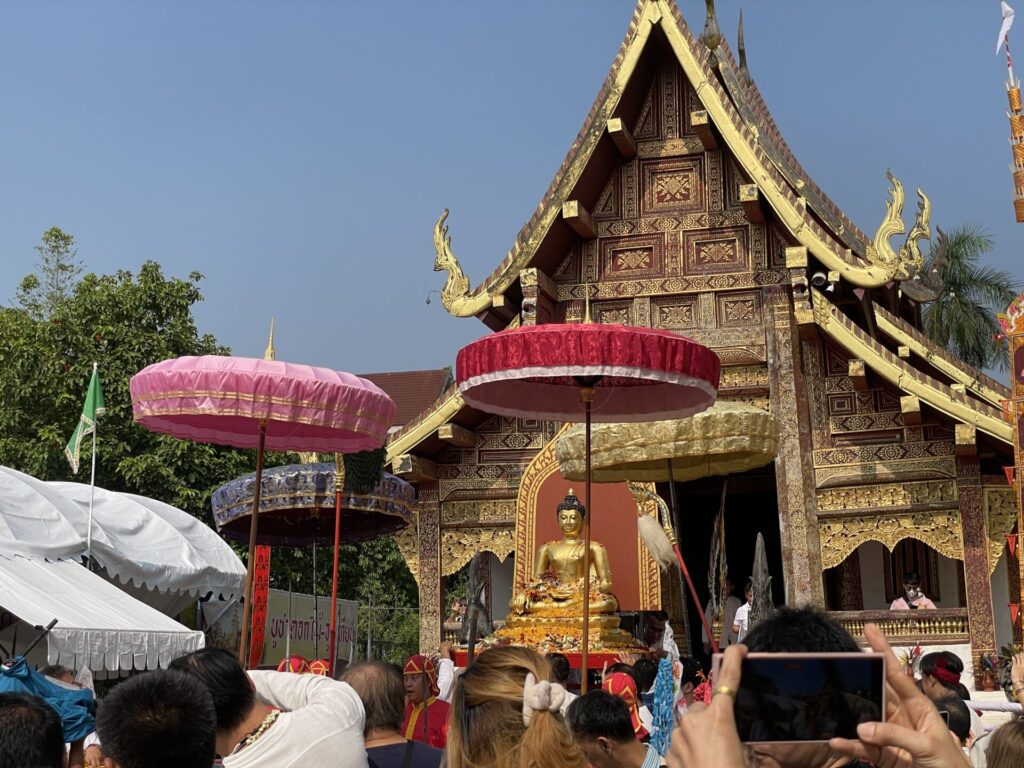
The ceremony of lifting the image onto a palanquin is powerful, and everyone looks very serious.
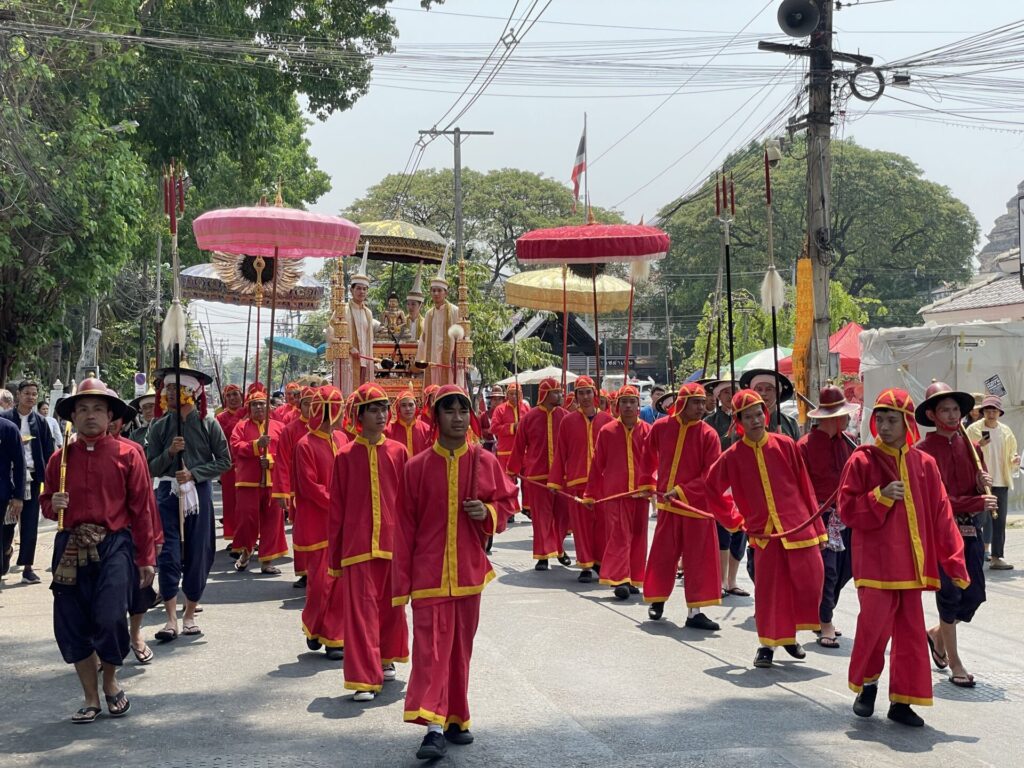
The image goes around the old city, and people pour holy water on it to show respect. Watch it in the video:
Pouring water on elders
Songkran is not only a water fight. It is also an important time to show respect to elders, parents and grandparents.
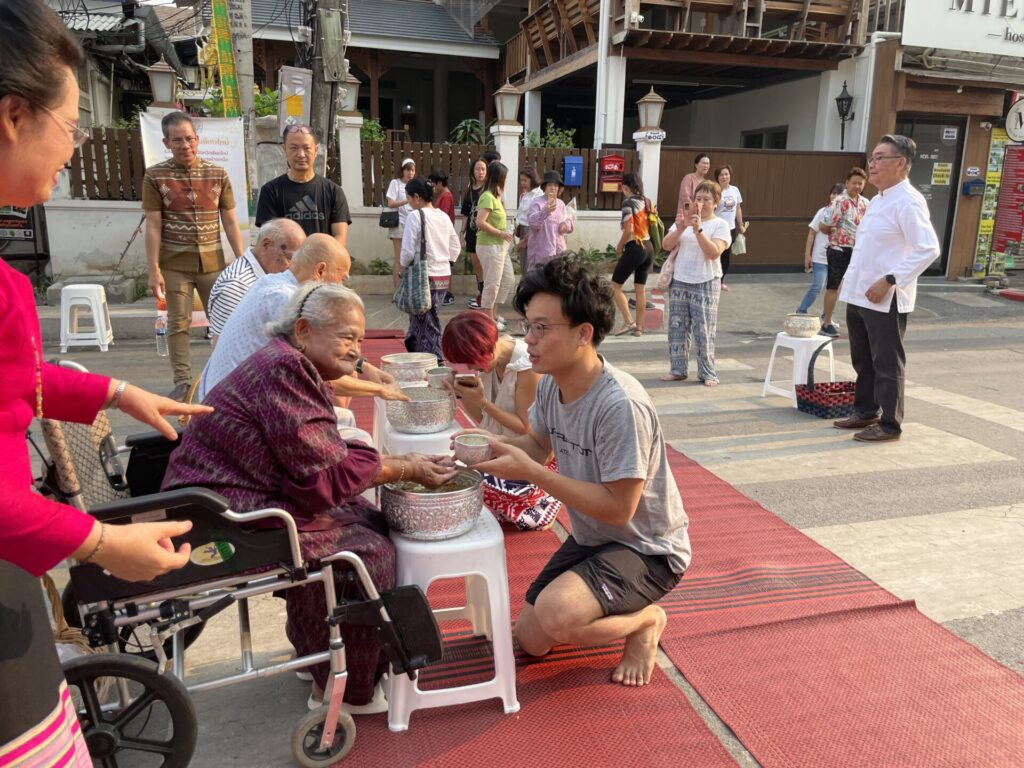
In Thai tradition, you pour water on the hands of elders to say thank you and to wish them luck and long life.
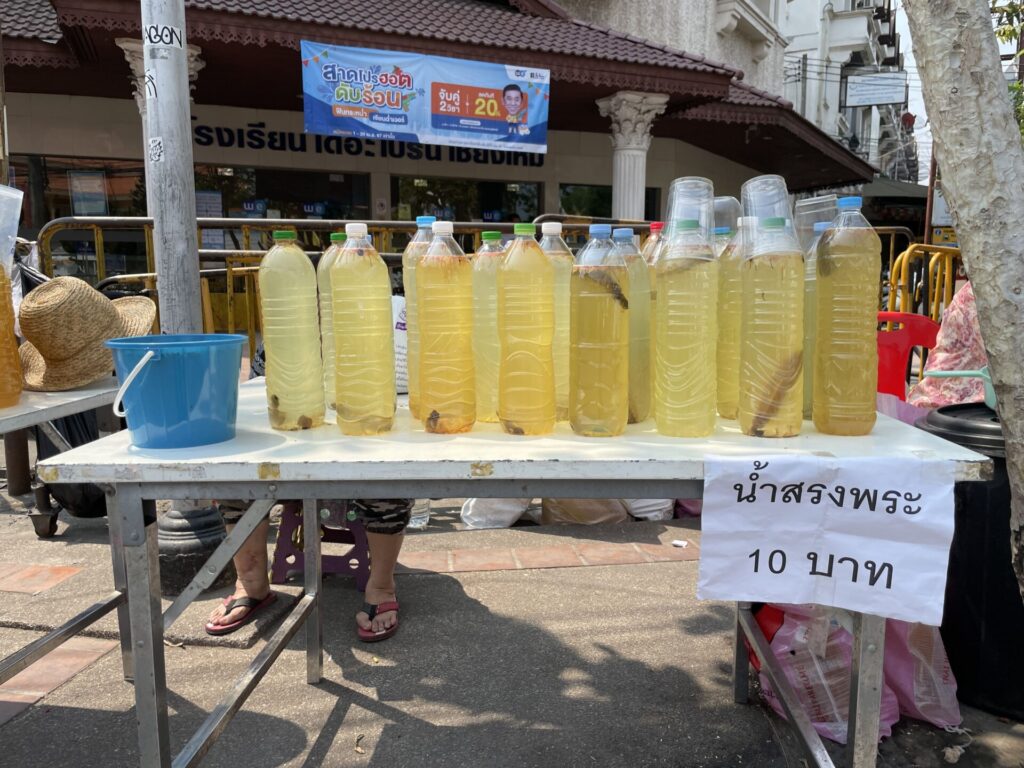
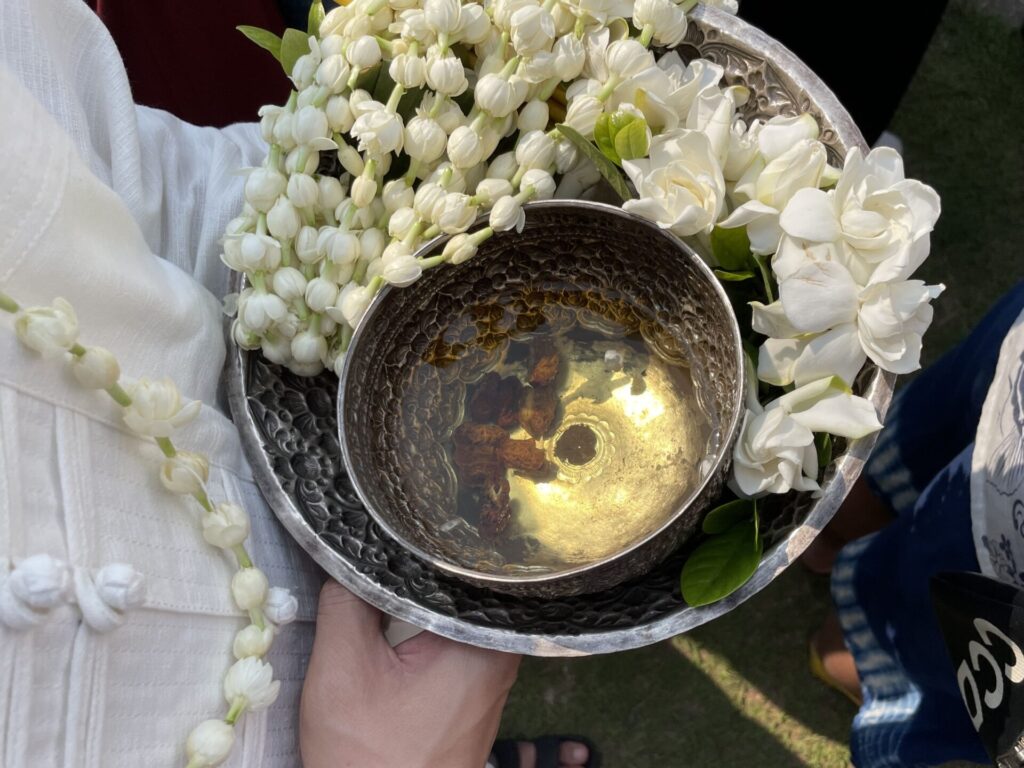
The yellow water sold along the street is jasmine water. It is said to be pure and to drive away bad luck.
Building sand pagodas (Chedi Sai)
During Songkran, many temples build pagodas out of sand.
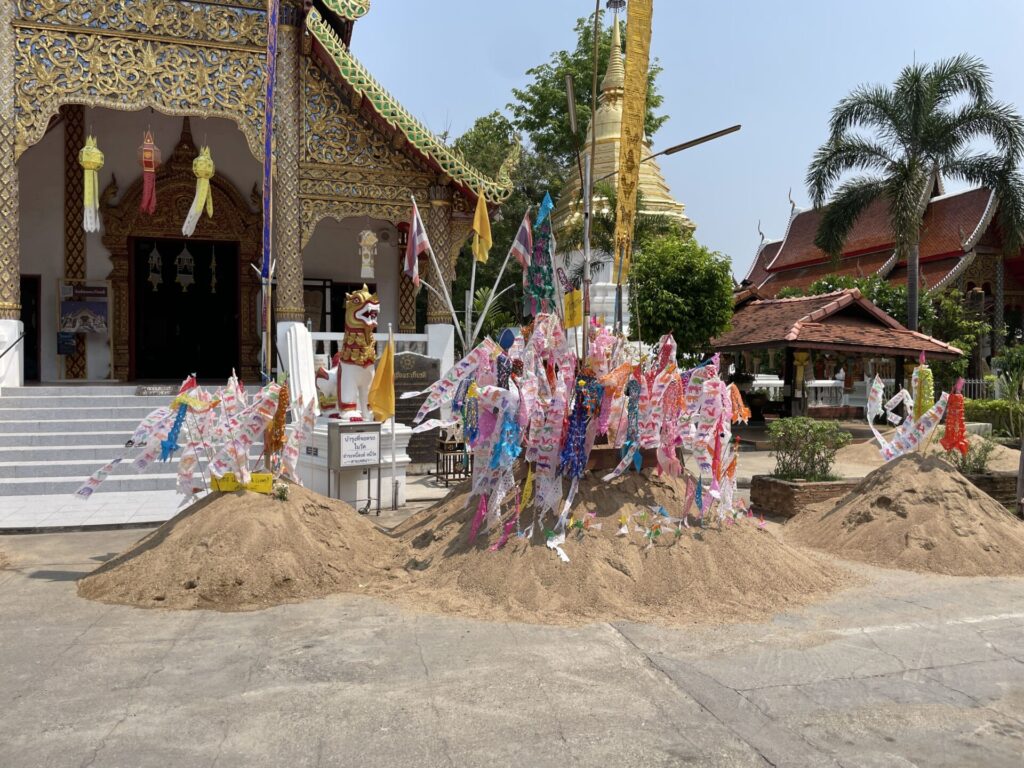
Building a sand pagoda means returning the sand that visitors carried away on their feet during the year back to the temple.
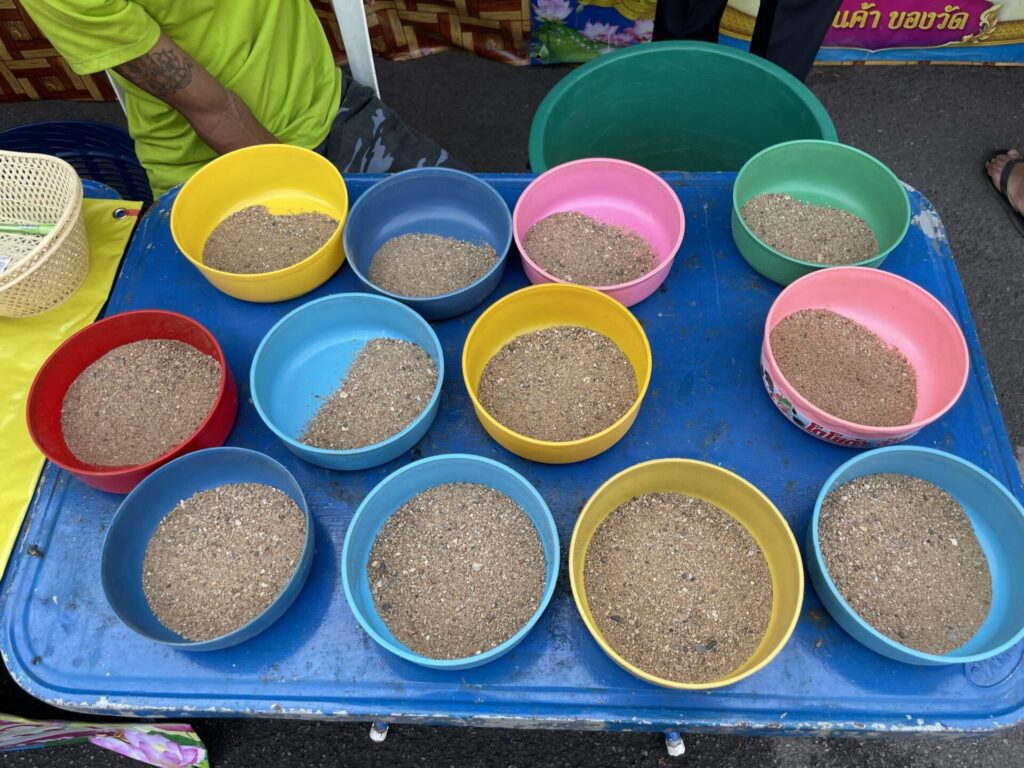
Sand is sold at the entrance of many temples. By adding it to the pagoda, you make merit.
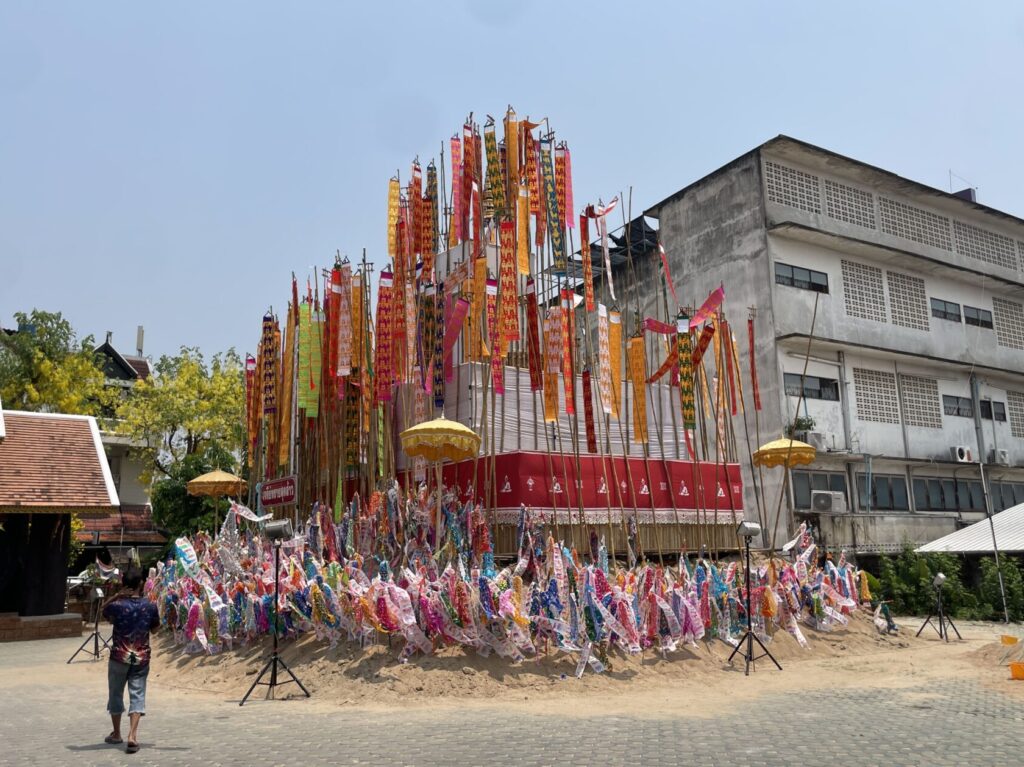
Wat Chet Lin has one of the largest and most beautiful sand pagodas in Thailand, and visitors can join easily. The pagoda has five tiers, which stand for the five elements of the universe: earth, water, wind, fire and space.
Sai Mai: supporting the tree
At temples in Chiang Mai, people raise wooden poles to support trees. This is called Sai Mai and is done to wish for happiness and prosperity.
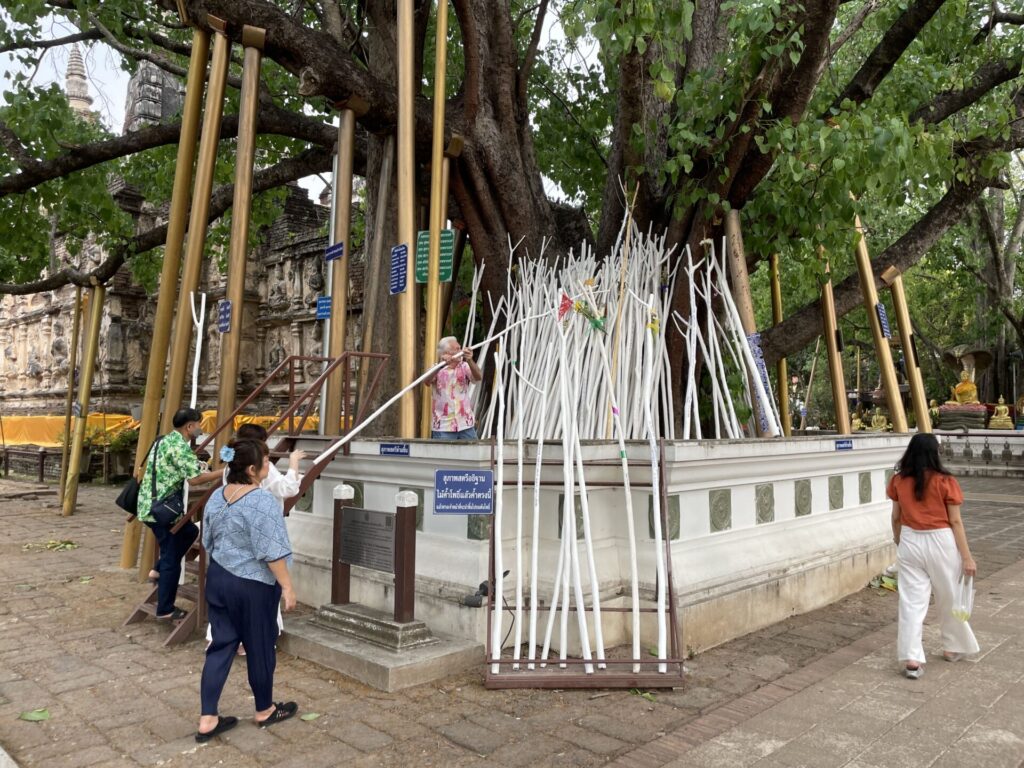
Holding up a tree that is about to fall is a way to make merit. Please try it when you visit a temple.
Visiting the temple
Wild water fights go on in the city, but inside a temple the time passes calmly.
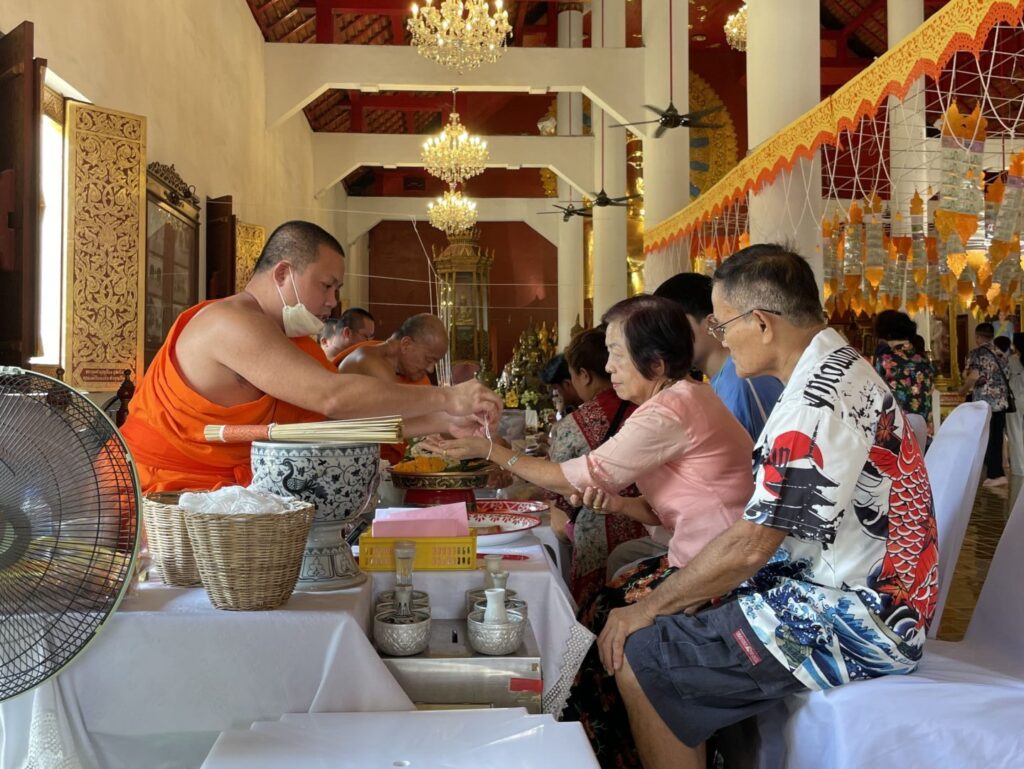
Songkran is not only a water event. It is also an important time to feel old Buddhist teachings and family ties.
At temples such as Wat Phra Singh, you can also see local people making handmade offerings beside the main hall.
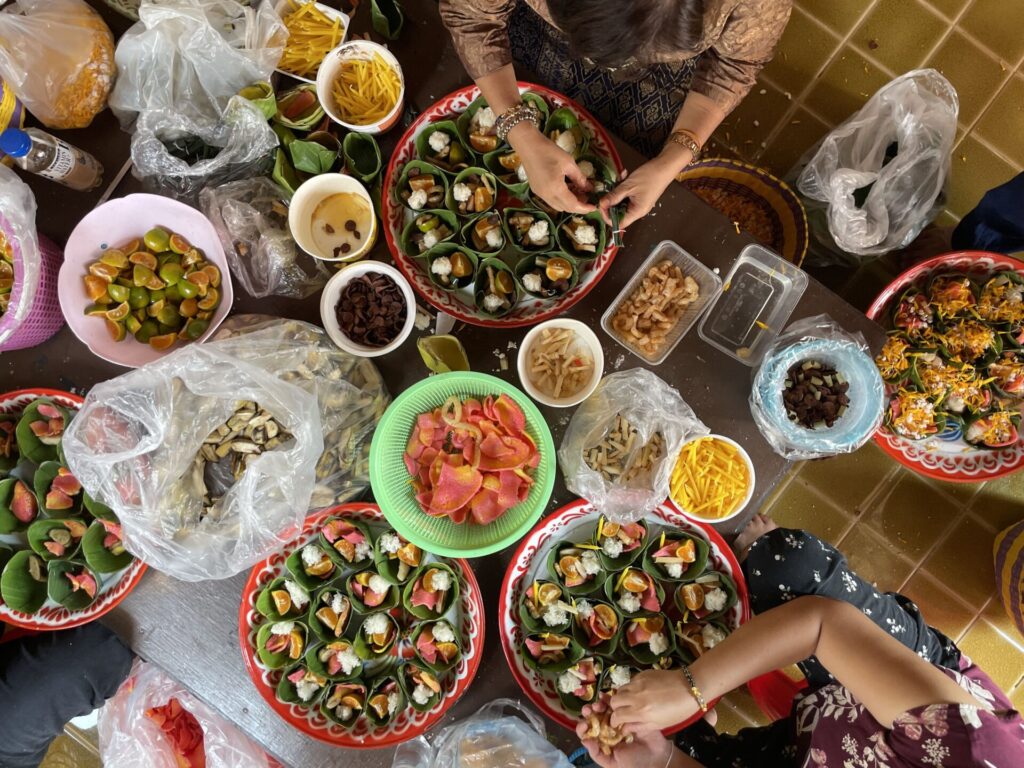
If you are in Chiang Mai, enjoy the lively water fun, and also touch these traditions.
Part 3: Tips and safety for Songkran
Songkran is great fun, but you should expect to be wet from head to toe. Here are my tips for enjoying it safely.
What to wear and bring
- Swimwear: You will surely get wet, so wearing it is a good idea.
- Waterproof bag: A must to protect cash and your phone.
- Cash in a zip bag: Leave your wallet behind. Carry only the cash you need in a zip bag.
- Goggles: For people who do not want water in their eyes.
- Water gun and bucket: You can buy them locally.
- Sandals: Non-slip ones are best.
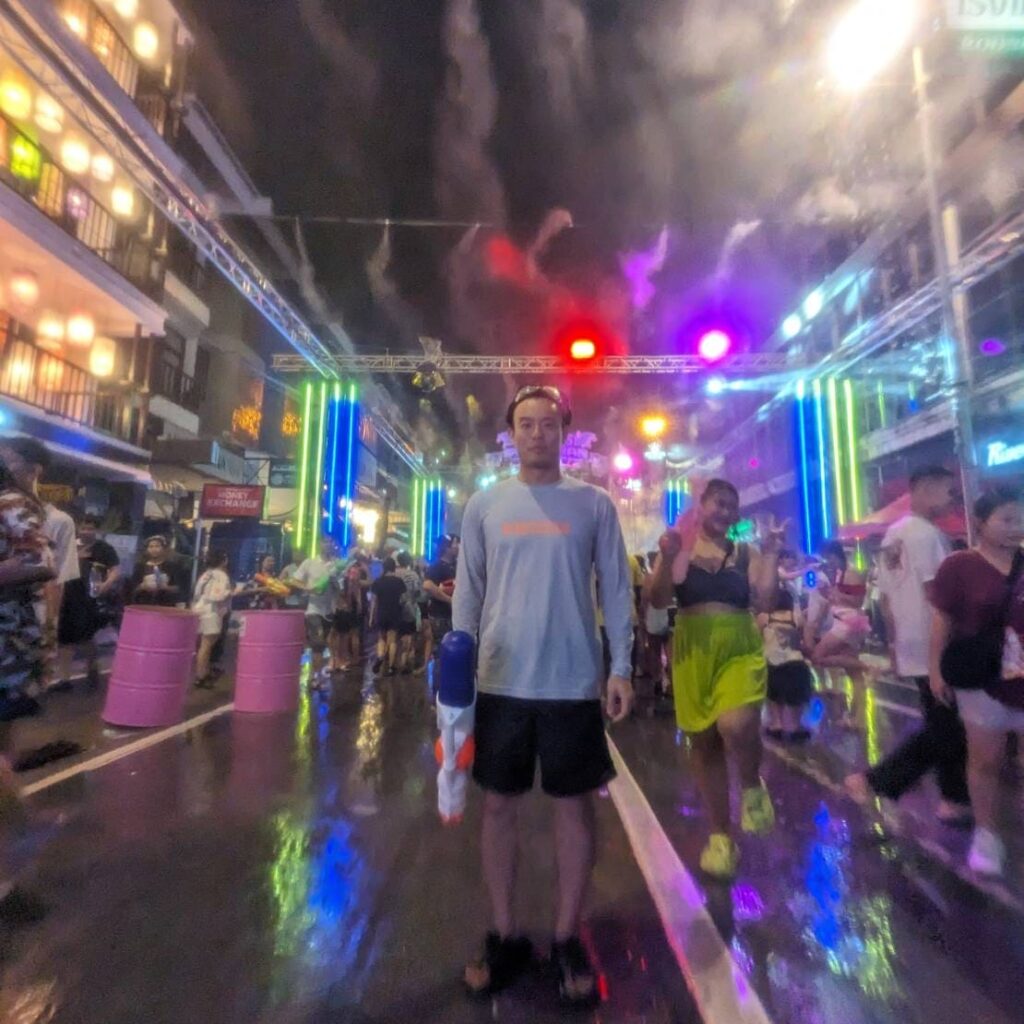
I wore a quick-dry sports shirt and pants, sandals and goggles.
Getting around
Roads are very crowded during Songkran. Walking is the best way to move around the city. Other options:
- Motorbike: Fine if you are used to riding, but roads are slippery when wet, so be careful not to fall.
- Tuk-tuk or songthaew: For a group, renting one is fun.
Safety
- Many traffic accidents: Some people drive motorbikes and cars while throwing water, so take care even on the sidewalk.
- Protect valuables: Carry as little as you can, and put your phone in a waterproof case.
- Be careful with alcohol: Many people drink while playing, so watch your surroundings.
Other tips
- Keep warm: It is hot in the day, so water feels good, but it gets cooler in the evening. Play hard in the daytime, or set a time limit at night. Cafes and supermarkets keep their air conditioning on, so you can catch a cold.
- Where to stay: Book a place close to the event area you want to visit.
- Travel rush: Songkran is also the Thai New Year, so many people travel home and the airport gets very crowded. Allow extra time when you leave or arrive.
Prepare well, and enjoy Songkran to the fullest!
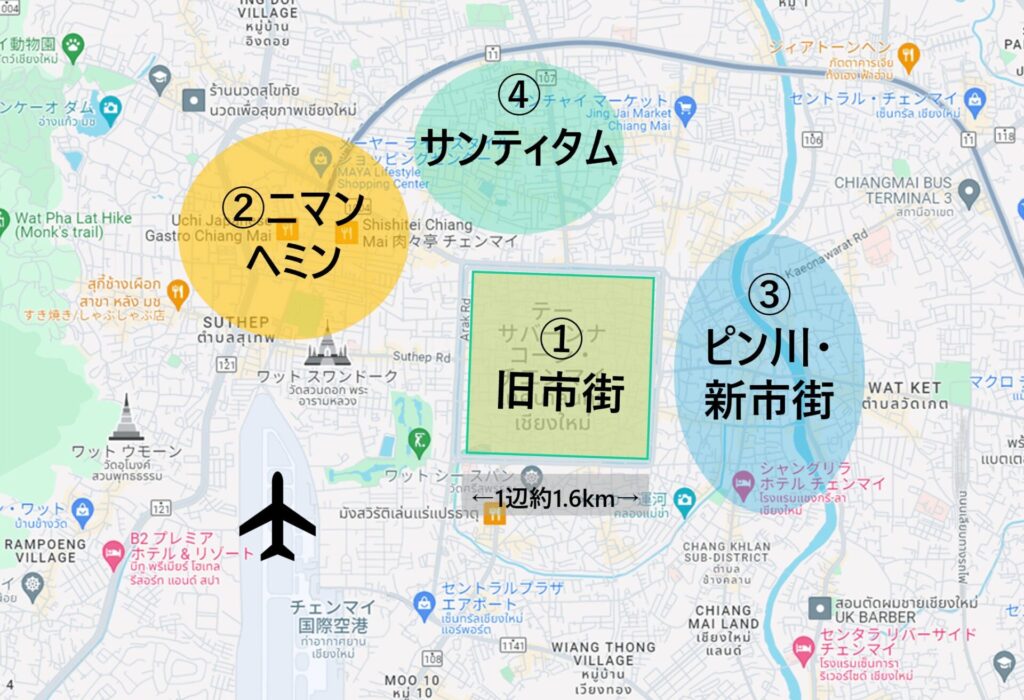
Bonus: Chiang Mai area map
Before your trip, a rough picture of the city areas makes it more fun.
Chiang Mai Sightseeing Guide: Exploring by Area with a Map
Chiang Mai by area: a map-based guide to the Old Town and other districts, with key sights, restaurants and how to get around.
 ManiTabi
Beyond the water fight: village tours from Chiang Mai
After the splash, try a quieter side of northern Thailand. ManiTabi is a small local team in Chiang Mai. We began by visiting hill-tribe villages, and we still do. Here are three village tours you can join from the city.
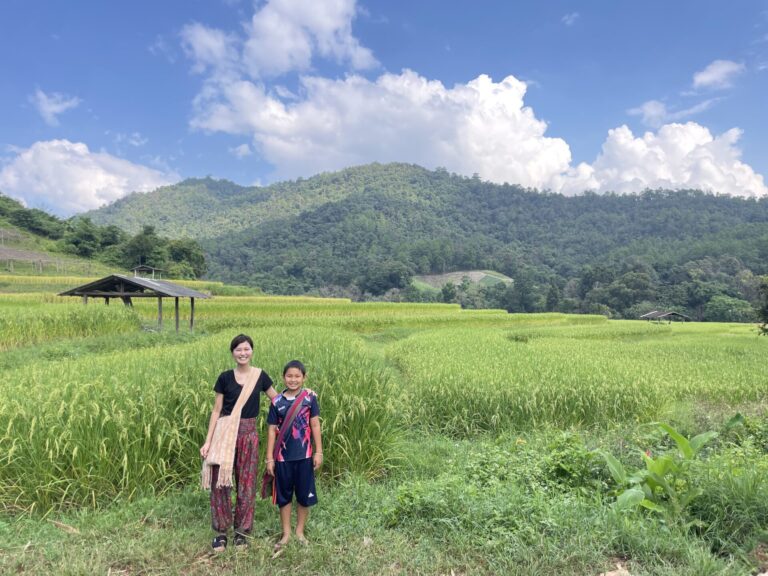 Karen village · about 1.5 hours from the cityKaren Village Life in NatureDay trip (about 9–10 hours) or 2 days / 1 night
Day trip from 4,000 THB per personSee the tour →
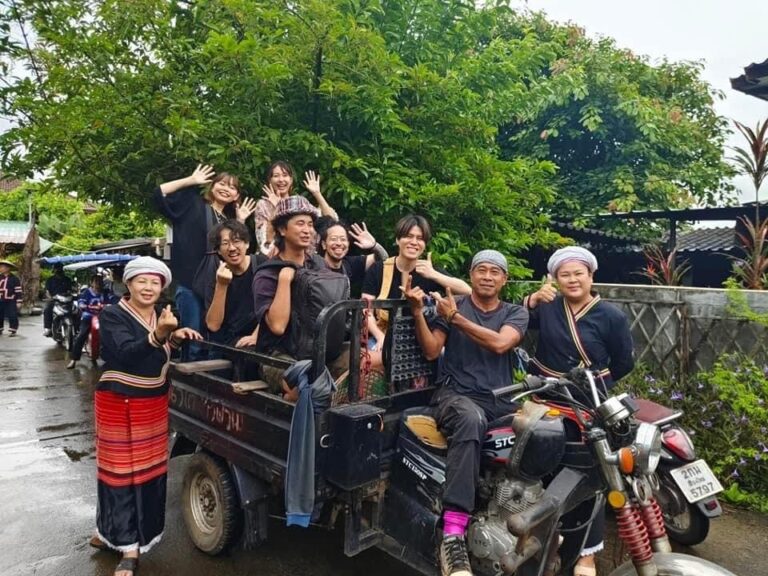 Tai Lue village · near Chiang MaiLife in a Tai Lue VillageHalf day (8:15 AM – 1:45 PM)
From 3,300 THB per person (min. 4)See the tour →
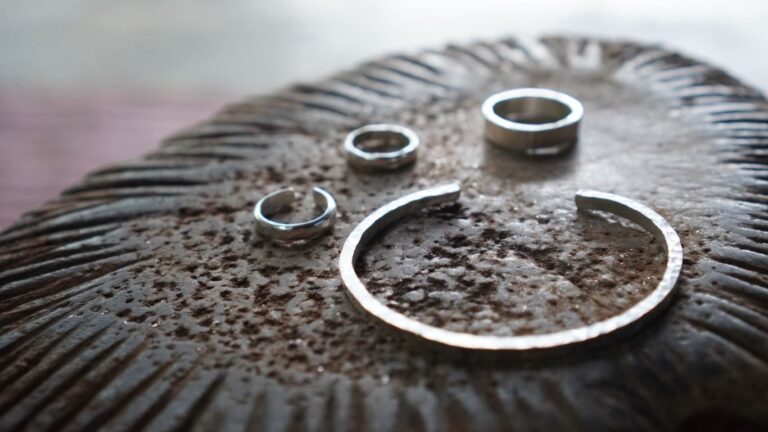 Karen village · LamphunKaren Silver Jewelry MakingDay trip (about 12 hours)
From 4,900 THB per personSee the tour →
Want to stay overnight in a village? See all our tours or the inquiry form.
Ask or book on WhatsAppJust send "village tour" — questions are welcomeTell us your dates and group size. Questions only are perfectly fine.