ManiTabi Exclusive: The World's Only Elephant Float Festival Tour in Wangpai Village
 チェンマイ坂田
In this article, I'd like to introduce Salakapat — a once-a-year festival held in Wangpai Village, Chiang Mai Province, where I regularly run tours and have deep ties with the community.
I'm also recruiting participants for a ManiTabi-exclusive tour to join the festival in person on Sunday, November 22, 2026!
① What Is Salakapat?
Origins of the Festival
Salakapat (สลากภัต) is a Buddhist merit-making ceremony. The purpose is to make offerings to temples and monks as an act of spiritual cultivation.
What makes this festival unique is that offerings are assigned lottery numbers, which the monks then draw at random.
The tradition dates back to the time of the Buddha, when lay people would offer gifts to accumulate merit — but offerings became concentrated on the Buddha himself. To redistribute them fairly among his companions and disciples, the Buddha numbered the offerings and drew lots. This became the origin of Salakapat.
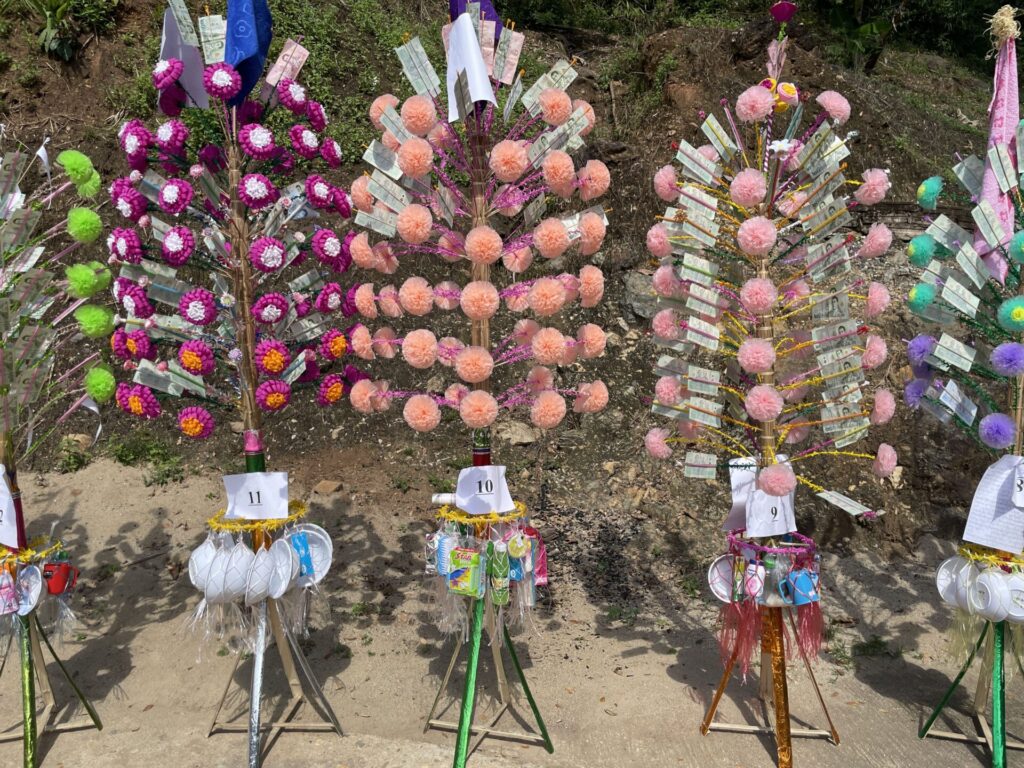
Each villager's offering receives a number. At the end of the ceremony, the monks draw a number and receive the offering that corresponds to it.
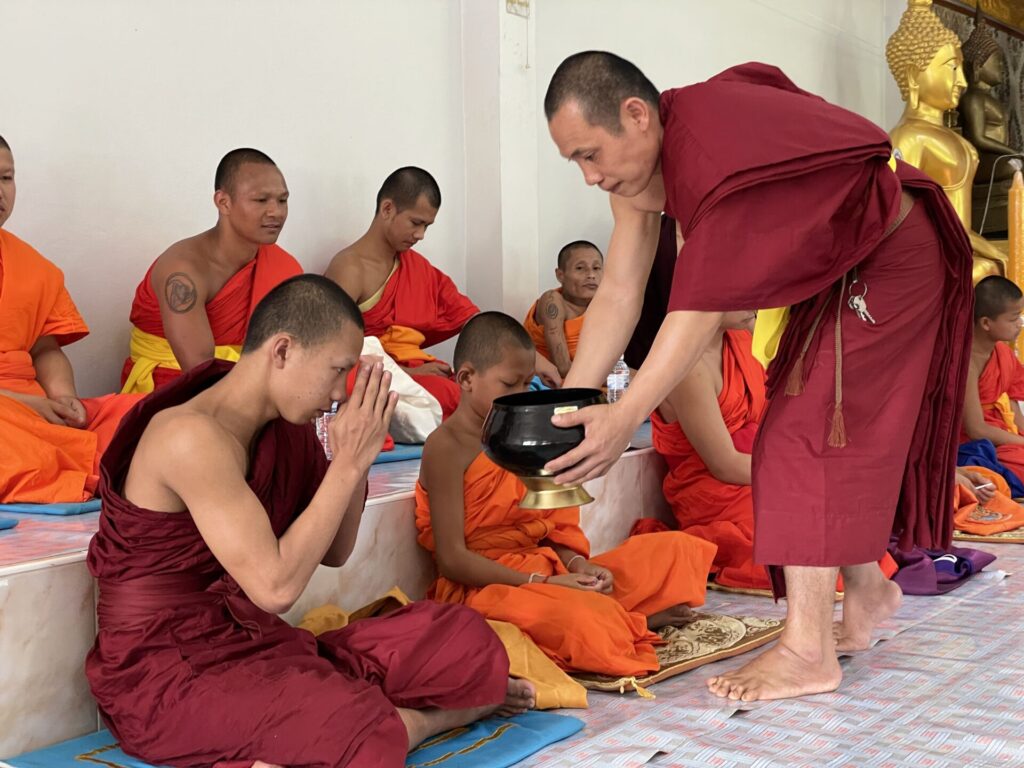
Salakapat in Wangpai Village
In the Days Before the Festival
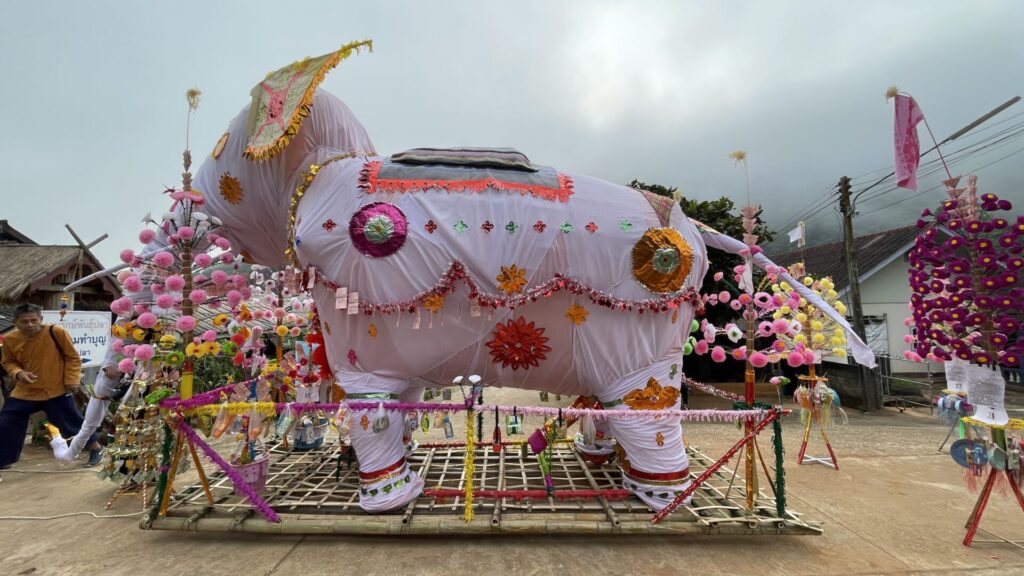
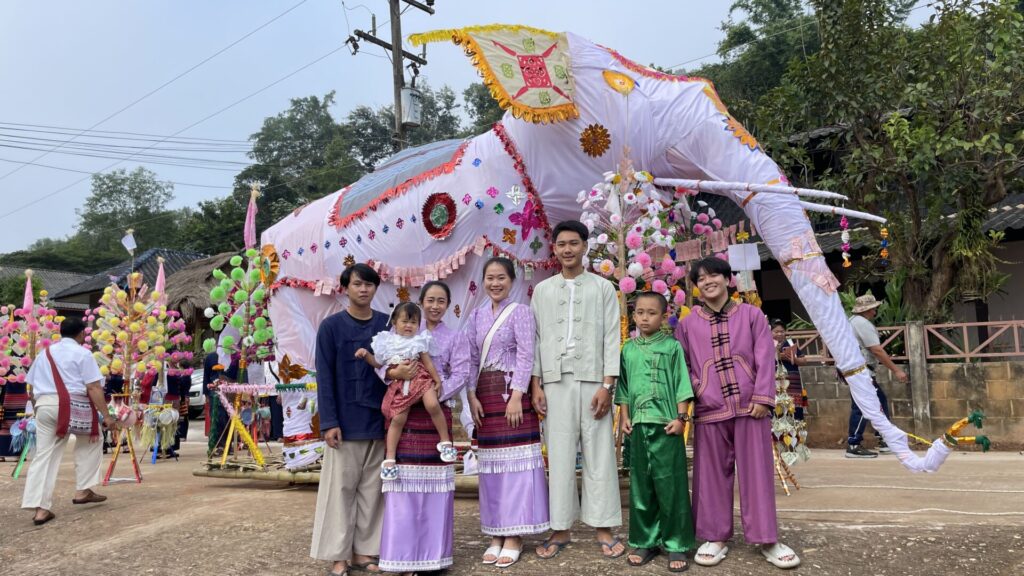
On the day of Salakapat, the people of Wangpai Village build a magnificent elephant float to celebrate the occasion.
The elephant is chosen because, according to Buddhist tradition, the Buddha's mother dreamed of a white elephant when she conceived him.
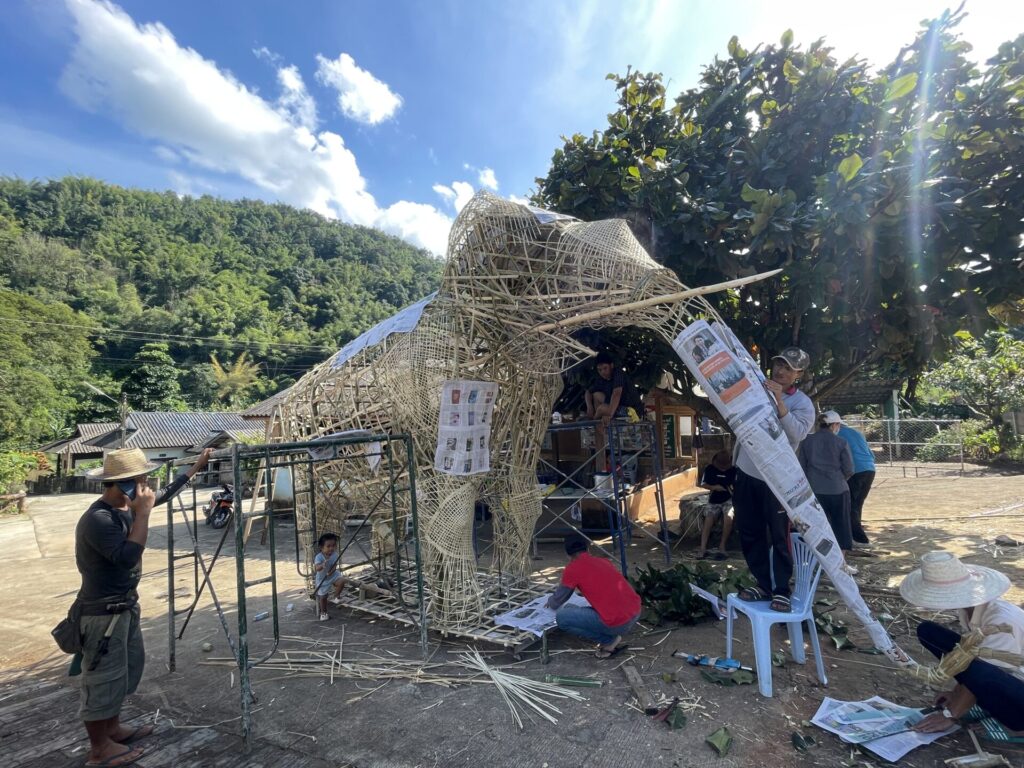
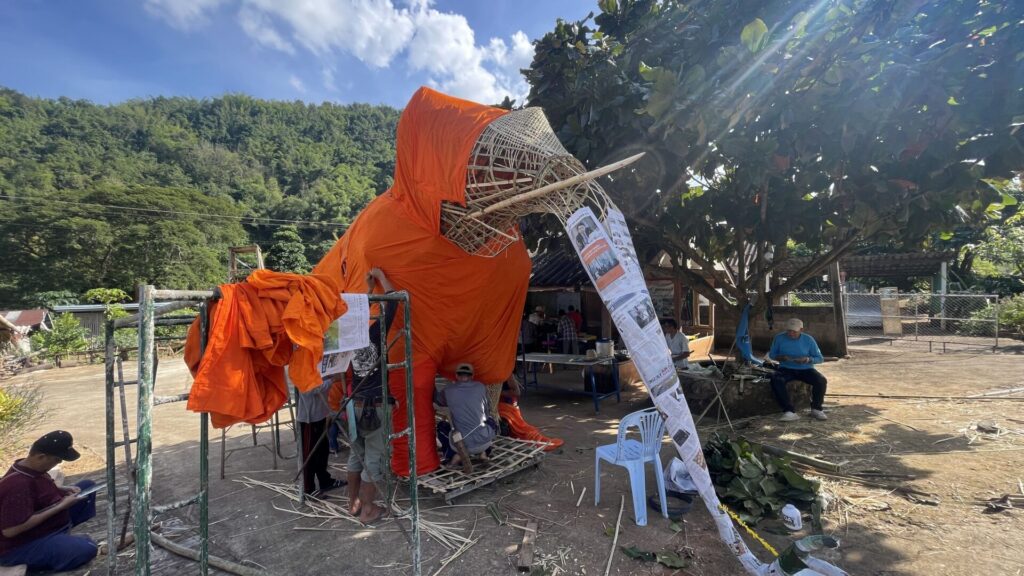
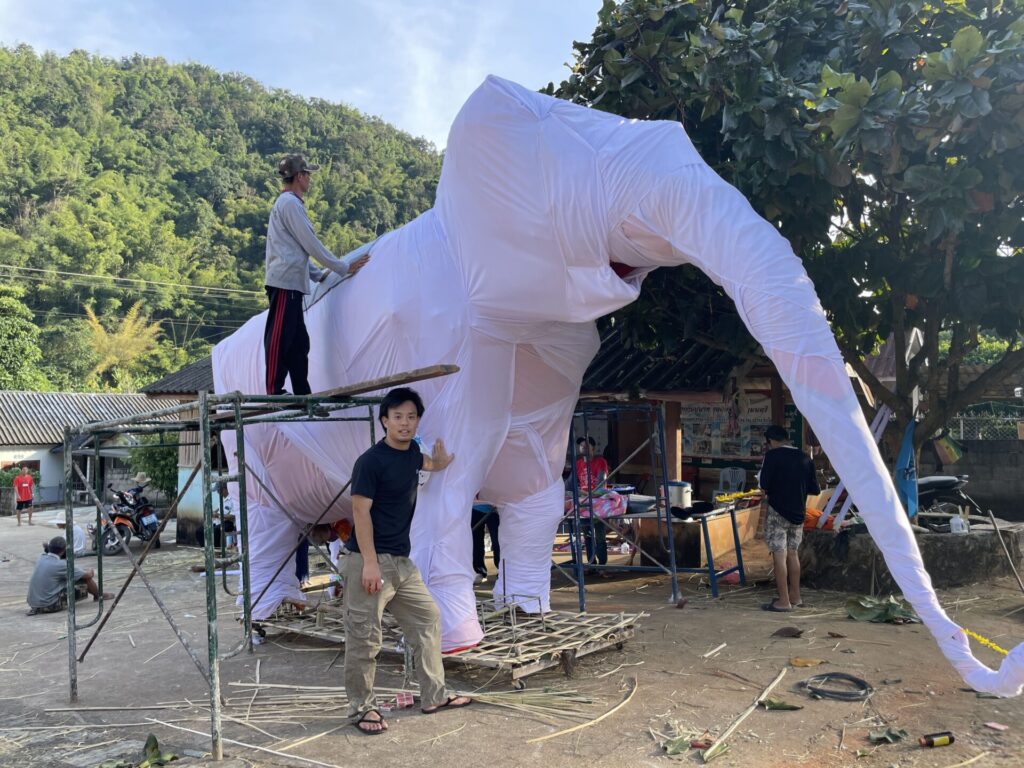
Preparations begin three to four days before the festival. Villagers cut bamboo from the mountain behind the village and shape it into the form of an elephant.
Next, the frame is draped in saffron orange fabric — the color of monk's robes —
then wrapped in white cloth,
and finally decorated with intricate paper ornaments.
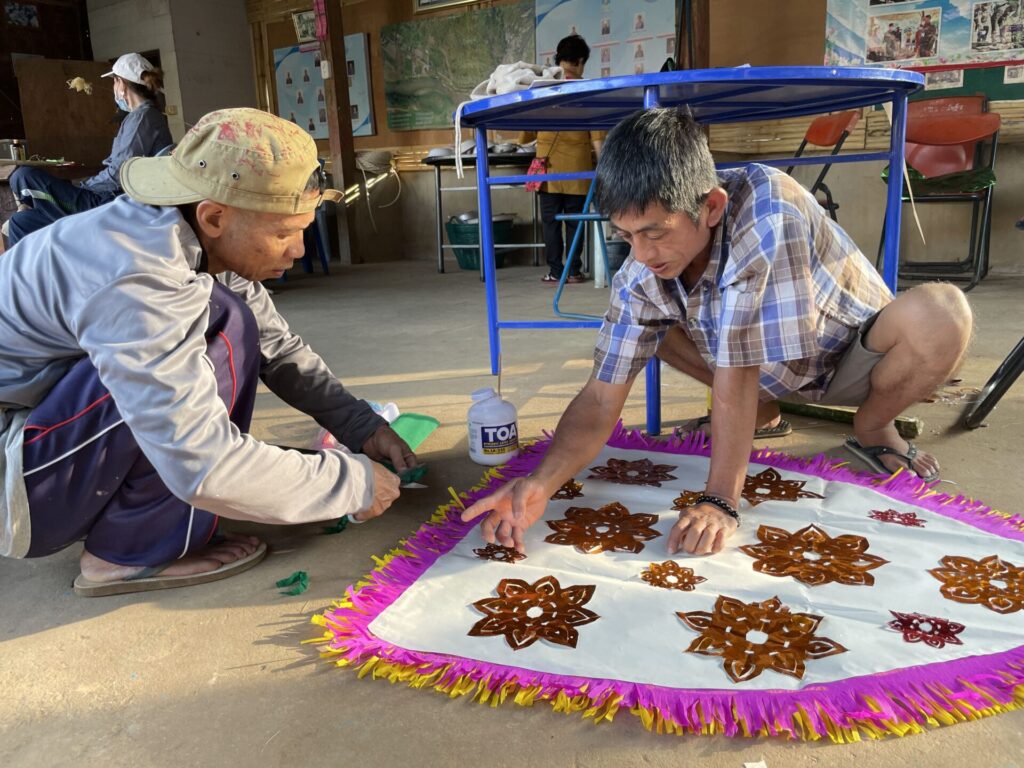
Every element of the elephant float is crafted entirely by the villagers themselves.
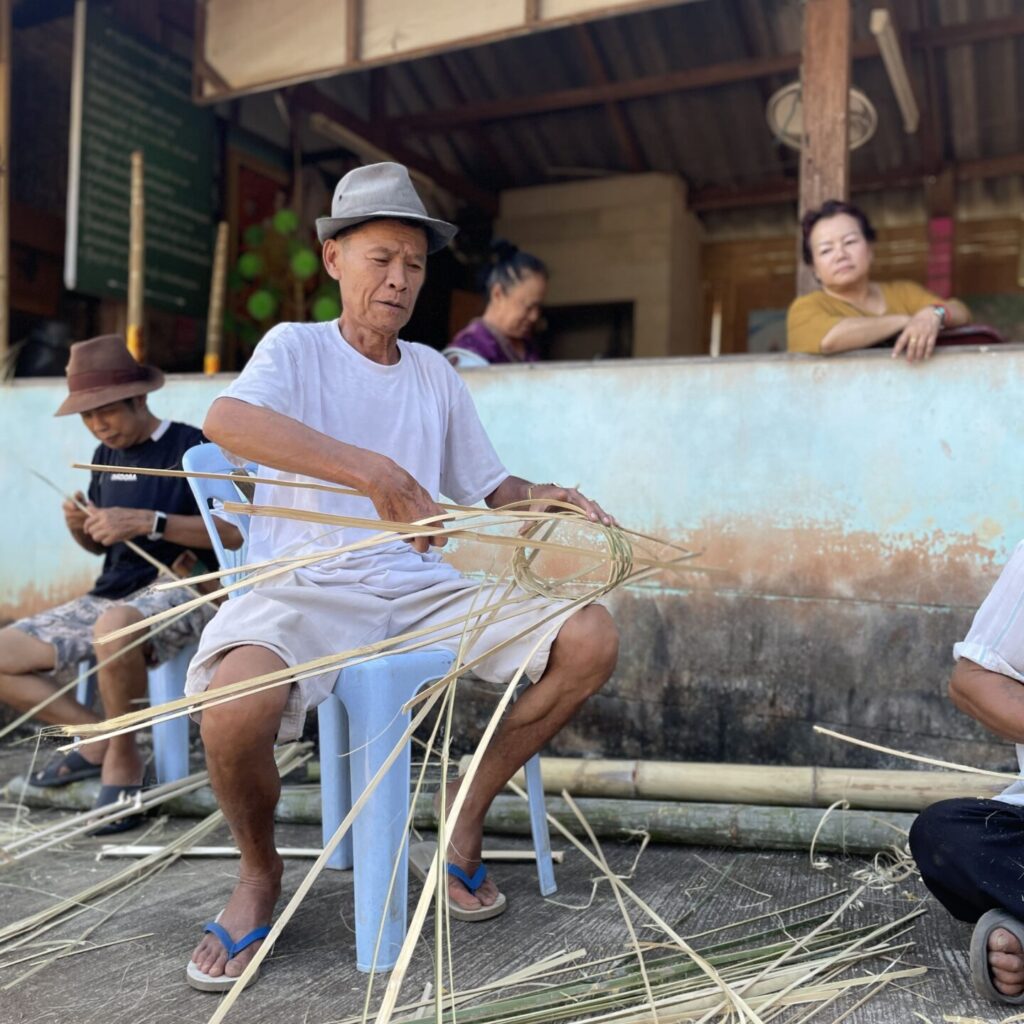
The Day of the Festival
The big day has arrived! First, everyone gathers for photos with the elephant float displayed at the center of the village.
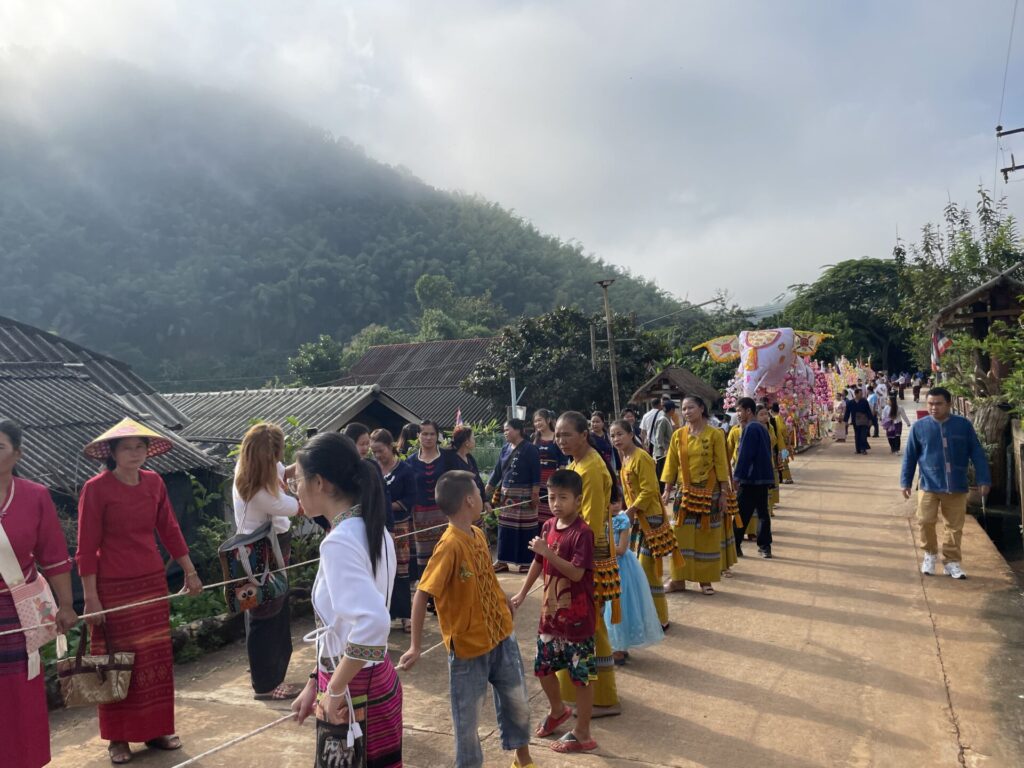
Then the entire village pulls the float together in a procession to the temple.
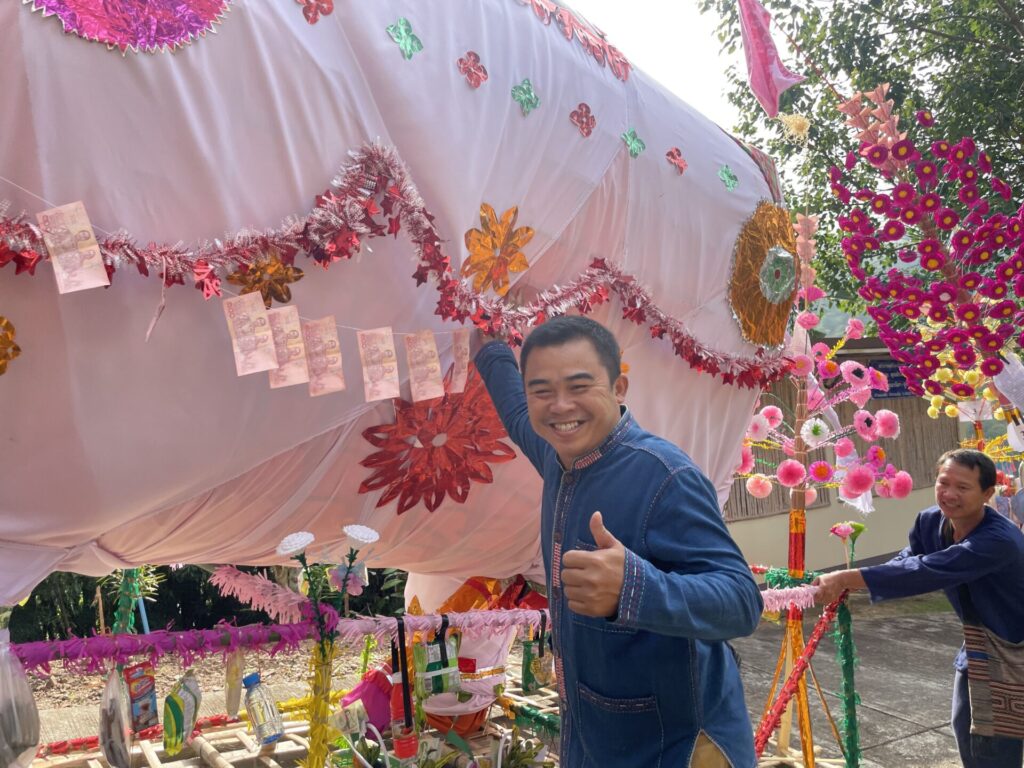
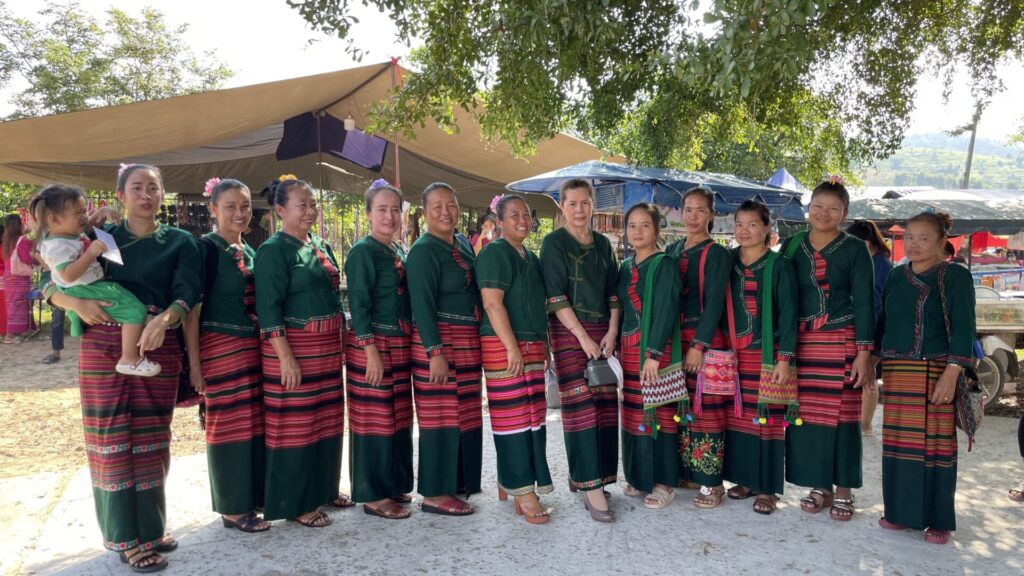
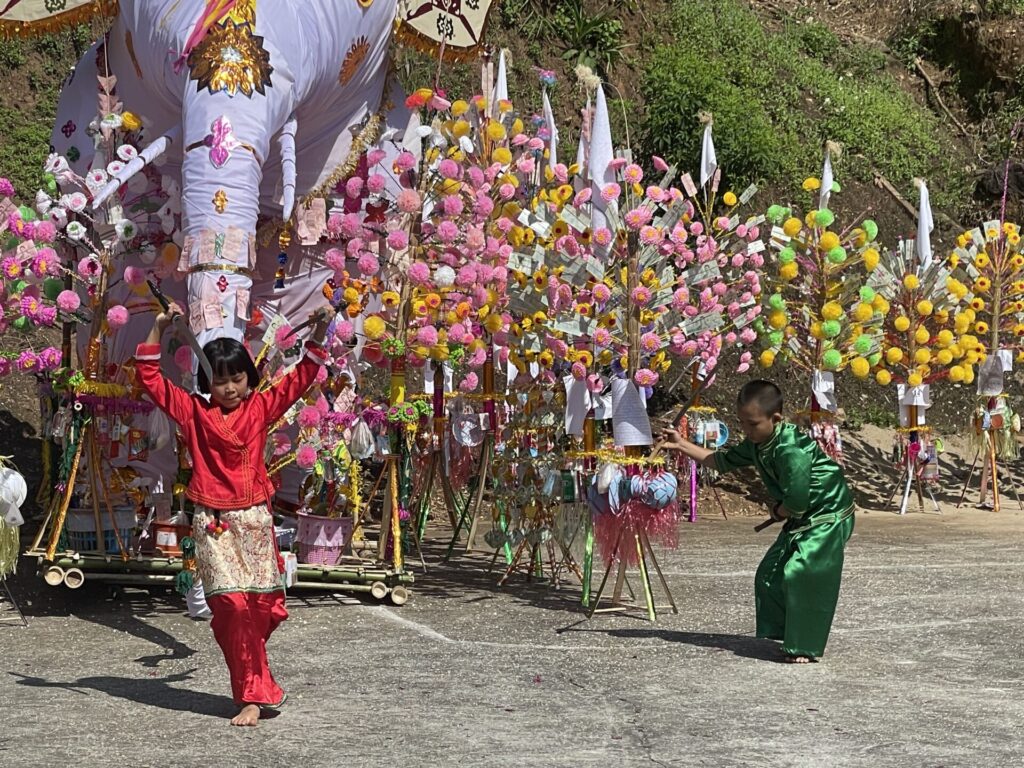
In front of the temple, the women and children of the village perform traditional dances in their stunning costumes.
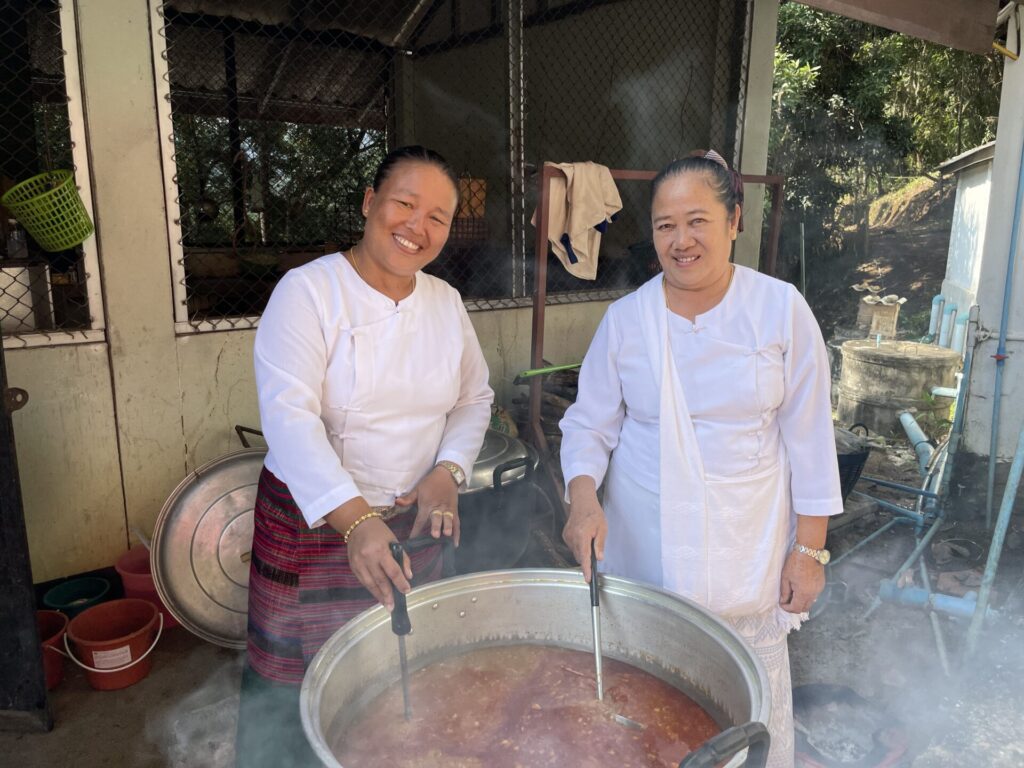
Villagers prepare a delicious spread of food for everyone to enjoy.
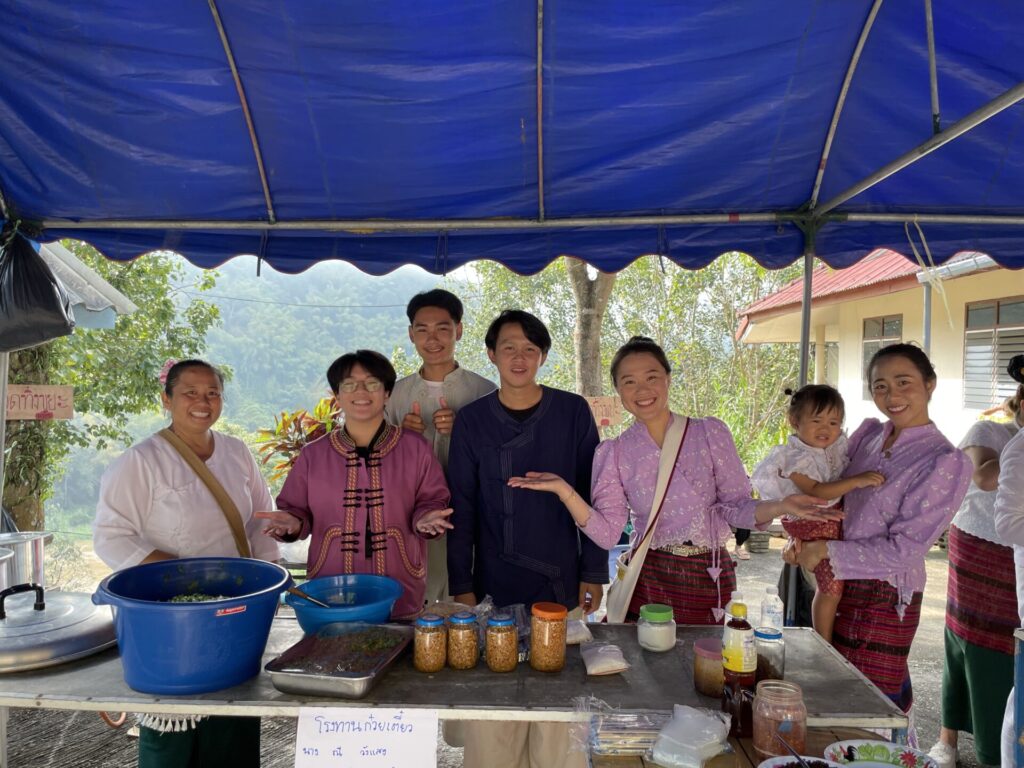
From classic northern Thai dishes to rare local specialties, you'll get to taste flavors you simply can't find anywhere else.
Once the dancing in front of the temple winds down, the lottery ceremony begins inside, where the monks draw their numbers.
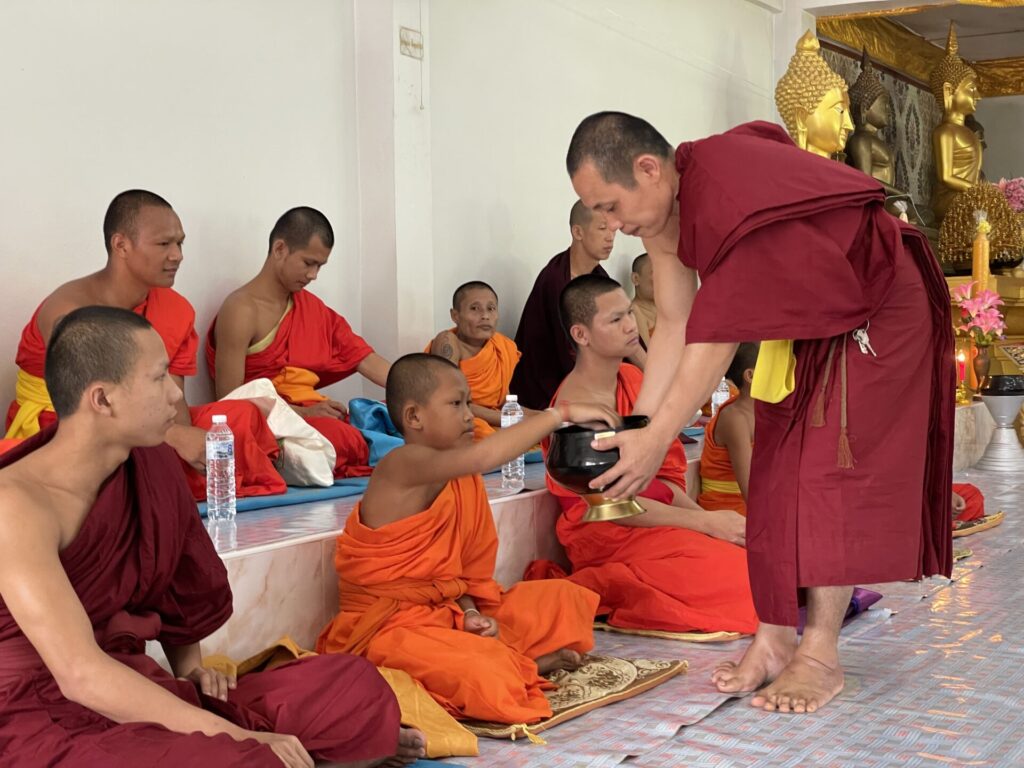
The villagers then return to the square in front of the temple, where each person presents their offering to the monk who drew the corresponding number.
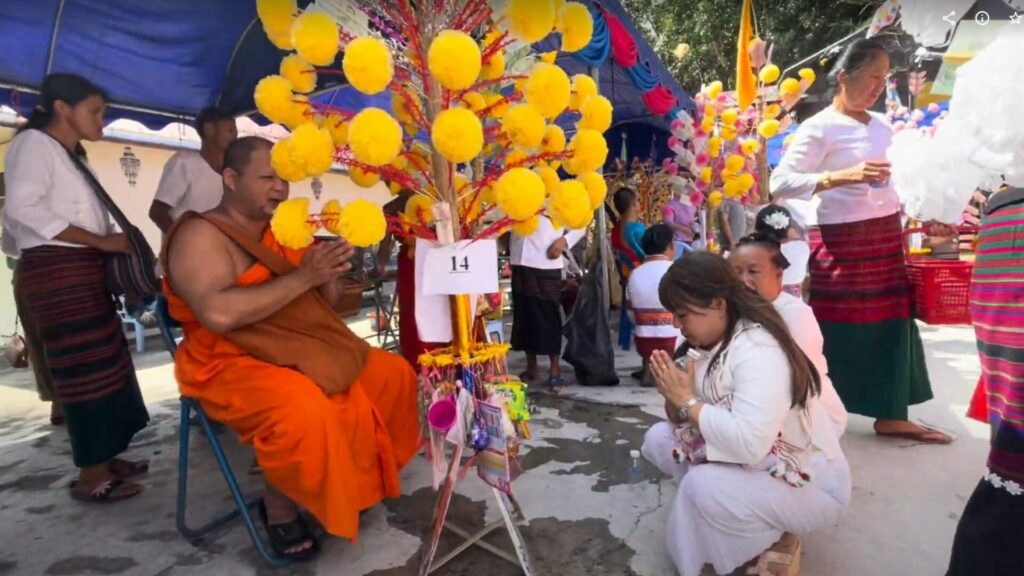
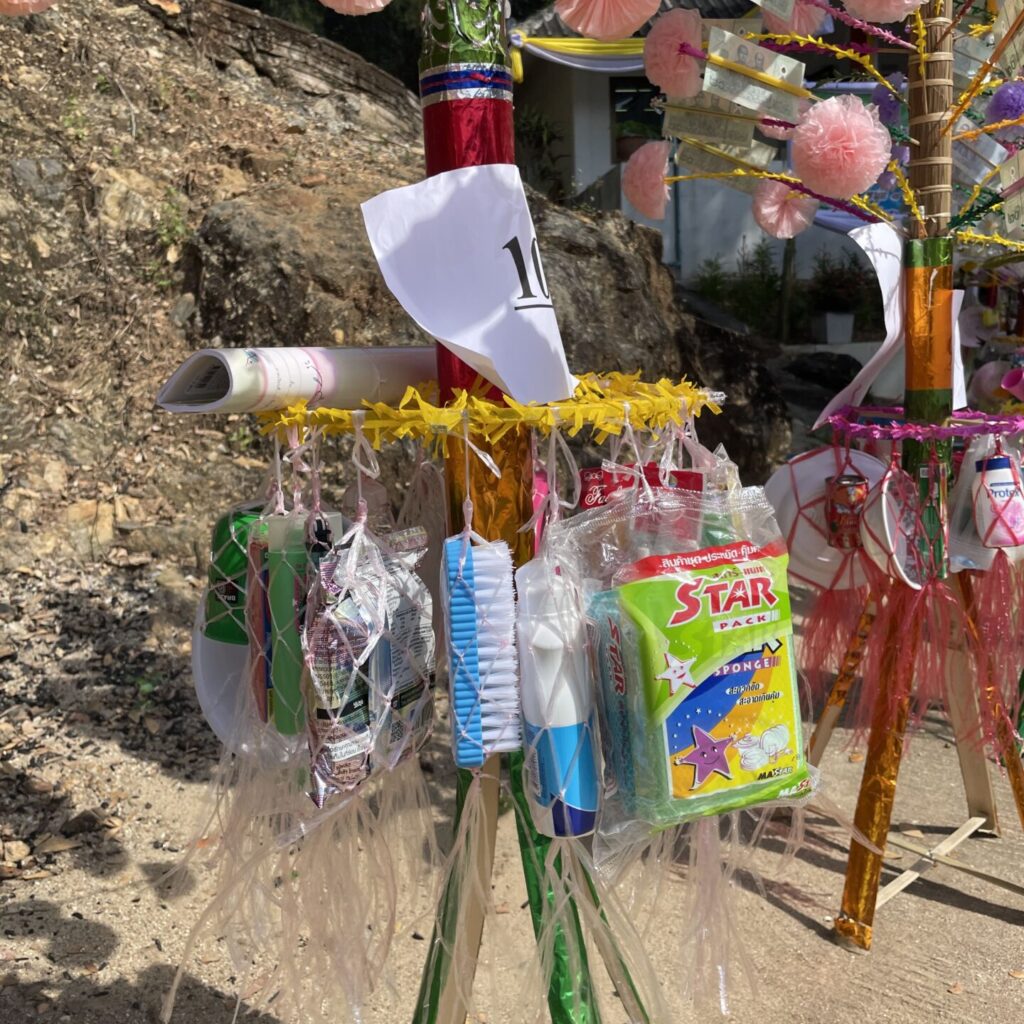
Offerings range from food and drinks to everyday household goods.
Here's a look at the 2024 festival! 👇
I want to share the joy of this Salakapat experience with everyone — so I've put together the following tour program!
② Elephant Festival Tour Overview
Tour Concept
1. Participate in a Tai Lue traditional ceremony and feel the community's deep reverence for their culture
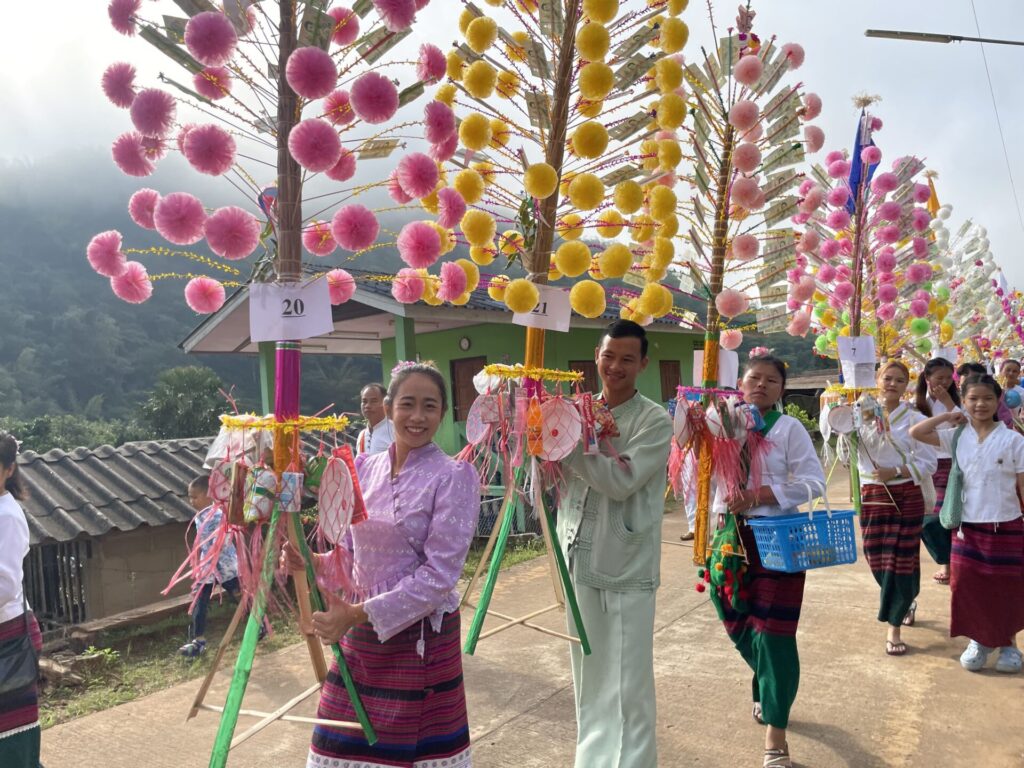
This is a once-a-year occasion that the Tai Lue people hold dear. We want you to experience firsthand how much this community values and treasures its own cultural heritage.
2. Connect with Tai Lue people and feel the warmth of a Thai village
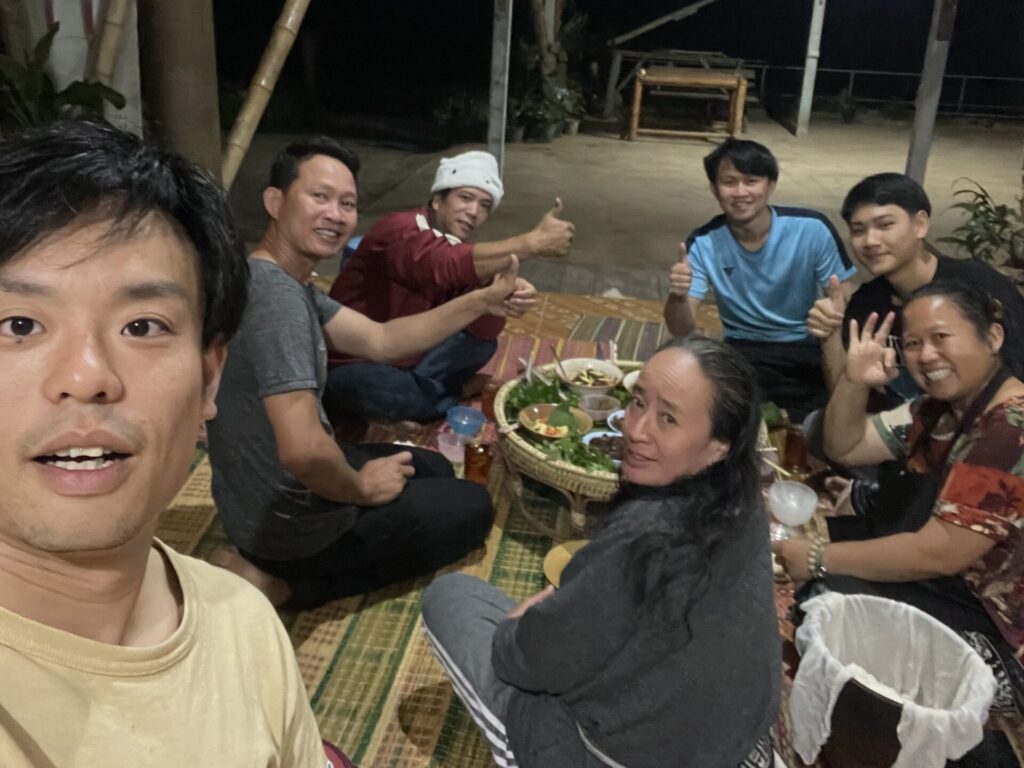
Wangpai Village is the community I visit most often and feel most at home in. Villagers like Chai and Jom — and so many others — welcome guests with open hearts. Come experience the uniquely warm and welcoming spirit that only Wangpai Village can offer.
Location of Wangpai Village
Wangpai Village is located in Tha Ton, Mae Ai District, Chiang Mai Province — at the very northernmost tip of Chiang Mai, along the Thai-Myanmar border.
By car, it's approximately 3.5–4 hours from central Chiang Mai and about 1.5 hours from Chiang Rai Airport.
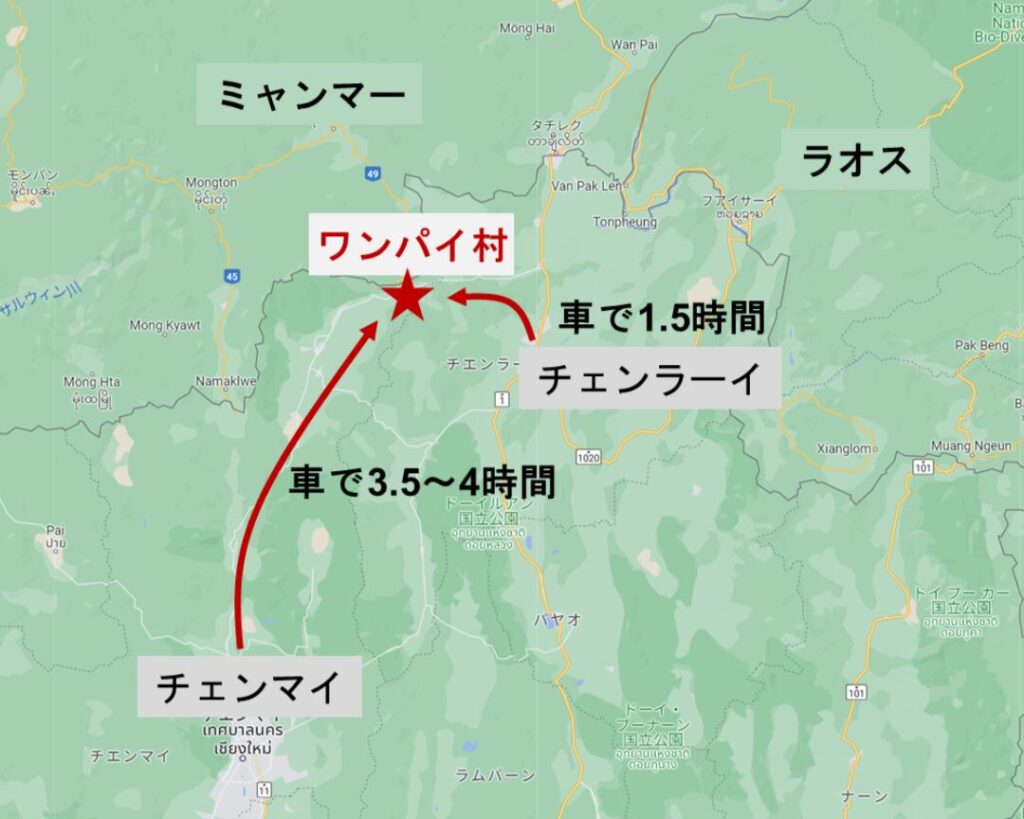
Find us on Google Maps 👇
Dates & Meeting Point
The festival takes place on the morning of Sunday, November 22. We're offering both a 1-night / 2-day and a 2-night / 3-day plan to suit your schedule. Meeting and farewell will be arranged in central Chiang Mai or at Chiang Rai Airport, adjusted based on participant preferences.
1-night / 2-day plan: Saturday November 21 – Sunday November 22
2-night / 3-day plan: Friday November 20 – Sunday November 22
Schedule
The planned schedule is as follows.
Friday, November 20 (2-night plan starts here; 1-night plan starts Saturday, November 21)
8:00 Depart Chiang Mai city
11:00 Lunch at a Chinese village
13:00 Arrive at Wangpai Village
Afternoon: Help build the elephant float
Evening: Village walk, welcome ceremony, dinner
Saturday, November 21 (2-night plan: Day 2 / 1-night plan: Day 1)
[2-night / 3-day plan]
Morning: Make traditional laab & breakfast
Late morning: Help with elephant float construction
Midday–afternoon: Explore nearby attractions (Mae Salong tea town, Wat Tha Ton, etc.) & browse a hill tribe market
Evening: Pre-festival celebration
[1-night / 2-day plan]
Depart Chiang Mai city (approx. 7:30)
12:00 Arrive at Wangpai Village & lunch
Afternoon: Help decorate the elephant float (the bamboo frame will already be complete; focus will be on decorating)
If time allows: Explore nearby spots
Evening: Browse hill tribe market, ceremony, pre-festival celebration
Sunday, November 22 — Festival Day
7:00 Wake up & breakfast
8:00 Photos with the elephant float
9:00 Pull the float, attend the festival, lunch
11:00 Festival in front of the temple / present offerings to monks
13:00 Festival wraps up
14:00 Depart the village
Approx. 18:30 Arrive back in Chiang Mai city
※ The schedule may change depending on weather and circumstances.
※ If you'd prefer to depart from / return to Chiang Rai Airport, please let us know.
Tour Price
2-night / 3-day plan: Adults 7,500 THB / Children 5,000 THB
※ Children = junior high school age and under. Senior high school to university students: 6,500 THB
1-night / 2-day plan: Adults 6,000 THB / Children 4,000 THB
※ Senior high school to university students: 3,000 THB
Included: Village accommodation & activities, private van & fuel, elephant float decoration materials, Naoto's accompaniment throughout
Not included: Meals outside the village (lunch on days 1–2), souvenirs, café stops, etc.
Accommodation & Shower
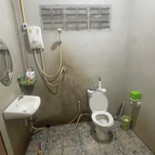
Here's an idea of what to expect for sleeping arrangements:
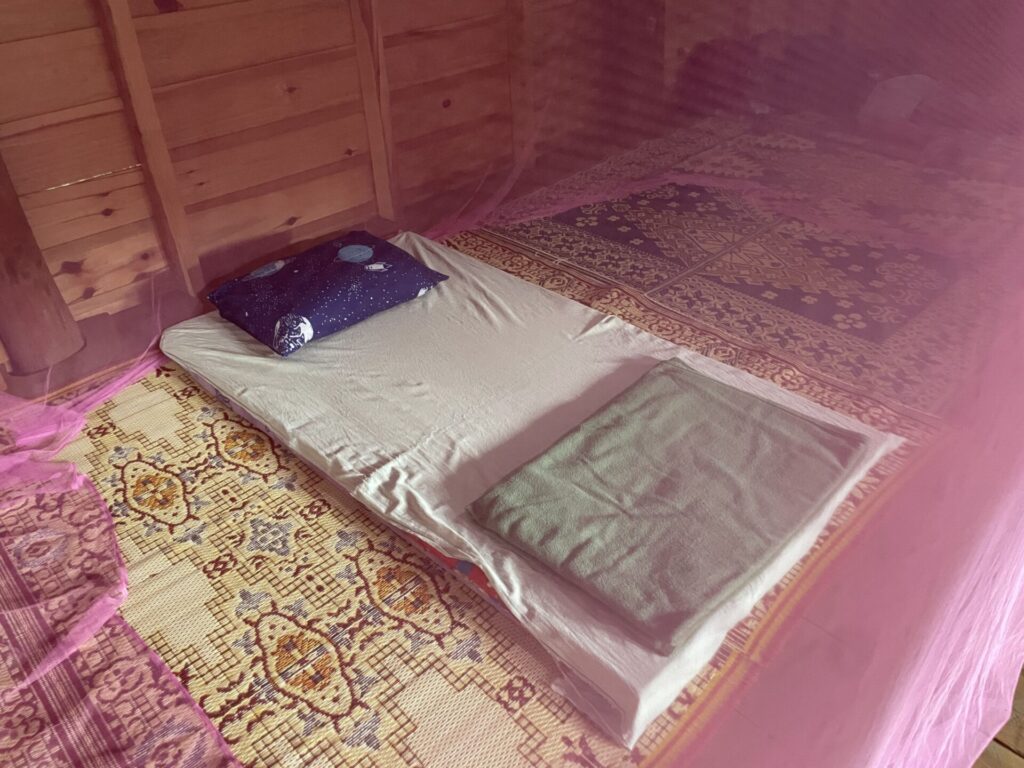
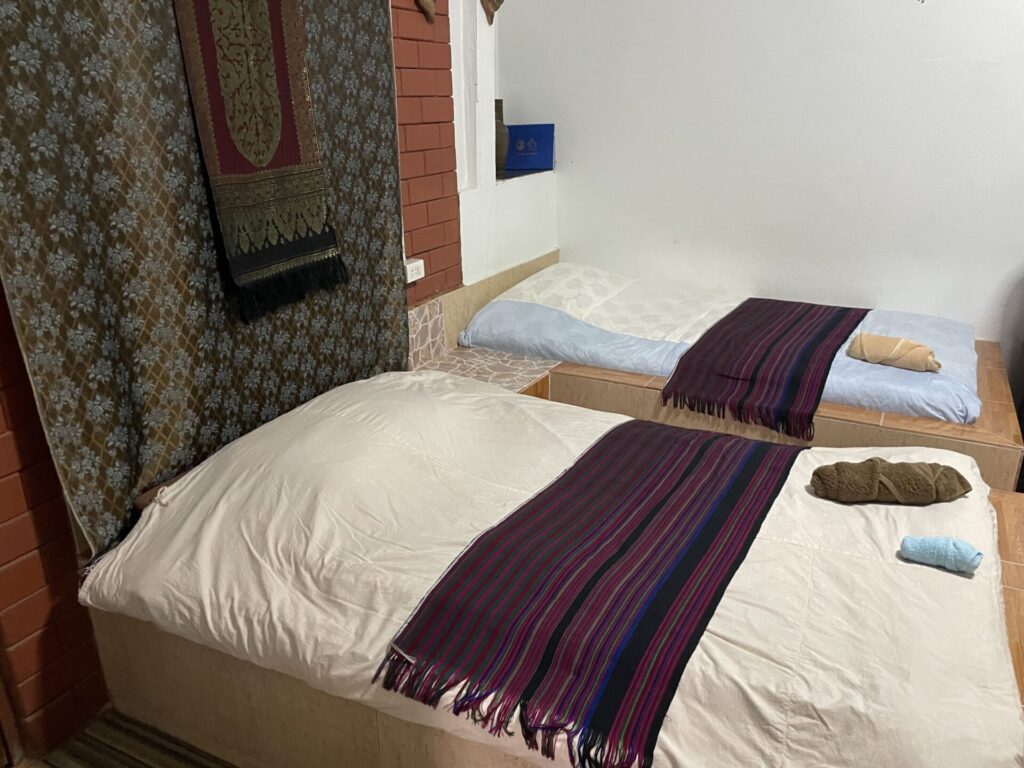
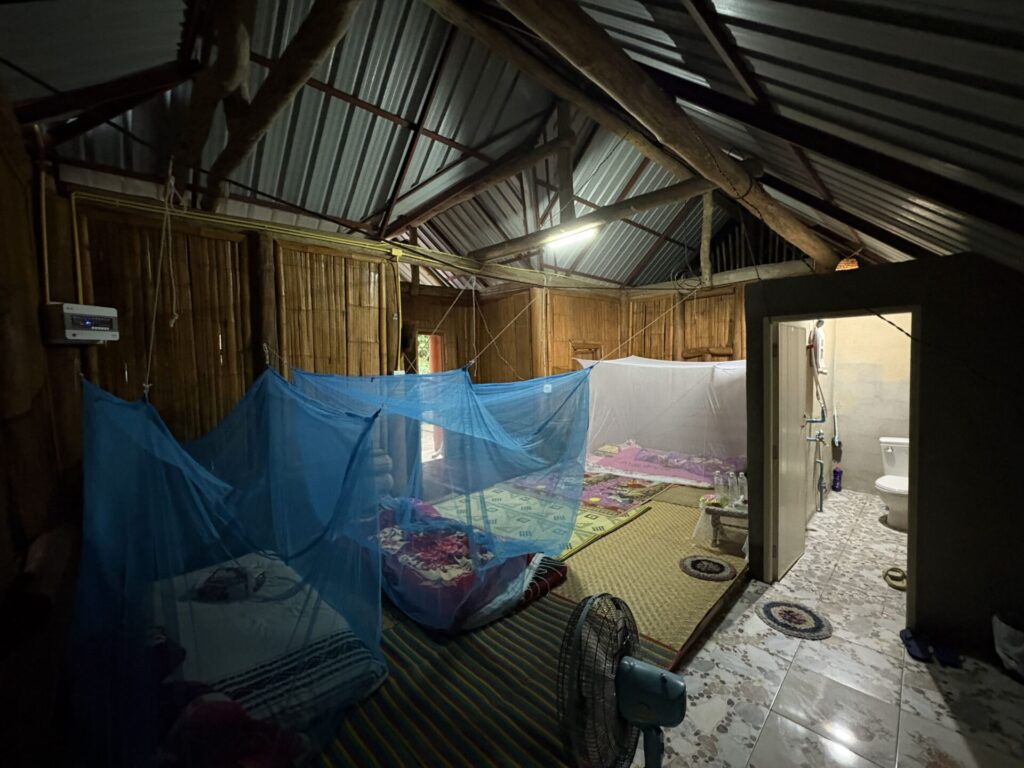
Hot showers are available, though water pressure may be on the lower side.
For a more detailed look at the homestay, check out the article below:
 ManiTabi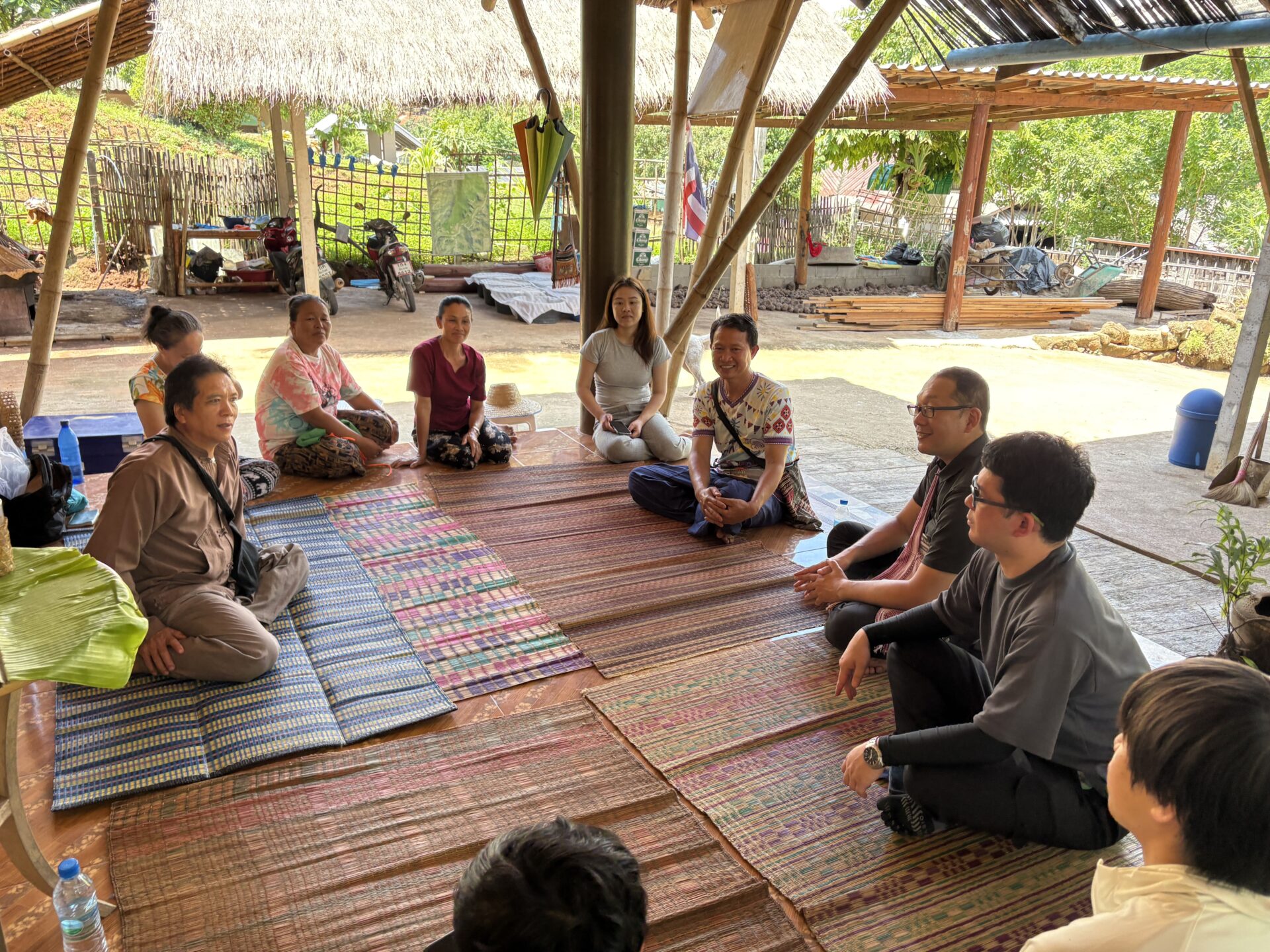
What to Bring
General Tour Packing List
| Priority | Item | Notes |
| Essential | Long sleeves & long pants | Mornings and evenings can be cool, so long sleeves and pants are recommended. |
| Personal medications | ||
| Sandals | ||
| Toothbrush | ||
| Nice to have | Sunscreen | |
| Shampoo | Bring your own if you have a preference. | |
| Conditioner | Same as above. |
Important Notes
- Village life and festival events don't run on a fixed clock. We encourage you to relax, go with the flow, and enjoy the unhurried pace of village time.
- The forest is close by, so insects and lizards may occasionally appear nearby. They are generally harmless. Mosquito nets are provided for sleeping.
- The program may change depending on weather or other circumstances.
Participant Reviews
K-san: "I'm so grateful for three days of precious experiences and the wonderful people I met. Chiang Mai has become even more special to me. I look forward to seeing everyone again!"
A genuine local festival, held just once a year — and only possible through ManiTabi. Come make unforgettable memories in northern Thailand!
To sign up or inquire, please use the contact form below or reach out via our official LINE.

Browse our other tours below! 👇
< Day Trip to 1-Night >
【少数民族ツアー】自然と共生するカレン族の暮らし体験
チェンマイの自然豊かなカレン族の村で、少数民族の伝統的な暮らしや自然を感じるツアー。料理からハーバルサウナ、染色体験も楽しめます!
< 1-Night to 2-Night >