Doi Suthep Temple: Highlights and How to Get There — A Must for Chiang Mai Travelers
 チェンマイ坂田
1. Overview: Doi Suthep, the symbol of Chiang Mai
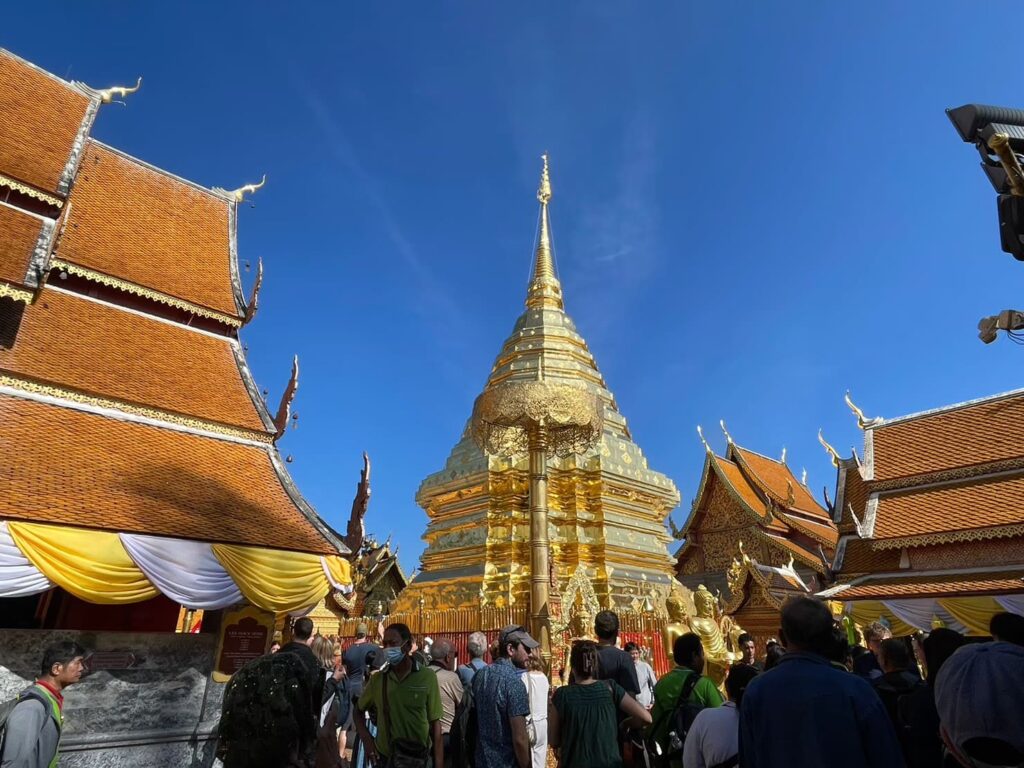
Doi Suthep temple is visited by many of the tourists who come to Chiang Mai. It's an important Buddhist temple symbolizing the culture and history of northern Thailand, located about 15 km west of central Chiang Mai atop Doi Suthep mountain at 1,080 m.
Doi Suthep's full name is "Wat Phra That Doi Suthep." "Phra That" means Buddha relics, "doi" means mountain, "su" means good, and "thep" means angel. As the name suggests, the temple is said to enshrine part of the Buddha's remains, making it a deeply sacred place for Thai Buddhists.
The temple's history dates back to the 14th century. It was founded in 1383 by King Kuena of the Lanna kingdom, and there's an intriguing legend behind its founding.
According to legend, the king possessed a relic of the Buddha. To decide where to enshrine it, he placed it on a white elephant and let it walk. The elephant climbed the mountain, and at a certain point it circled three times, trumpeted, then collapsed and died. The king took this as a divine sign and resolved to build the temple at that spot (Doi Suthep).
Ever since, Wat Doi Suthep has stood as a symbol of Chiang Mai, drawing people's faith to this day through numerous renovations and expansions. Its majestic form and the stunning panoramic view of Chiang Mai continue to captivate many visitors.
2. Highlights: the appeal of Doi Suthep
The 306-step stairway
The first thing to greet visitors to Doi Suthep is a steep stairway.
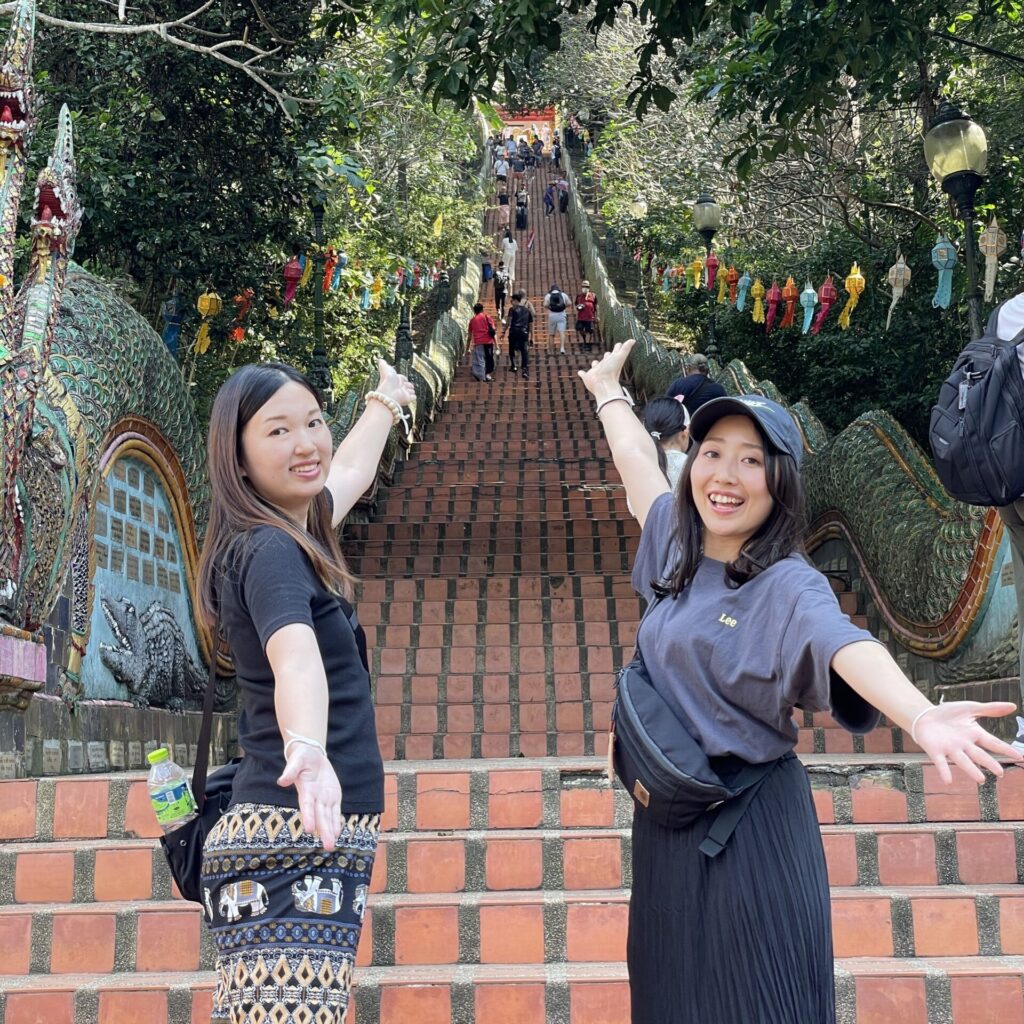
On both sides of the 306-step stairway stand statues of nagas (serpent deities) with scales that shine in seven colors. The naga is said to be a guardian linking the water god and the earth, protecting the journey to this sacred site.
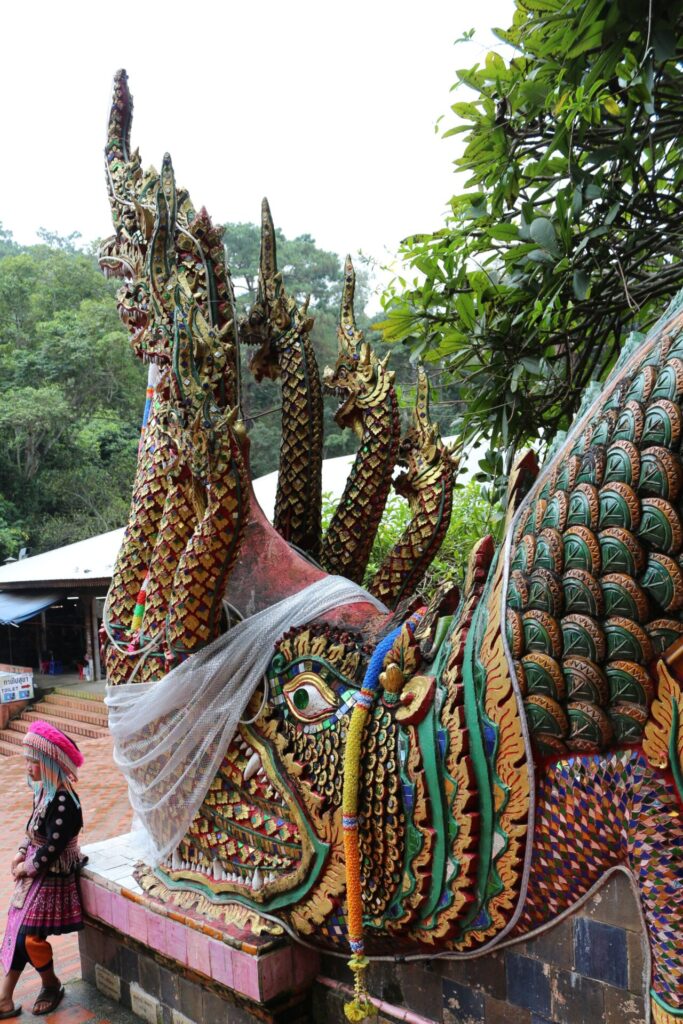
Just climbing this stairway lets you feel the temple's mystical atmosphere.
The golden stupa
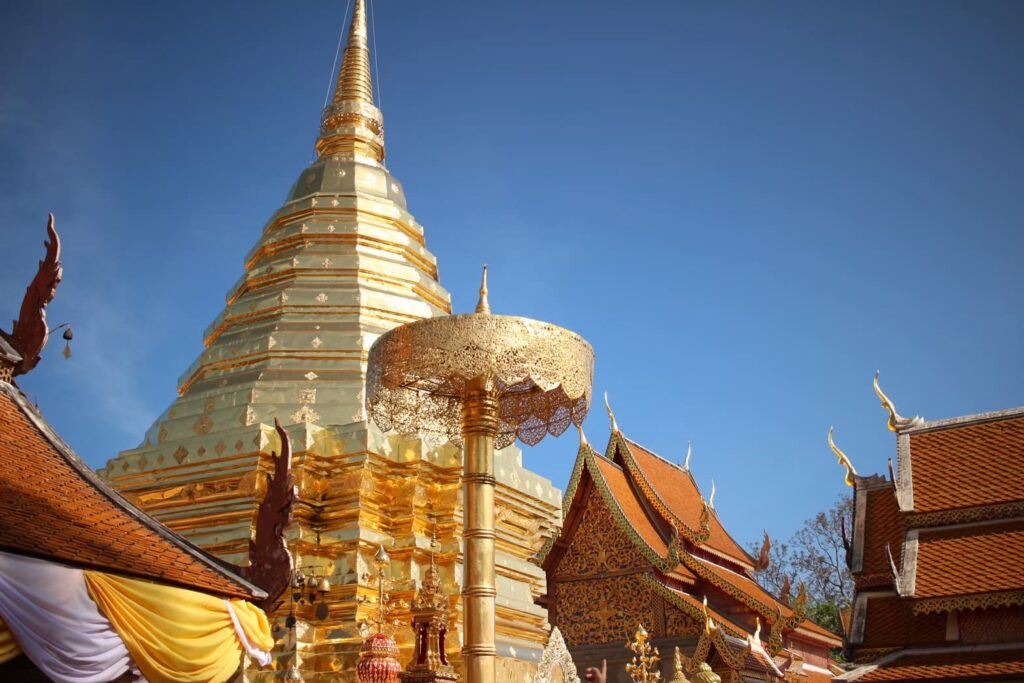
At the top of the stairs, the golden stupa at the temple's heart comes into view. About 22 m tall, it shines in the sunlight and overwhelms visitors. The Buddha's relics are said to be enshrined within.
Like many Thai stupas, it has a bell shape, which in Buddhism symbolizes the universe. Its gentle curve toward the top signifies the path to the ultimate goal Buddhists strive for — nirvana.
The stupa's surface is covered in gold leaf, and when sunlight hits it, the whole area glows gold. This radiance is thought to symbolize the sanctity of the holy place and the light of Buddhism.
The temple grounds
Walking the temple grounds, there are many things to see — receiving a sermon from a monk, drawing a Thai fortune, and more.
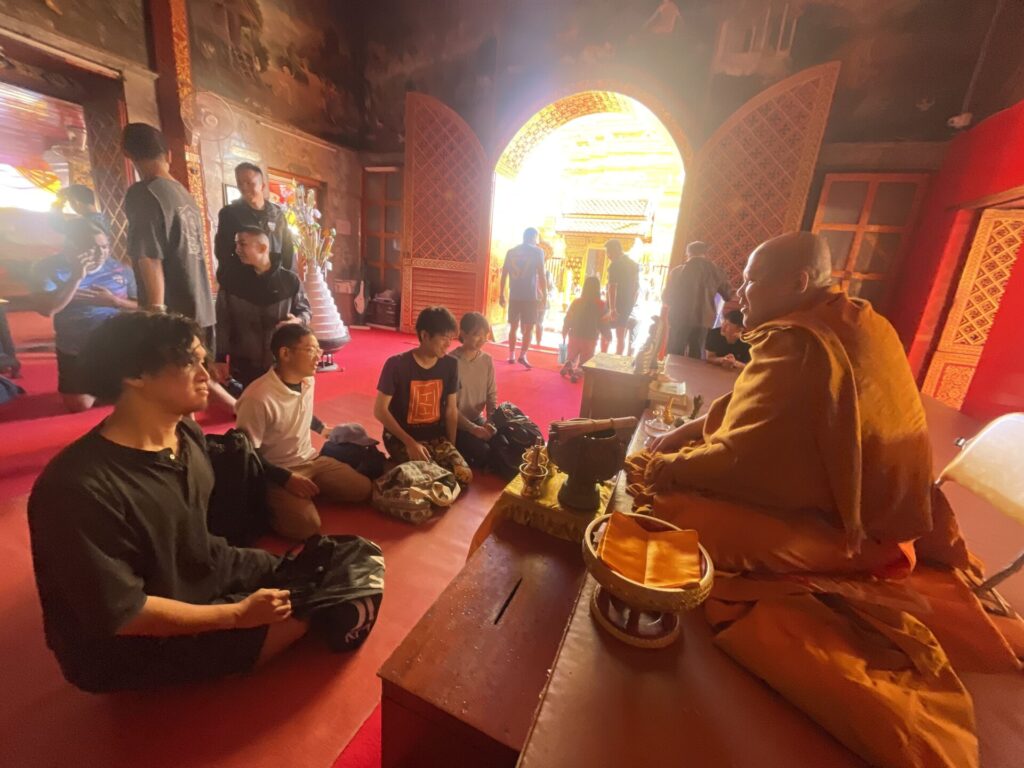
You can also draw omikuji fortunes on the grounds. For a Thai omikuji, you tilt a cylinder of sticks slightly and shake it up and down with just the right force until one stick falls out. The stick has a number, so you take the paper with the matching number from the shelf. Doi Suthep's fortunes are written in English too. If the message is bad you return the paper; if it's good, you take it home. The offering amount is up to you. (Reference: Kita-Thai Gohan to Koto Aruki: Chiang Mai e)
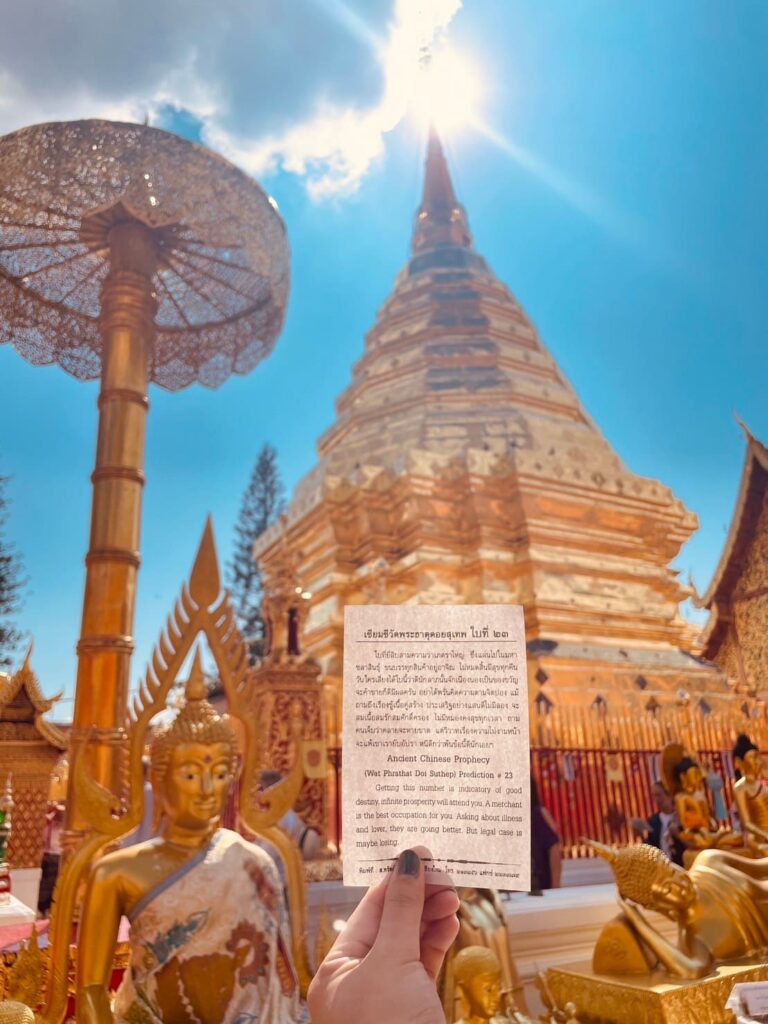
Omikuji fortunes and the stupa
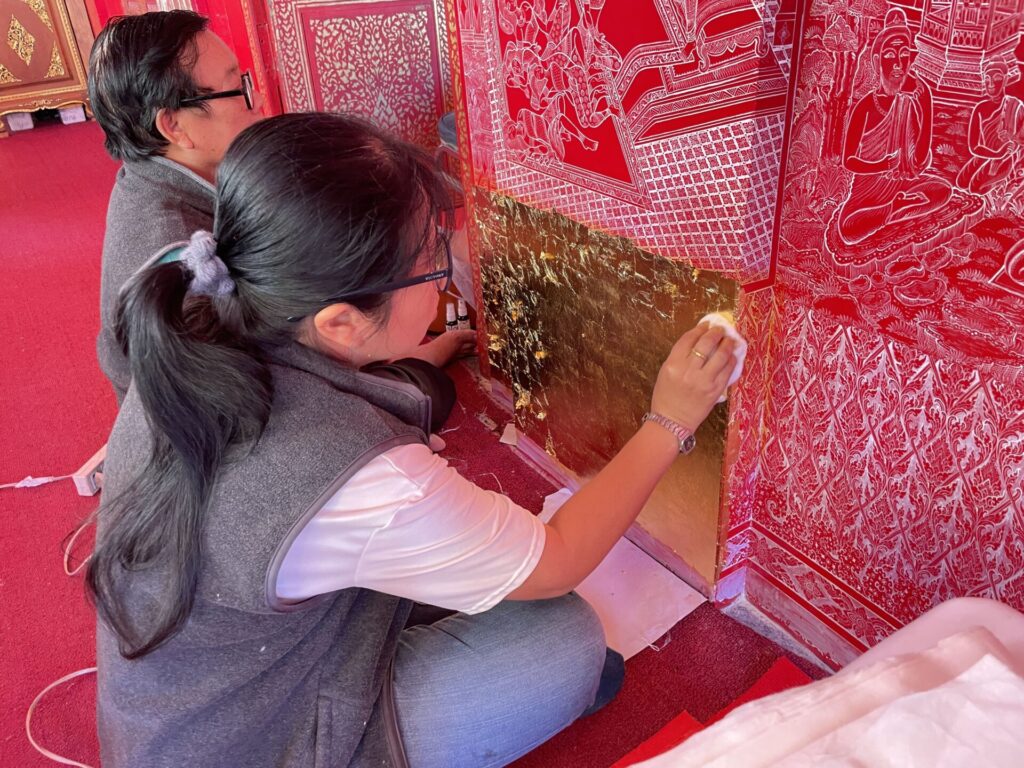
On some days you can watch artisans' craftsmanship live.
The view from Doi Suthep temple is spectacular too.
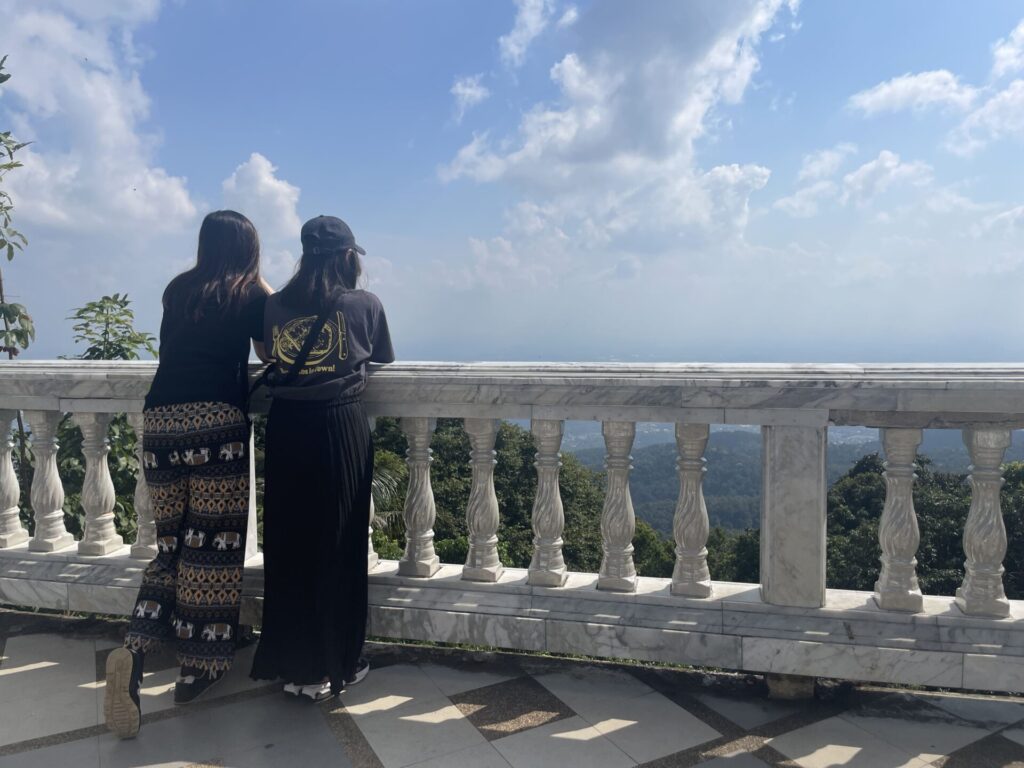
On clear days, you can see all of Chiang Mai's streetscape.

And the view at dusk is breathtakingly beautiful.
When visiting the temple, dress to cover your shoulders and knees as a sign of respect. You'll need to remove your shoes to enter the grounds.
3. Getting there: access to Doi Suthep
There are several ways to get from central Chiang Mai to Wat Doi Suthep. Choose the method that suits you and head to Doi Suthep.
The "songthaew," a small truck with its bed converted for passengers, is an economical way to travel.
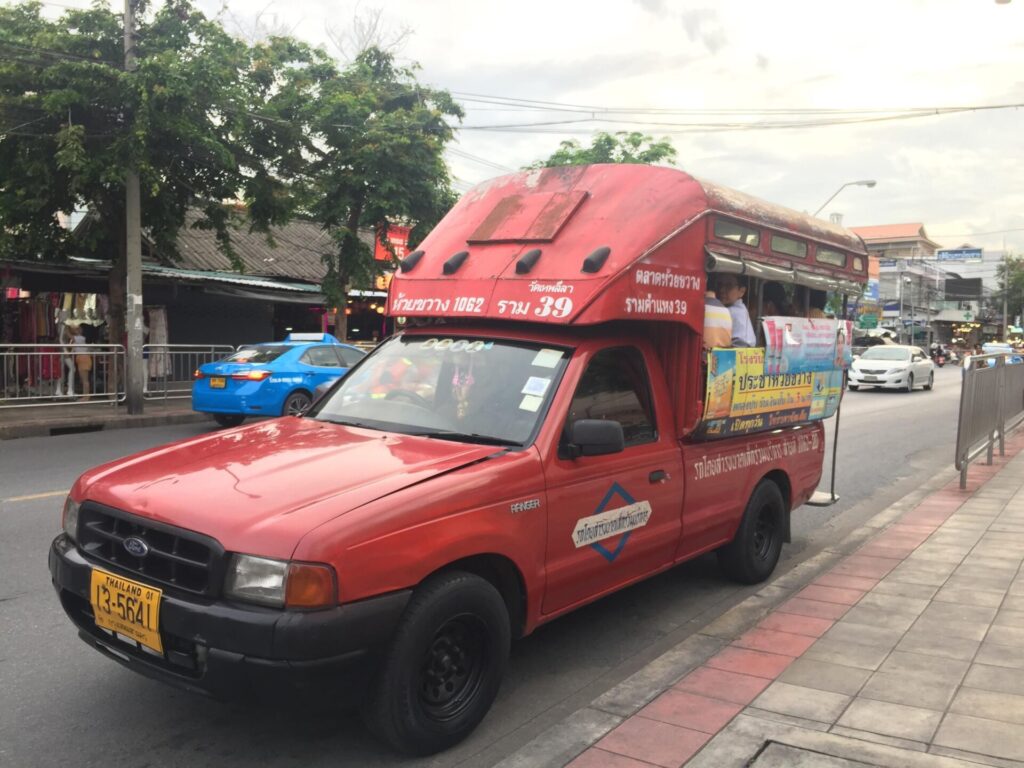
Songthaew stops include: ① near Chang Phuak Gate in Chiang Mai's Old Town, and ② near Soi 7 on Nimmanhaemin Road. The fare is about 80 THB per person one way. Note that they don't depart until enough passengers gather, so allow extra time.
① The stop near Chang Phuak Gate in Chiang Mai's Old Town is here.
Taxi
Recommended if you want to travel comfortably without worrying about time. For about 400–500 THB one way, you can go directly from the city or your hotel to the temple.
Rental motorbike
For those who want to get around freely. Chiang Mai has many rental motorbike shops, where you can rent one for about 200–300 THB per day. However, take great care on mountain roads, and always wear a helmet.
Tour
There are also guided tours covering Chiang Mai's major sights, including Doi Suthep.
Half-day and full-day tours with an English-speaking guide are available. Prices vary by content but are roughly 1,000–3,000 THB. For inquiries to Mani Tabi, click here.
Trekking
For the adventurous. A trekking route starts near Chiang Mai Zoo. You climb the mountain over about 2–3 hours to reach the temple. You can enjoy the nature along the way, but it takes stamina and time.
Whichever way you choose, an early-morning or near-dusk visit is recommended. Midday is hotter and more crowded. Enjoying Wat Doi Suthep with the sunrise or sunset is a wonderful experience. See our trekking tours 👇.
 ManiTabi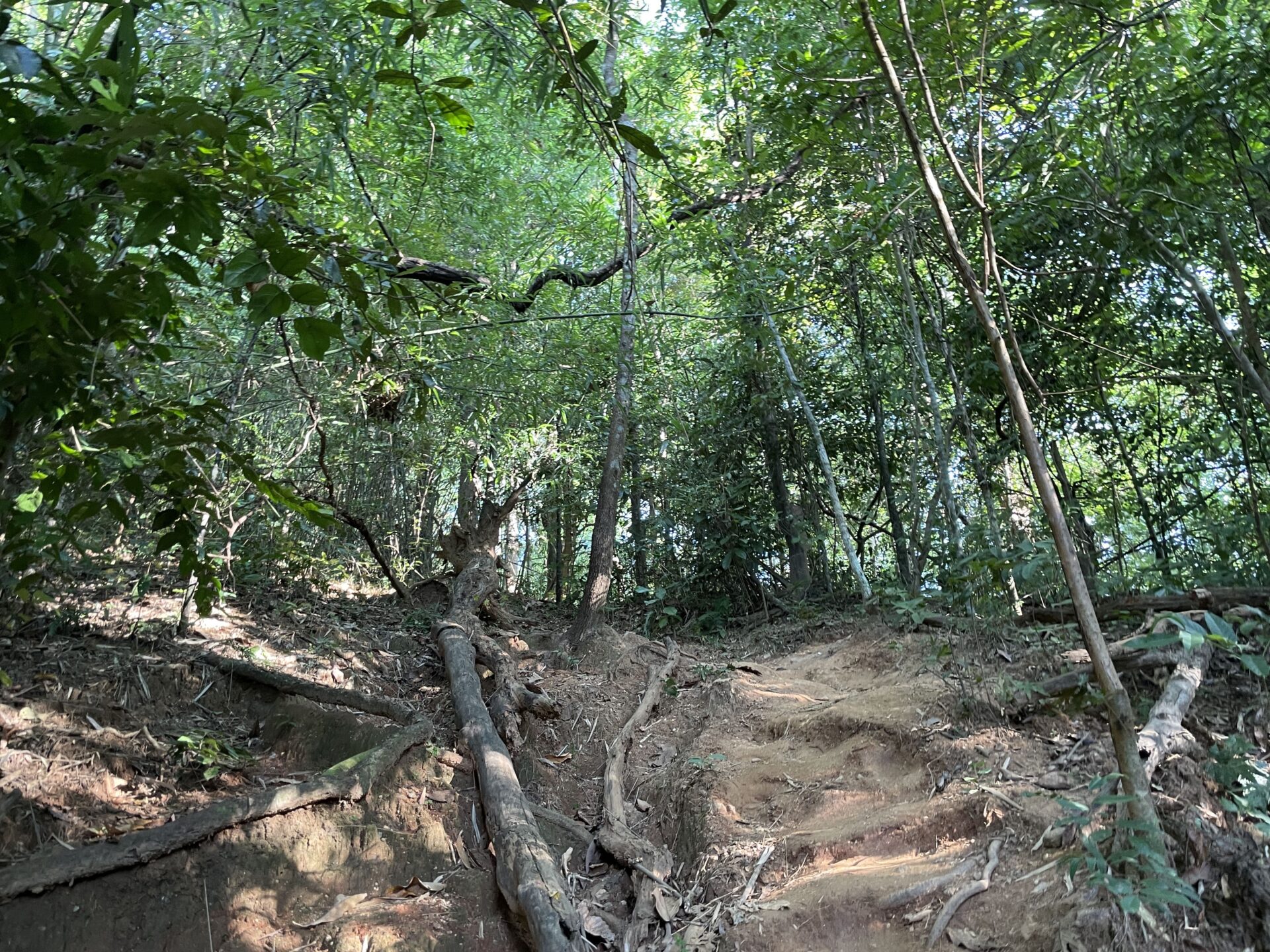
Paying respects at Doi Suthep is a precious chance to touch Chiang Mai's history and culture, and Thai Buddhism. When you visit Chiang Mai, do make your way to Doi Suthep. You can also find other Chiang Mai temples here.
Doi Suthep basic info
| Name | Wat Phra That Doi Suthep |
| Hours | 5:00–20:00 (the paid cable car runs from about 05:30 to 20:00) |
| Admission | 30 THB (cable car 50 THB per person) |
| Access | About 45 min by car from Chiang Mai Old Town |
| Other | Tourism Authority of Thailand website |